Czech paradise
Tábor
Horehronie
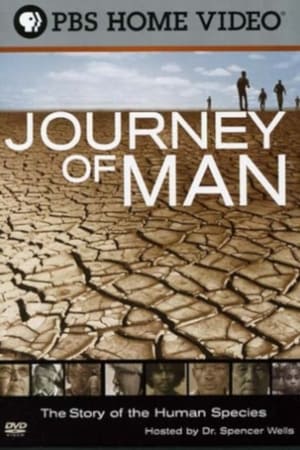
Many geneticists and archaeologists have long surmised that human life began in Africa. Dr. Spencer Wells, one of a group of scientists studying the origin of human life, offers evidence and theories to support such a thesis in this PBS special. He claims that Africa was populated by only a few thousand people that some deserted their homeland in a conquest that has resulted in global domination.
When the Tanana River bridge was installed in Salcha, Alaska, the community worried about the levee's effects on fish wildlife. Salcha Elementary School, along with the help of Tanana Valley Watershed Association, conducted a 10-year scientific project with students to study the effects the levee had on Piledriver Slough. Tori Brannan - the filmmaker's mother - is a retired principal at Salcha Elementary and was the project's centerpiece. She shares her experiences with the project, the community, and how her daughter's involvement strengthened their relationship.
In 2013, the world's media reported on a shocking mountain-high brawl as European climbers fled a mob of angry Sherpas. Director Jennifer Peedom and her team set out to uncover the cause of this altercation, intending to film the 2014 climbing season from the Sherpa's point-of-view. Instead, they captured Everest's greatest tragedy, when a huge block of ice crashed down onto the climbing route...
Host Peter Greenberg explores the hidden gems of Turkey's Aegean coast. Some of the stunning destinations include Bodrum, Izmir and the ancient city of Troy.
Hatay
A documentary short that uses fish to explore identity and belonging in a metropolis.
A New Yorker journeys to the jungle in the Darien Gap of Panama to reconnect with an indigenous tribe he met and photographed 20 years ago. Their reunion highlights the profound power of photos and the human connection that transcends cultural barriers.
This short-length documentary takes us to Agadir, a city in Morocco that was struck by an earthquake in 1960. The film, made by an expatriate Moroccan who lost family and friends in the disaster, is a memorial to that tragedy and to the past he left behind when he came to North America. Partly allegorical, it employs varying techniques to offset reality from fantasy sequences.
The Balkans cradles Europe's last wild rivers and supports abundant wildlife and healthy, intact ecosystems. These rivers are "The Undamaged" – clean, pristine, and undammed. With over 2,700 small and large hydro power plants planned or under construction in the Balkans, corruption and greed are destroying the last free-flowing rivers of Europe. Follow the Balkan Rivers Tour, a rowdy crew of whitewater kayakers, filmers, photographers and friends who decided to stand up for the rivers, travelling from Slovenia to Albania for 36 days, kayaking 23 rivers in 6 countries to protest the dams and show the world the secret wild rivers of the Balkans. The film honours everyday people and local activists who are fighting to defend rivers and aims to spread the word of the plight of these rivers, showing a new style of nature conservation that is fun, energetic and effective.
Země jihu – Vietnam
It shows the Neretva river from its source to the shores of the Adriatic Sea. The document also captures the original four-hundred-year-old bridge in Mostar.
Domažlicko
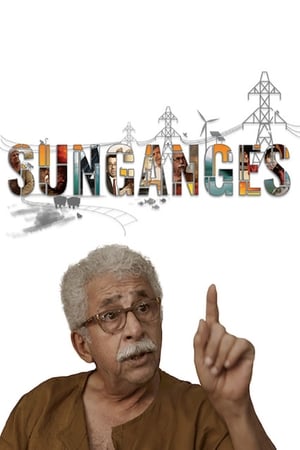
A panoptic film on water, energy and climate, SunGanges (SuryaGanga) is a wild and intense ride three filmmakers take across the vast Indian landscape in an attempt to connect the dots between vanishing rivers, massive energy projects and the quiet rise of renewable energy.
Krušné hory.
Take an unprecedented visual journey into Planet Water. Water Life captures extraordinary locations and intimate animal behavior never before seen on film. Two years in the making, this groundbreaking series takes viewers on an unprecedented visual journey to aquatic ecosystems on five continents to reveal how water shapes and sculpts the landscape and provides food and refuge for an astonishing array of species. This epic series tells water's story as never before to engage viewers in vital discussions about how water must be conserved and preserved. Learn the impact of climate change, pollution and other factors that are changing the environment and affecting each and every one of us.
How would natural habitats develop without human interference? In this documentary we follow an international team of scientists and explorers on an extraordinary mission in Mozambique to reach a forest that no human has set foot in. The team aims to collect data from the forest to help our understanding of how climate change is affecting our planet. But the forest sits atop a mountain, and to reach it, the team must first climb a sheer 100m wall of rock.
The interview, held on January 4, 2001, was the last given by Professor Milton Santos, who died from cancer on June 24 of the same year. The geographer is gone, but his thoughts remains. Its political and cultural ideals inspire the debate on Brazilian society and the construction of a new world. His statement is a true testimony, a lesson that the world can be better. Based on geography, Milton Santos performs a reading of the contemporary world that reveals the different faces of the phenomenon of globalization. It is in the evidence of contradictions and paradoxes that constitute everyday life that Milton Santos sees the possibilities of building another reality. He innovates when, instead of standing against globalization, proposes and points out ways for another globalization.