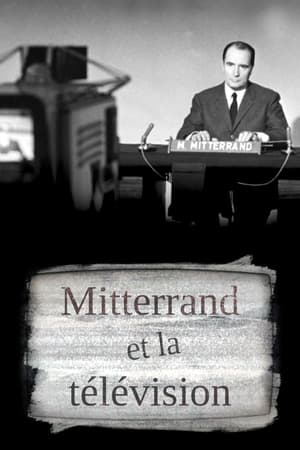
Entretien politique : Histoire et mode d'emploi
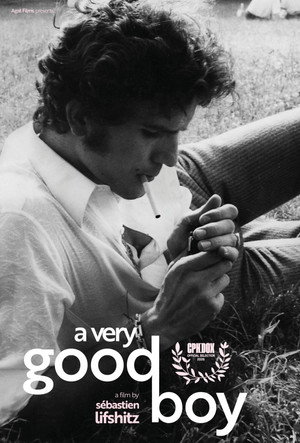
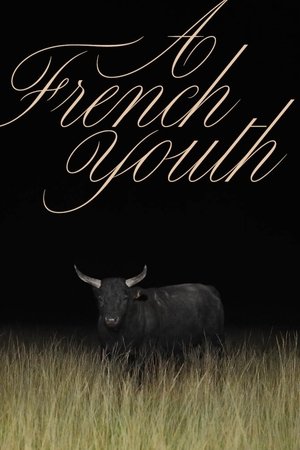
Cyrille, a young gay farmer from Auvergne, has only one friend, a homosexual like him. One day, he goes on vacation to a beach in Charente Maritime. He cannot swim and sees the sea for the first time. It was there that he met the director Rodolphe Marconi who decided to devote this sensitive and gentle portrait to him, plunging us into an agricultural world in crisis and into a life often lonely and made up of hard work rarely pays off.
Le Parti du cinéma
This documentary follows seven wine-making families in the Burgundy region of France, delving into the cultural and creative process of making wine. You'll never look at wine the same way again.
Le Normandie, un géant à la française
October 2018, France. Macron’s government decrees a tax increase on the price of fuel. A wave of protests starts to grow. Citizens mobilize throughout the country: this is the beginning of the Yellow Vests movement. In Chartres, a group of men and women gather daily. Among them, Agnès, Benoît, Nathalie and Allan commit themselves to the collective struggle. Like a whole nation, they discover that they have a voice to be heard...
Pierre Carles questions the privatization of the leading French televisions channel : is it not scandalous that the TFI-Bouygues concession has been automatically renewed since 1987 ? Taking up the anti-television fight he initiated with "Pas vu Pas pris", his first film, he confronts the people responsible for the news who have always avoided tackling this taboo subject. But the investigation does not go as planned : the old dinosaurs and young guardians now how to handle this media critic. To find his "fighting spirit" again, Carles calls to arms his friends and changes methods : Henceforth, no more concessions !
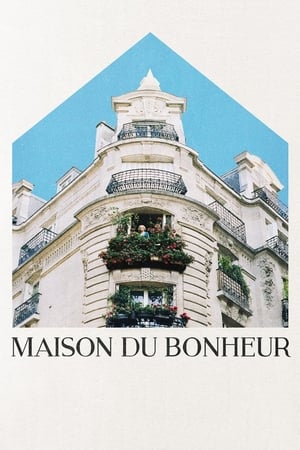
A photoshoot on the roofs and in the streets of Paris, under the astonished eyes of the inhabitants.
Published in Paris in 1954, Story of O was an immediate bestseller and literary scandal: an elegantly written S&M fantasy that had all the hallmarks of being an autobiographical account by the pseudonymous Pauline Réage. In 1994 Dominique Aury, a mild-mannered, dowdy editor for France’s prestigious Gallimard press, revealed her authorship. Pola Rapaport explores Aury's inspiration, recreating the world of '50s literary Paris and setting it against dramatic sequences that bring the infamous book to life. The author as well as various French intellectuals expound on the thorny relationship between sexuality and power, submission and freedom, liberation and non-being.
The 1960s opened with La Dolce Vita by Federico Fellini and its unforgettable lead: Marcello Mastroianni. The actor seemed to glide effortlessly through his roles — and through life — as if to say that life is not all that serious, or perhaps that it is far too serious not to be laughed at. But what kind of man was hiding behind the actor with the handsome, boyish looks, who appeared so gentle and nonchalant?
The Channel Tunnel linking Britain with France is one of the seven wonders of the modern world but what did it take to build the longest undersea tunnel ever constructed? We hear from the men and women, who built this engineering marvel. Massive tunnel boring machines gnawed their way through rock and chalk, digging not one tunnel but three; two rail tunnels and a service tunnel. This was a project that would be privately financed; not a penny of public money would be spent on the tunnel. Business would have to put up all the money and take all the risks. This was also a project that was blighted by flood, fire, tragic loss of life and financial bust ups. Today, it stands as an engineering triumph and a testament to what can be achieved when two nations, Britain and France put aside their historic differences and work together.
Charles de Gaulle, the first president (1958-1969) of the Vth Republic, France’s current system of government, left his mark on the country . He was statesman of action and has been compared to a monarch. This film depicts the general’s personality through the great events of his presidential term, at a time when the world was undergoing considerable changes.
At the close of Jacques Chirac's life, politician Jean-Louis Debré has wished to make a film to celebrate his friend, to tell the story of their friendship and professional understanding, and to make an intimate portrait of the former President of France through the accounts of a few very close friends. Thanks to Jean-Louis Debré's presence, Claude Chirac and some of Jacques Chirac's closest friends, famous or unknown, agreed to talk to the camera, sometimes for the first time, to evoke their untold-before memories and tell about the moments that bonded the two men for a lifetime.
In France, victims and perpetrators of offenses, misdemeanors, or crimes can meet and talk in secure, supervised settings. Included in the Penal Code since 2014, this "restorative justice" is intended to complement criminal justice and provide a safe space for dialogue. The aim is to enable victims to rebuild their lives and perpetrators to take full responsibility for their actions, thereby reducing the risk of reoffending. This film follows one such program over the course of a year. Amélie, a prison rehabilitation and probation counselor, and Séverine, a lawyer for a victims' association, prepare Marthe, Aurélien, Sylvain, and JF, who are incarcerated for murder or attempted murder of their spouses. They also follow Emeline, Evelyne, and Marie, victims of similar crimes.
French actors Lucien Jean-Baptiste, Aïssa Maïga, Sonia Rolland, Deborah Lukumuena, Marie-France Malonga, Gary Dourdan and others speak up on the reality of black actors in the French movie industry.
An exploration of Rodez Cathedral and its stained glass windows: praying figures and scientific imagery. A study on color, repetition and flickering consisting of 292 photographs.
Britain's Special Operations Executive (SOE) provides trained agents, arms and other assistance to the European resistance groups fighting against Hitler. British agents, Captain Harry Rée DSO, OBE, Croix De Guerre, Médaille de la Résistance, aka "Felix", and Jacqueline Nearne, MBE, aka "Cat", recreate some of their adventures in France.
Vivante(s)
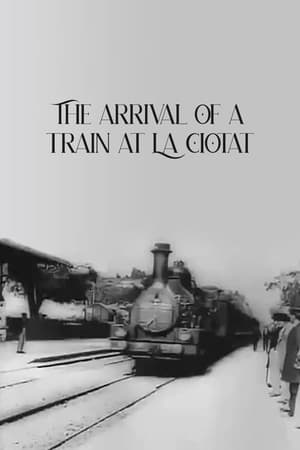
A group of people are standing along the platform of a railway station in La Ciotat, waiting for a train. One is seen coming, at some distance, and eventually stops at the platform. Doors of the railway-cars open and attendants help passengers off and on. Popular legend has it that, when this film was shown, the first-night audience fled the café in terror, fearing being run over by the "approaching" train. This legend has since been identified as promotional embellishment, though there is evidence to suggest that people were astounded at the capabilities of the Lumières' cinématographe.
The portrait of a woman who remembers. Sheila tells the story of Sheila, without concessions or evasions. Her childhood, her parents, her beginnings, the rumors, her love affairs, her marriage, her son, her successes, her farewells, her return, her mourning. The journey of an extraordinary popular icon who never stopped fighting. The courage of an artist who never gives up. "Sheila, toutes ces vies-là" is also a journey through time. 60 years of pop music, punctuated by numerous archives, personal films, timeless hits and illustrations by Marc-Antoine Coulon. But also 60 years of fashion, through a legendary wardrobe (her TV show outfits) that Sheila invites us to rediscover.