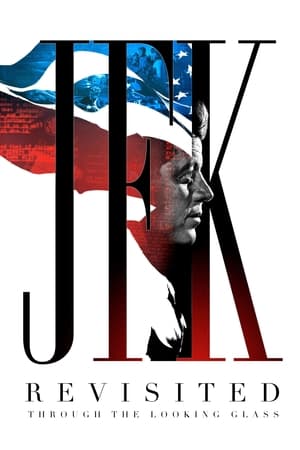
Thirty years after the release of his film JFK (1991), filmmaker Oliver Stone reviews recently declassified evidence related to the assassination of President John F. Kennedy, which took place in Dallas on November 22, 1963.
This documentary explores the events surrounding the greatest maritime tragedy in the history of the Pacific coast, the sinking of the Princess Sophia. The Canadian Pacific steamer had left Skagway, Alaska, on October 23, 1918, on its way to Vancouver, when a fierce blizzard hit. The ship veered off course and ran aground on a reef. Despite the proximity of several other ships, the harsh weather prevented any evacuation attempt. Almost 48 hours later, the Sophia slipped off the reef and sank. The following morning, rescue ships faced the terrible evidence: only the tip of its mast was visible. None of the 353 passengers and crewmembers survived. Archival photos, 3D animation, exclusive interviews and underwater photography relate an important chapter of maritime history, while vividly portraying a place and time.
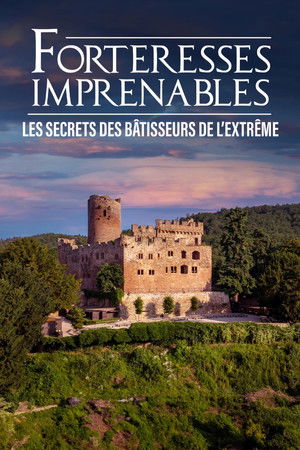
Forteresses imprenables : les secrets des bâtisseurs de l'extrême
The Victorian era is often cited for its lack of sexuality, but as this documentary reveals, the period's artists created a strong tradition surrounding the classical nude figure, which spread from the fine arts to more common forms of expression. The film explains how 19th-century artists were inspired by ancient Greek and Roman works to highlight the naked form, and how that was reflected in the evolving cultural attitudes toward sex.
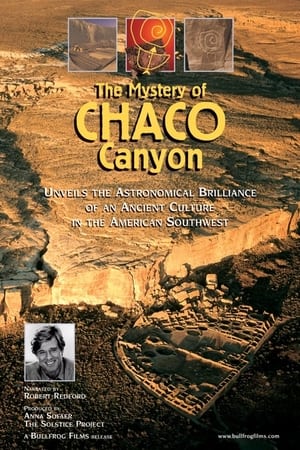
Chaco Canyon, located in northwest New Mexico, is perhaps the only site in the world constructed in an elaborate pattern that mirrors the yearly cycle of the sun and the 19-year cycle of the moon. How did an ancient civilization, with no known written language, arrange its buildings into a virtual celestial calendar, spanning an area roughly the size of Ireland?
A documentary made by History Time on YouTube. Written, researched and produced by Pete Kelly.
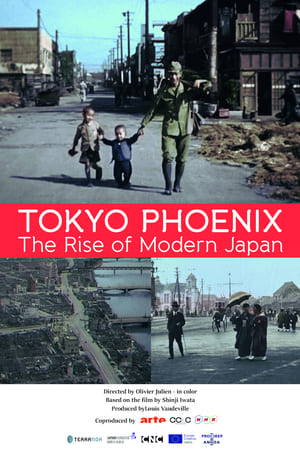
In 150 years, twice marked by total destruction —a terrible earthquake in 1923 and incendiary bombings in 1945— followed by a spectacular rebirth, Tokyo, the old city of Edo, has become the largest and most futuristic capital in the world in a transformation process fueled by the exceptional resilience of its inhabitants, and nourished by a unique phenomenon of cultural hybridization.
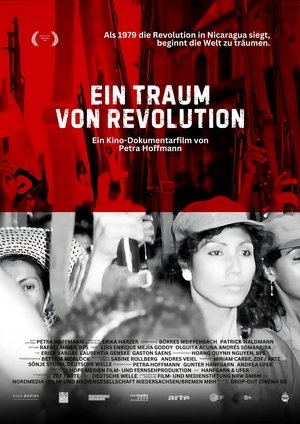
When the revolution in Nicaragua won its victory nearly 40 years ago, the world began to dream. A young generation was taking the reins in a country of grand utopias. From West Germany alone, 15,000 “brigadists” travelled to help rebuild the war-torn country: liberals, greens, unionists, social democrats, leftists and church representatives harvested coffee and cotton, built schools, kindergartens and hospital wards. No movement has mobilised so many people. What became of the hopes and dreams of the revolutionaries and their supporters?
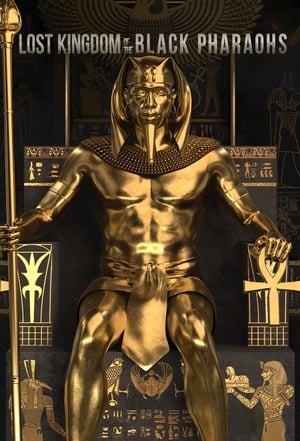
The Kush Empire was an ancient superpower that dominated the Nile Valley and rivaled the Egyptians, and now, a new, cutting-edge investigation at a mysterious tomb could reveal the secrets of this formidable lost kingdom.
Cruelty, psychological and sexual violence, humiliations: reality television seems to have gone mad. His debut in the early 2000s inaugurated a new era in the history of the audio-visual. Fifty years of archives trace the evolution of entertainment: how the staging of intimacy during the 80s opened new territories, how the privatization of the biggest channels has changed the relationship with the spectator. With the contribution of specialists, including philosopher Bernard Stiegler, this documentary demonstrates how emotion has made way for the exacerbation of the most destructive impulses.
In this hour-long documentary, Oxford academic Janina Ramirez tours the country in search of Anglo-Saxon art treasures. Her basic thesis - and it is a plausible one - is that we should not look upon their era as a "dark age" as compared, for example, to Roman times, but rather celebrate it as an age in which creativity flowered, especially in terms of artistic design as well as symbolism. She shows plenty of good examples, ranging from the Franks Casket to the Staffordshire Hoard, and the Lindisfarne Gospels.
Aspiring influencer Gabby Petito sets out on a cross-country road trip with her fiancé, but she soon disappears, and the ensuing mystery goes viral. New footage of the couple sheds light on their struggles that led to the nightmarish outcome.
An ancient skeleton has been discovered in Jerusalem in a rich man's tomb. Colouration of the wrist and leg bones indicates the cause of death was crucifiction. other signs, include a gold coin bearing the marks of Pontius Pilate and faint markings around the skull, lead authorities to suspect that these could be the bones of Jesus Christ. Politicians, clerics, religious extremists and those using terror as a means to an end, find their beliefs and identities tested while risking their lives to unearth the truth.....
Between June 1940 and March 1943, the 1,200 kilometer long demarcation line broke France in two. For almost three years she controlled the daily newspaper of 40 million French people. In the north the zone occupied by Hitler's soldiers, in the south the zone administered by Marshal Pétain's Vichy regime. This film lifts the veil in this theater on the shameful mistakes of the collaboration, but also on the most courageous and noble deeds. Archive images and film recordings at places where the border used to be crossed are alternated with interviews with the last witnesses of this time.
From the acclaimed director of American Movie, the documentary follows former Los Angeles police officer turned independent reporter Michael Ruppert. He recounts his career as a radical thinker and spells out his apocalyptic vision of the future, spanning the crises in economics, energy, environment and more.
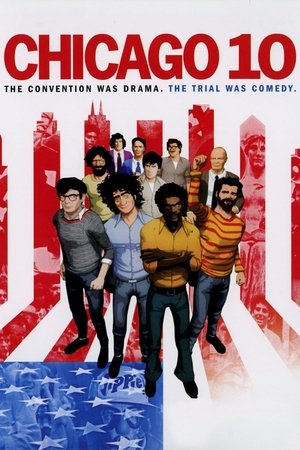
Archival footage, animation and music are used to look back at the eight anti-war protesters who were put on trial following the 1968 Democratic National Convention.
La belle histoire de Noël
12.000 Anos de História - Arqueologia e Pré História do RS
Were the eleven official witnesses—twelve if you include Joseph Smith himself—of the Book of Mormon reliable? What about the unofficial witnesses who interacted with the plates in various ways—including a number of women? Were the plates actually made of gold? How could witnesses really hear the voice of God and yet come to doubt His prophet?
By decoding ancient hieroglyphic texts, Jean-François Champollion gave voice to an enigmatic civilization, but behind his legendary feat is a mysterious brother who made it possible. The recent discovery of correspondence between Jean-François Champollion and his brother Jacques-Joseph now allows us to fully understand how a young, self-taught genius was able to make one of the most important discoveries of the 19th century. Without the ingenuity and unfailing support of his older brother, Jean-François would never have succeeded in solving this enigma, which had international repercussions. With animated sequences of their private correspondence, and with the help of archives and expert analysis, this film revisits this unique scientific, human and intellectual adventure to celebrate the bicentenary of the decoding of hieroglyphics.