Experimental short film that mix drawings of Jean-Luc Chansay's daughter with computer animation and sculptures of Marie Mercier.
Charlotte Gainsbourg agrees to play a witch condemned to be burned at the stake in the first film directed by Béatrice Dalle. But the chaotic production, technical problems, and psychotic breakdowns gradually plunge the shoot into a chaos of pure light.
A day in the city of Berlin, which experienced an industrial boom in the 1920s, and still provides an insight into the living and working conditions at that time. Germany had just recovered a little from the worst consequences of the First World War, the great economic crisis was still a few years away and Hitler was not yet an issue at the time.
Pedro is Mallorcan, born to a mother from Burgos and a father from Mallorca. Due to his distant relationship with his father, Pedro doesn't fully master Mallorcan as a language. He turns to the works of Damià Huguet to remember his father, as only his poems can fill the void left by his death. The poet's words transport Pedro to his childhood and his roots, even though many of the words are unknown to him, despite them belonging to his language. This becomes the driving force behind the protagonist's search for his own identity, his origins, what it means to be a man, father-son relationships, collective identity, and "mallorquinness". Pedro constantly questions the emotions stirred by Huguet's poetry, and, most importantly, who he is and where he belongs.
Images out of their intended context create new context, and also provide us the perception to be able to see which were there but not seen in its own context. This work is a process of research on the world which is familiar, but at the same time full of mysteries. This film is based on the abandoned images with variable reasons. I hoped the images would be free from the logic of selection. At the same time, I was curious about the world which is full of mysteries, always richer than the personal perception. (Lee Jangwook)
An unknown future. A boy confesses to the murder of another in an all-boy juvenile detention facility. More an exercise in style than storytelling, the story follows two detectives trying to uncover the case. Homosexual tension and explosive violence drives the story which delivers some weird and fascinating visuals.
Adachi's follow-up to Bowl using the figure of a woman suffering from an unusual sexual aliment has often been taken as a controversial allegory for the political stalemate of the Leftist student movement after their impressive wave of massive fiery protests failed to defeat the neo-imperialist Japan-US Security Treaty. The ritualistic solemnity of the charged sexual scenes contribute to the oneiric qualities of Closed Vagina which Adachi would later insist was an open work, not meant to deliver any kind of deliberate political message. - Harvard Film Archive
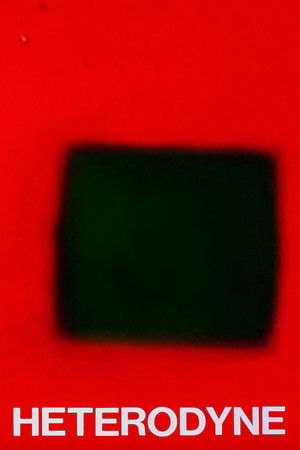
“Geometric animation made entirely by sculptural methods: cutting, punching, welding colored leader. HETERODYNE is related to some of my other work as RNA to a protein or polypeptide. It was made in abject (if blissful) ignorance of Paul Sharits’ early work.” –Hollis Frampton
From afar, the suburban lifestyle may appear as a sort of utopia; but be sure to gaze beyond the veil, for dire horrors and troubled intimacies will arise in the most unpleasant of forms.
SEELE orders an all-out attack on NERV, aiming to destroy the Evas before Gendo can advance his own plans for the Human Instrumentality Project. Shinji is pushed to the limits of his sanity as he is forced to decide the fate of humanity.
Host Scott Forrest presents a curated compilation of eight independent short films in this rapid-fire science-fiction feature. Genres collide, narratives twist, aesthetics clash, and even humor, both campy and dystopian, showcase the vast creative possibilities of each story's individual world, offering the viewer a brief glimpse into the lives of every character's attempt to survive the otherworldly chaos around them. Released in 2001, the selected shorts span original creation dates of 1997 to 2001; most of the featured filmmakers also appear as themselves in short video interviews to talk about their inspirations, creative process and motivations while working on their individual shorts.
Tom is a young guy from Zagreb, completely without money, trying to make films in Belgrade. He somehow manages to survive with a help of women. He doesn't believe in anybody, respects no one and is in constant conflict with the ruling system and order. After being left by a silly American girl, Tom binds with a woman whose husband is abroad. When she kicks him out, he moves in with her husband's sister, who later kills him in the attack of jealousy. All this is shown in the context of major historical events prior to 1968. with lots of archive footage of world leaders.
Changgyeong Palace was converted into a zoo in the Japanese colonoial period and continued to operate as such for some time after liberation.
In 17th-century Tuscany, a church play is performed for the benefit of young aristocrat Cosimo. In the play, a grotesque old woman gives birth to a beautiful baby boy. The child's older sister is quick to exploit the situation, selling blessings from the baby, and even claiming she's the true mother by virgin birth. However, when she attempts to seduce the bishop's son, the Church exacts a terrible revenge.
Fragments from Brussels, about the flow of the city, A cinema, A body, A film, and a wind that blows through the town. The film is a Schizomentry experience that blends real stories and fiction. After all, where is the border?
Suffocating under poverty, Ferris finds a door to another world that may provide her the perfect escape - If only her struggles don't follow her.
It would be chess that brought nightmares and hell to a dreamlike, fairy-tale universe. Chess was trying to manipulate the universe and humanity. It controlled its own destiny. Time had stopped, and now flowed with strategy. To stop it, a fair match had to be played as a last resort.
A short by Steven Soderbergh described as “intense sci-fi homage to Godard.”
The film contains the despair of an artist’s desire for creation on ruthless censorship, rebel, and anxiety in the mid-70s when it was politically and socially depressed.
In 1919 an art school opened in Germany that would change the world forever. It was called the Bauhaus. A century later, its radical thinking still shapes our lives today. Bauhaus 100 is the story of Walter Gropius, architect and founder of the Bauhaus, and the teachers and students he gathered to form this influential school. Traumatised by his experiences during the Great War, and determined that technology should never again be used for destruction, Gropius decided to reinvent the way art and design were taught. At the Bauhaus, all the disciplines would come together to create the buildings of the future, and define a new way of living in the modern world.