Follows amateur botanist Antonius Moscal's raft journey down the Franklin River (Tasmania, Australia).
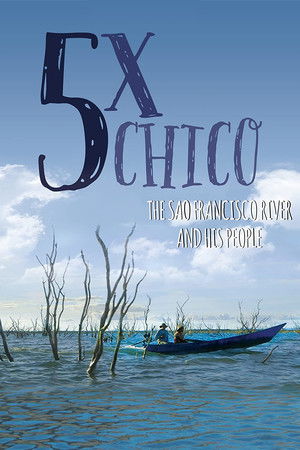
A black and white film about the people who live near one of the world’s largest hydroelectric plants in Amazonia. In the shadow of this environmentally destructive project, they eke out involuntarily meagre lives, without electricity or infrastructure.
Follows Martin Strel as he attempts to cover 3,375 miles of the Amazon River in what is being billed as the world's longest swim.
Set in Nagaland, the film hopes to find resonance in other geo-political locations of the world where people living on the margins are challenged by the seemingly inevitable phenomenon of modernization. The film follows Zarenthung, a first generation fisherman as he navigates his new profession as the reality around him is changing.
For the past ten years, Jürgen Henn has filmed over-height trucks crashing into the 11foot8 train bridge affectionately nicknamed the "Can Opener." In that time, millions have viewed the crashes online. Regional, national, and international news organizations have dined out on the story and the goofy crash reels. But why do motorists continue to crash despite the many warnings, sensors, and signs? And what is it about these crashes that holds our attention? In this piece, we look for the humanity in human error.
Documentary about the degraded rivers of Canterbury, New Zealand.
A meditative observation of the poetry present in the world of Pedrito, an elderly man of the mountains and relic of a time that no longer exists, while he comes to an understanding of his physical mortality and becomes aware of his spiritual immortality.
This movie shows Biebrza Valley's wildlife during the four seasons of the year. Spectacular wildlife images, exceptional sounds of nature and specially composed music make this poetic story about the lives of rare European animals come to life. Is Biebrza the European Amazon river?
In the heart of New York City stands Grand Central Terminal. Explore the magnificent secrets of this iconic landmark as we take you inside the heart, soul and amazing engineering of this superstructure. From railroad cars to rush hours, we unlock the colorful tales of its past, present and future.
Tackling colossal waterfalls in Gabon, kayakers Adrian Mattern, Dane Jackson, Bren Orton and Kalob Grady's story of high-stakes adventure reveals the gritty reality behind the veneer of social media.
ATUEL is the story of a community and its river; of a river and its community. Everyone in the province of Mendoza, Argentina, lives in one of three oases. The southern oasis, home to the cities of San Rafael and General Alvear, depends primarily on The Atuel River. Yet incredulously, the river remains under threat. People cannot care for what they don’t know and so we decided to ask the river what story it would like to tell about itself. To do so, we travelled its entire length from its source in the heart of The Andes to where it dries out prematurely in the sands of The Cuyo Desert. We’re told we are the first to do so since 1884 and the first ever to do so by boat. 43 days. 480 kilometres. 38 people interviewed about their relationship with the river.
Legendary kayaker Scott Lindgren attempts to complete an extreme, unprecedented whitewater expedition 20-years-in-the-making. When a brain tumor derails his goals, he sinks into the darkness of his own trauma only to discover that healing, like any expedition, is not a destination but a journey.
Documentary about the development of the Boeing 747 jumbo jet. The 747 was a game changer, the airliner that revolutionised mass, cheap air travel. But the first wide-bodied plane was originally intended as a stopgap to Boeing's now-abandoned supersonic jet. This is the remarkable untold story of the jumbo, a billion-dollar gamble that pushed 1960s technology to the limits to create one of the world's most recognisable planes.
A journey that follows the Ganges from its source deep within the Himalayas through to the fertile Bengal delta, exploring the natural and spiritual worlds of this sacred river.
Pstruh a živočichové pstruhového pásma
Ukryté v lese, schované v tŕstí
The world-famous Greyhound bus is almost as old as the Wild West. It is a symbol of North America, of progress, and of nostalgia. Reporter Studs Terkel travelled 2,000 miles across the United States by Greyhound. From Seattle to Chicago, he observes his fellow-passengers. He meets a number of travelers who appear to be very interesting people: a Native American boxer on his way to his birthplace in Montana, a bar owner who was a bank robber in a former 'career', a 99 year old woman who is still running a busy hotel, and, of course, a pedigree cowboy. The spectator of this film listens to their personal stories, watches the beautiful scenery, and is treated to famous feature film fragments in which the Greyhound bus plays a part. Seven states and two time zones later, he is back in his cinema seat.
On November 25, 1973, the first of four car-free Sundays transformed West Germany's deserted highways into spaces for walking, cycling, and horse-drawn carriages, while towns and cities took on a festive atmosphere. Introduced during the oil crisis to conserve fuel after the Arab oil embargo and production cuts following the Yom Kippur War, the measure became an unforgettable collective experience. Beyond the immediate energy shortage, the crisis marked a turning point, ending the postwar economic boom and encouraging greater awareness of energy use, consumerism, and environmental issues.
A day-to-day record of the construction of the Confederation Bridge linking Prince Edward Island to the mainland, Abegweit reveals some of the innovations that made this mammoth project one of the most impressive engineering feats in Canadian history.
People have always wanted to reach the horizon and go beyond it. It wasn't and isn't just about discovering for the sake of discovering. Exotic goods, wealth and power were the driving forces of these people. The steamship ultimately brought the breakthrough for global mobility and trade. In the past, as now, shipping is the engine of globalization.