The political upheaval in North Africa is responsibility of the Western powers —especially of the United States and France— due to the exercise of a foreign policy based on practical and economic interests instead of ethical and theoretical principles, essential for their international politic strategies, which have generated a great instability that causes chaos and violence, as occurs in Western Sahara, the last African colony according to the UN, a region on the brink of war.
Forty years after its people were promised freedom by departing Spanish rulers, Western Sahara remains Africa's last colony. This film chronicles the everyday violence experienced by Sahrawis living under Moroccan occupation and voices the aspirations of a desert people for whom the era of colonialist never ended.
This film offers a picture of the tense situation in which the Sahrawi people have lived for more than 30 years. The yearly celebration of a marathon in the Sahrawi refugee camps serves as the central focus of the story.
The Runner is a film about endurance. It is the story of a champion long-distance runner whose journey transformed him from an athlete into the symbol of a national liberation movement. Salah Hmatou Ameidan is willing to risk his life, his career, his family and his nationality to run for a country that doesn't exist. He is from Western Sahara, officially Africa's last colony and under Moroccan occupation since 1975.
It describes the way of life of the Sahara people in the Western Sahara Desert, in particular it tells the story of a child bitten by a snake.
In this exclusive broadcast, Democracy Now! breaks the media blockade and goes to occupied Western Sahara in the northwest of Africa to document the decades-long Sahrawi struggle for freedom and Morocco's violent crackdown. Morocco has occupied the territory since 1975 in defiance of the United Nations and the international community. Thousands have been tortured, imprisoned, killed and disappeared while resisting the Moroccan occupation. A 1,700-mile wall divides Sahrawis who remain under occupation from those who fled into exile. The international media has largely ignored the occupation—in part because Morocco has routinely blocked journalists from entering Western Sahara. But in late 2016 Democracy Now! managed to get into the Western Saharan city of Laayoune, becoming the first international news team to report from the occupied territory in years.
Mektub portrays a day in the life in the Sahrawi refugee camps, along with the declarations of some of its protagonists. But behind this seemingly calm life hides a common fight, which is to continue fighting and protesting to accomplish the single common goal that all Sahrawis have as a nation: to take back the occupied land, rebuild their country, and reunite with their families.
Two women of different generations struggle for survival, happiness, and freedom in barren desert refugee camps. Here, the displaced people of Western Sahara have rebuilt life after fleeing from Morocco's brutal occupation from their homeland, and continue to cry out for justice. Najla and Agaila's different relationships to their cause reflect their personal narratives, revealed and explored with an intimate approach.
Refugees in Algeria since 1975, the Saharawi have had to forge another life path, fighting to return home. Their children, a generation born in exile to parents born in exile, tell the story and struggle of their people, the Saharawi, through their dreams, hopes, and strength.
Filmed in the camps of Sahrawi refugees living in West-Algeria and Tifaritti (the liberated territory). The narrator, in his multiple interviews, examines the reality of these people who have been condemned to silence in exile. This is a direct and concise documentary that gives the refugees the opportunity to express themselves, as well as hearing from other people implicated in the conflict.
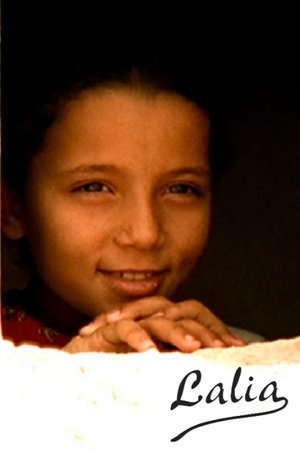
Lalia is a Saharaui girl who lives in a refugee camp in Algiers. She has only heard her grandmother and grandfather talk about her country, about the Sahara, that was taken away by Morroco. She dreams of one day seeing the ocean, seeing her real country. The reality she lives in is different... the uncertainty of the refugee camps, the political unbalance... but she is strong... and she knows that there can be change... she won't stop dreaming, and she won't stop longing..
In April 2007, during the celebration of FiSahara, three friends embarked on the adventure of teaching a photography course in the Dajla refugee camp in Algeria.
It happens in Ecuador and South Korea, in Italy, in Venezuela and also in Western Sahara. Three men and two women live every day acting against the global corporate order. Their actions are the voices of others, of individuals, of crowds, of many. Those who seek another world.
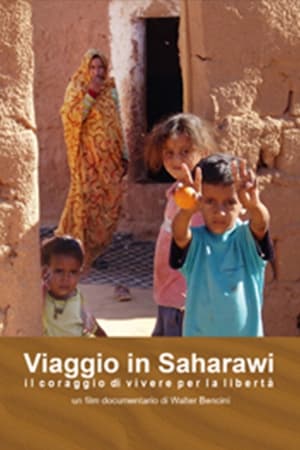
In the stunning and starkly beautiful landscape of Western Sahara, Walter Bencini recounts his journey to meet the Saharawi people, uprooted from their lands for decades and confined to desert tent camps named after the Moroccan cities where they once lived. It's the solidarity journey of a group of people from Valdarno, delivering the money and medicines raised through various initiatives directly into the hands of the beneficiaries.
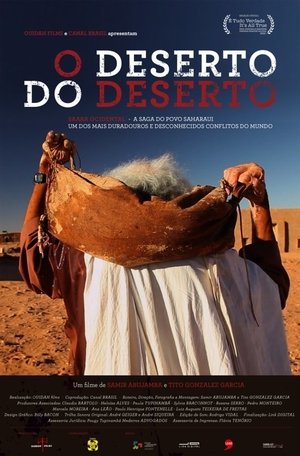
'The Desert of the Desert' is a feature documentary about one of the longest-running and least- known colonial conflicts and the plight of the Sahrawi desert nomads of Western Sahara since Morocco's 1975 invasion. Shot in Jan./Feb. 2014 in the Saharawi Liberated Territories of Western Sahara, and in the Saharawi Refugee Camps in Tindouf, Algeria, the film shows the saga of the Sahrawis, their struggle to regain their homeland and the sad paradox of a nomadic people forced to live in confinement. During production, the crew made a rare treck through 3,000 kilometers of bleak and dangerous desert, becoming unwitting participants in the conflict when their jeep was blown up by an anti-tank mine less than a kilometer from their destination on Western Sahara's Atlantic coast.
Spanish actor Pepe Viyuela embarks on a personal journey on the trail of his grandfather Gervasio, a soldier in the Republican Army during the Spanish Civil War.
The Algerian region of Tindouf is home to more than 170,000 Sahrawis, who have been living in refugee camps since 1976, when Morocco occupied the Western Sahara region. In a place of inhospitable conditions and scarcity, the Sahrawi population lives on dwindling humanitarian aid. Six percent of them face the added difficulty of coeliac disease.
Women are the protagonists of this documentary. Girls and women of varied ages tell us the difficulties of living their whole lives in refuge and their desires for the future.
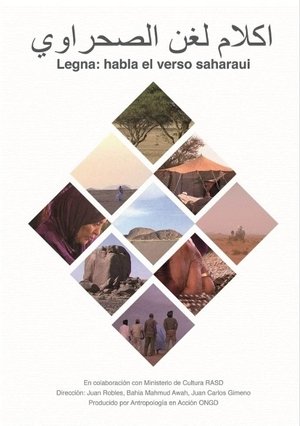
The Sahara has been and is populated by peoples who have passed through and occupied it since time immemorial. The Sahrawis are one of these peoples. When Spain withdrew from its colony in 1976, Morocco invaded. Thousands have had to leave their lands to seek refuge in camps in the Sahara, in neighboring Algeria, and thousands have had to migrate to Spain and other destinations outside the Sahara. And it is the women who built the camps while the men fought, and it is they who have increasingly gained social, cultural, and political influence in the territory and in the diaspora. This is their history and their reality.
Art and culture as a fight against injustice and oblivion. The Saharawi people, with creative processes, claim their right to the land from which they were expelled. A different look at the figure of the Sahrawi refugee who claims dignity and consideration.