The World's Biggest and Baddest Bugs, follows host Ruud Kleinpaste, as he embarks on an entomological odyssey around the globe in search of the ultimate biggest and "baddest" creepy crawlies. The World's Biggest and Baddest Bugs will then profile the "stars" of the show, with Ruud explaining in his audience-friendly style exactly what makes them so amazing.
Saving endangered species in Australia's Kimberley region.
The story of a family of meerkats living in the Kalahari Desert in South Africa.
A unique story on the discovery of a 40-thousand-year-old, perfectly preserved baby woolly mammoth. Cutting edge science and Arctic adventure come alive in this story of a unique discovery: a perfectly preserved baby woolly mammoth that suddenly appears on a Siberian riverbank, triggering an extraordinary investigation into her life and death at the end of the Ice Age. Solving the mystery of her origins unites men whose lives are worlds apart except for their link to the woolly mammoth.
Klappern gehört zum Geschäft: Europas größtes Storchendorf
The mysterious jungles of Thailand are home to some of the rarest wild cats on earth - the Clouded Leopard, The Asian Leopard, The Indian Fishing Cat and the Indo Chinese Tiger. In one of the last truly wild corners of the world this extraordinary collection of secretive predators defend their last remaining stronghold. As their territories intertwine and continuously shift, these cats must cheat death on a daily basis if they are to survive and thrive out in these tangled lands
On the harsh and unforgiving plains of central Namibia, Africa, a young honey badger named Grit has just left home to venture out in the great, wide world, but it won't be easy. Fewer than half of all young honey badgers survive their first few weeks on their own, as they deal with intense heat, starvation, and round-the-clock threats from the many predators of the savannah.
From prehistoric times to our technologically accelerated present, this exciting and entertaining journey through time explores the thousands of ways in which mankind has perceived, measured and passed time over the course of its history.
Narrated by Oscar-nominated actress Emily Watson, MEERKATS 3D takes audiences on a journey with a family of meerkats as they cope with the twists and turns of life in the Kalahari Desert. The film begins as matriarch Klinky’s most recent litter emerges from the burrow for the first time. Klinky and her family, including elder children and regular babysitters Ms. Bean and Harry, must endure turf wars from rival families, attacks from vicious predators big and small and internal family turmoil. The survival of this clan hinges on the meerkat golden rule: Stick together, and keep calling.
When National Geographic photographer James Balog asked, “How can one take a picture of climate change?” his attention was immediately drawn to ice. Soon he was asked to do a cover story on glaciers that became the most popular and well-read piece in the magazine during the last five years. But for Balog, that story marked the beginning of a much larger and longer-term project that would reach epic proportions.
An exploration of the diversity of moths and butterflies from caterpillars to larvae to chrysalis to winged flight. The documentary covers camouflage and other anti-predatory tactics along with uniqueness of different species and amazing feats and colors.
The squirrel family is one of the most widespread on earth, so what is the secret to their success? There are squirrels that can glide through the air, outwit rattlesnakes and survive the coldest temperatures of any mammal. We uncover the extraordinary abilities of these cheeky characters, putting their problem solving to the test on a specially designed assault course. We team up with some of the world's top squirrel scientists who are making groundbreaking discoveries - from the fox squirrel who can remember the location of 9,000 nuts to the grey squirrel whose tree-top leaps are the basis of new designs in robotics. We also see the world through the eyes of an orphan red squirrel called Billy, as he grows up and develops all the skills he will need to be released back to the wild. It is time to meet the animal family we should never underestimate - the supersquirrels.
A professor develops an extraordinary relationship with an octopus when he invites it to live in his home. The octopus, called Heidi, unravels puzzles, recognises individual humans and even watches TV with the family. The episode also shows remarkable behaviour from around the world - from the day octopus, which can change colour and texture in a split second, to the coconut octopus, which carries around its own coconut shell to hide in. But most fascinating of all is seeing how Professor David Scheel and his daughter Laurel bond with an animal that has nine brains, three hearts and blue blood running through its veins.
For fifteen million years orangutans roamed tropical forests from China to South East Asia. In Borneo, one of their last island outposts, lives one today who is a legend. He's won more than just a kingdom, he's won human hearts. They gave him the name Kusasi. The Orangutan King is the story of Kusasi's life told to us by a remarkable witness. Dr Birute M. Galdikas has been researching orangutans in Borneo for over 40 years. Now, for the first time, Dr Galdikas will draw audiences deep into the orangutan universe. With enthusiasm and insight she tells us this special story - taking us back 30 years and unfolding Kusasi's story with detail, energy, and the wonder that she still feels for the orangutan species. As a three year old orphan, Kusasi fell under the care of Galdikas in her forest research camp. But driven by a cunning and tenacious spirit Kusasi did not behave as the other ex-captive infants.
The critically important work by renowned naturalist Claudine Andre to save the endangered bonobo apes of the Congo is presented in this visually stunning feature film.
In 200,000 years of existence, man has upset the balance on which the Earth had lived for 4 billion years. Global warming, resource depletion, species extinction: man has endangered his own home. But it is too late to be pessimistic: humanity has barely ten years left to reverse the trend, become aware of its excessive exploitation of the Earth's riches, and change its consumption pattern.
The Serengeti is Africa's largest nature reserve and one of its most notable inhabitants is the cheetah, also called cheetah. A young cheetah tells of his carefree childhood on the Serengeti Plain in Tanzania, thanks to his wonderful mother. She takes care of food on the shelf and with her he and his brothers and sister have nothing to fear. Lesson one: tripping the calf, lesson two: choking and biting to death, lesson three: Catching a calf yourself. Mother cheeta allows her boy to practice on a gazelle calf she has caught for them. One day, the young cheetahs will have to hunt themselves. Without Mommy's help.
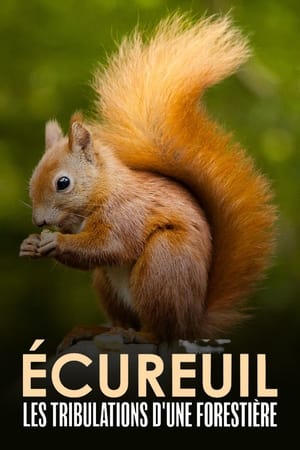
Observe red squirrels in their home environment high up in the treetops as they engage in lovable antics, hide from predators and battle for food.
Exploring the large and powerful anaconda in remote parts of the Amazon rainforest.
For the last decade, a team of frontline medics has been fighting to save Borneo's critically endangered orangutans. Armed with cameras, International Animal Rescue has documented their struggle: pulling apes from devastated jungle, giving emergency medical care, rehabilitating and releasing the healthiest orangutans back into the wild. This is both the story of their life-saving work and of how one of our closest wild relatives has been pushed to the brink of extinction. Combining genuine rescue footage with contributions from experts throughout, this documentary looks toward the future and asks what hope remains to save the orangutan.