On April 30, 1945, while the Russian Army surrounded Berlin, Hitler committed suicide in his bunker. His body was discovered a few days later by the Soviets. He would be positively identified after a top secret inquest in which Hitler's personal dentist would play a central role. And yet, at the same time, Stalin publicly declared that his army was unable to find the Führer's body, choosing to let the wildest rumors develop and going so far as to accuse some of his Allies of having aided the monster's probable escape. What secrets were hidden behind this dissimulation? What happened then to the two ladies involved in the identification of Hitler’s body?
This video invites you inside the U-505 submarine, the actual craft that stalked the waters of the Atlantic before it was blown to the surface and captured on June 4, 1944. This immersive video reveals the technology and life aboard this sub in the days leading up to her capture. Among the many highlights, you’ll see crewmen bunks and the galley, wedged in among the mechanical workings of the sub.
In 1900, the eyes of the whole world are on Paris. The World's Fair welcomed 50 million amazed visitors, and the city celebrated itself in a glamorous era. This period went down in history as the "Belle Époque." Elaborately restored and colorized historical photographs bring to life the exciting life in Paris between the end of the 19th century and the beginning of World War I in 1914. Bicycles, cars, airplanes, moving pictures, newly founded film studios, revolutionary composers and painters, avant-garde ballet performances, fashion houses, summer resorts on the Atlantic coast – life was intoxicating. People celebrate in the variety shows, cabarets, and revue theaters of Paris. Moulin Rouge, Folies Bergères, Bal Tabarin—in Paris, the nights are long and life is too short to sleep through. It is a dance on the volcano, given the political developments in the world.
A documentary focusing on American conscientious objectors during WWII.
The Polish city of Łódź was under Nazi occupation for nearly the entirety of WWII. The segregation of the Jewish population into the ghetto, and the subsequent horrors are vividly chronicled via newsreels and photographs. The narration is taken almost entirely from journals and diaries of those who lived–and died–through the course of the occupation, with the number of different narrators diminishing as the film progresses, symbolic of the death of each narrator.
40 Jours d'errance : La Traversée du Saint-Louis
In 1609, Henry IV sent Inquisition judge Pierre de Lancre to the French Basque Country to investigate witchcraft. In the trials, 80 people were sentenced to death at the stake. Between the 15th and 17th centuries, a total of between 40,000 and 60,000 people fell victim to such waves of persecution in Europe. How can this phenomenon be explained?
During the Spanish Civil War (1936-1939) and the Second World War (1939-1945), around three thousand people managed to elude their pursuers, and probably also avoided being killed, thanks to the heroic and very efficient efforts of the Ponzán Team, a brave group of people — mountain guides, forgers, safe house keepers and many others —, led by Francisco Ponzán Vidal, who managed to save their lives, both on one side and the other of the border between Spain and France.
A remarkable film that takes a special look at the first war to be truly reported and recorded by one of the more unsung heroes of World War II: the combat photographer. Through the unflinching eye of their camera's lenses, these courageous soldiers continually risked their lives in their brave attempts to capture history.
After the World War I, Mussolini's perspective on life is severely altered; once a willful socialist reformer, now obsessed with the idea of power, he founds the National Fascist Party in 1921 and assumes political power in 1922, becoming the Duce, dictator of Italy. His success encourages Hitler to take power in Germany in 1933, opening the dark road to World War II. (Originally released as a two-part miniseries. Includes colorized archival footage.)
A captivating and personal detective story that uncovers the truth behind the childhood of Michaël Prazan's father, who escaped from Nazi-occupied France in 1942 thanks to the efforts of a female smuggler with mysterious motivations.
In 1939, just finished the Spanish Civil War, Spanish republican photographer Francesc Boix escapes from Spain; but is captured by the Nazis in 1940 and imprisoned in the Mauthausen concentration camp, in Austria, a year later. There, he works as a prisoner in the SS Photographic Service, hiding, between 1943 and 1945, around 20,000 negatives that later will be presented as evidence during several trials conducted against Nazi war criminals after World War II.
The film returns to the origins of the creation of the State of Israel (from 1896 to 1948) and highlights the responsibility of the Western World.
A tribute to the cameramen of the newsreel companies and the service film units, in the form of a compilation of film of the cameramen themselves, their training and some of their most dramatic film.
Cinecitta is today known as the center of the Italian film industry. But there is a dark past. The film city was solemnly inaugurated in 1937 by Mussolini. Here, propaganda films would be produced to strengthen the dictator's position.
The greatest secret of the Second World War has remained a mystery for the last 80 years: a Jewish Communist, Sandor Rado, led a spy network that proved essential to the victory of Allied Forces. Rado received details of strictly confidential strategies from the highest echelons of the Nazi State through Rudolf Roessler, a dedicated anti-Nazi he'd only known as code name "Lucy." Aided by key German industry leaders, Roessler transmitted timely information from high-ranking collaborators within the German army headquarters. Despite their achievement, Rado, Roessler and their sources remained unacknowledged heroes until today. Thanks to the recent declassification of secret archives, we are now able to step behind the scenes of this incredible story.
Produced by the Army Pictorial Service, Signal Corps, with the cooperation of the Army Air Forces and the United States Navy, and released by Warner Bros. for the War Activities Committee shortly after the surrender of Japan. Follow General Douglas MacArthur and his men from their exile from the Philippines in early 1942, through the signing of the instrument of surrender on the USS Missouri on September 1, 1945. Preserved by the Academy Film Archive in 2013.
During the Second World War, women were for the first time allowed to work as war correspondents. Based on reports, letters and diary excerpts, filmmaker Luzia Schmid sketches a personal portrait of three fearless women and their unique attempts to report on the war.
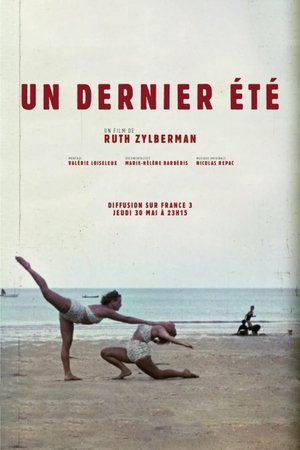
Gustave Folcher, a French farmer, wrote in his 1939 diary that the summer had been long and hot. He was not alone. Many other anonymous French men and women wrote of the beauty and warmth of those summer months and how threats of war were far from their minds. Through home movies, diaries and letters, One Last Summer describes the final weeks of peace in France and the mix of blindness, denial and prophetic clear-sightedness of those facing the war that was about to unfold.
This short documentary depicts the search, discovery and authentication of the only known Norse settlement in North America - Vinland the Good. Mentioned in Icelandic manuscripts and speculated about for over two centuries, Vinland is known as "the place where the wild grapes grow" and was thought to be on the eastern coast between Virginia and Newfoundland. In 1960 a curious group of house mounds was uncovered at l'Anse aux Meadows in northern Newfoundland by Drs. Helge Ingstad and Anne Stine Ingstad of Norway. Added to the United Nations World Heritage List, l'Anse aux Meadows is considered one of the most important archaeological sites in the world.