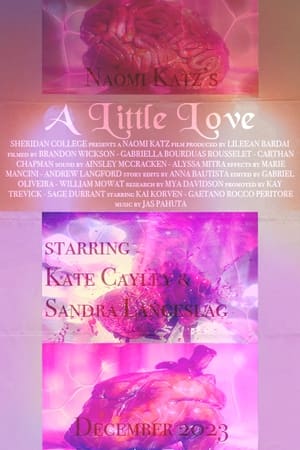
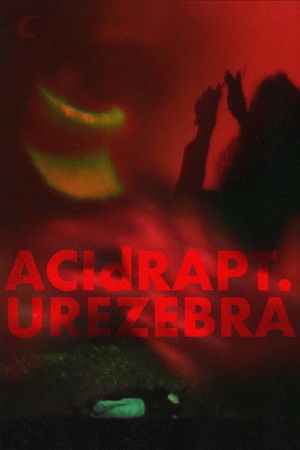
A tactile exploration of the inherent duality of violence and sensuality in nature.
Íris
Mel Schwartz escaped the Great Depression on a bicycle adventure he'd remember for the rest of his life... until Mel lost his memory to Alzheimer's. Now over seventy-five years later, his grandchildren set out to recreate his life-changing journey and find those memories before they slip away. Cycle of Memory explores the importance of intergenerational connection, healing painful pasts, and leaving a meaningful time capsule for the future.
When two siblings undertake an archaeological excavation of their late grandmother’s house, they embark on a magical-realist journey from her home in New Jersey to ancient Rome, from fashion to physics, in search of what life remains in the objects we leave behind.
La France de l'épuration, entre vengeance et justice
The city and its parking lots.
"Surrounded by dozens of soldiers like me, I was led by bus to a remote camp in the desert, a place I knew nothing about. As a military photographer, I collected fragments of moments in my photos, serving as solid evidence for me." Shivtown is the story of an ordinary soldier who, in an intimate and courageous act, revisits memories from his military service through the still images he captured with an analog camera.
From the segregated American South to the fashion capitals of the world, operatic fashion editor André Leon Talley's life and career are on full display, in a poignant portrait that includes appearances by Anna Wintour, Marc Jacobs, Tom Ford, Bethann Hardison, Valentino, and Manolo Blahnik.
Unfolding in a series of eight vignettes, Sound Spring explores the history ofYellow Springs, Ohio over hundreds of years, as narrated by its residents incomical scenes: one interviewee rollerblades and reads the village's water meters, another stands on his head in a breakdancing freeze. The villagers describe American history-their ancestors' settlements after slavery, a friendship with Coretta Scott King, and Ohio's Trail of Tears- among other more personal details of village life. The wording of their recollections is imperfect, unsure-in fact they are all re-stagings of their previous audio interviews. Through performing their own previously recorded media, villagers uncover layers of time and storytelling.
A young woman, who has inherited her grandparents' huge house, a fascinating place full of amazing objects, feels overwhelmed by the weight of memories and her new responsibilities. Fortunately, the former inhabitants of the house soon come to her aid. (An account of the life and work of Fernando Fernán Gómez [1921-2007] and his wife Emma Cohen [1946-2016], two singular artists and fundamental figures of contemporary Spanish culture.)
Literary icon Joan Didion reflects on her remarkable career and personal struggles in this intimate documentary directed by her nephew, Griffin Dunne.
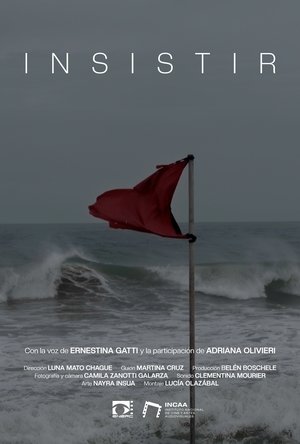
After a premonition of an unusual bird, a father loses his voice. His daughter undertakes a search to rediscover him, through an intimate narrative that explores the past, the new facets and the silences of a man who is no longer the same.
Maccaia
Brouillards
X-ray images were invented in 1895, the same year in which the Lumière brothers presented their respective invention in what today is considered to be the first cinema screening. Thus, both cinema and radiography fall within the scopic regime inaugurated by modernity. The use of X-rays on two sculptures from the Bilbao Fine Arts Museum generates images that reveal certain elements of them that would otherwise be invisible to our eyes. These images, despite being generally created for technical or scientific purposes, seem to produce a certain form of 'photogénie': they lend the radiographed objects a new appearance that lies somewhere between the material and the ethereal, endowing them with a vaporous and spectral quality. It is not by chance that physics and phantasmagoria share the term 'spectrum' in their vocabulary.
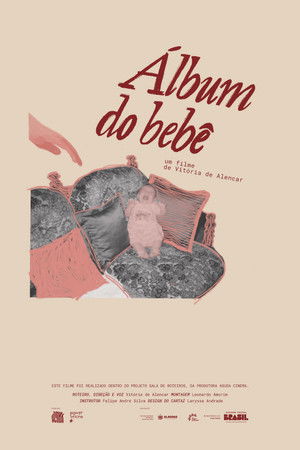
A manufactured memory.
Ergui as Mãos aos Céus e Não Havia Mais Luz
A Jupatarama
A compilation of interviews, rehearsals and backstage footage of Michael Jackson as he prepared for his series of sold-out shows in London.
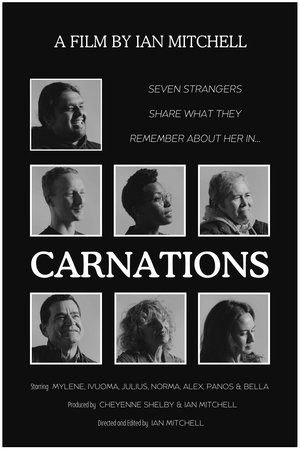
A film essay that intertwines the director's gaze with that of her late mother. Beyond exploring mourning and absence as exclusively painful experiences, the film pays tribute to her mother through memories embodied by places and objects that evidence the traces of her existence. The filmmaker asks herself: What does she owe her mother for who she is and how she films? To what extent does her film belong to her?