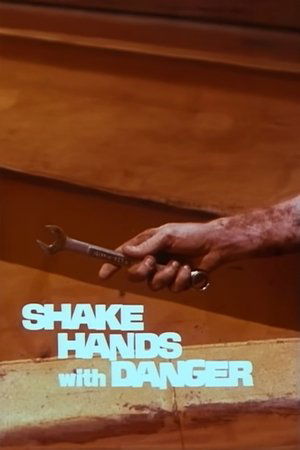
This short cautionary training film examines dangers associated with earthmoving equipment operation, showing many simulated accidents on construction sites.
A 1981 educational film about the perils of school bus drivers having a bad attitude while on the job. Follow Barbara, a model employee... until she developed a bad attitude and let it effect her job performance.
POLICE OFFICER JIM BYRNE, Canada's most honoured Safety Education Specialist brings you his famous TEN RULES, with which he has personally tested more than 25,000 students. Learn key strategies now taught in many schools and used by police working with the full NEVER BE A VICTIM Institutional Study Program. Develop your own personal streetproofing skills so you can train and test your family. Robert Gordon, who created this remarkable program in partnership with Metropolitan Police introduces this family video library against a backdrop of today's troubled society. TEACHING LIFE SKILLS FOR A SAFER COMMUNITY OFFICER JIM'S TEN RULES FOR STREETPROOFING • STRANGER MYTHS • ABDUCTION • BEING FOLLOWED • DANGEROUS PLACES • AVOIDING CARS AND VANS • GOOD TOUCHING-BAD TOUCHING
A short film warning the unaware housewife of the dangers of “dry cleaning” with gasoline at home.
The recent heavy workload faced by Teton County Search and Rescue crews last winter highlights the fact that some recreational users of the Bridger Teton National Forest are in critical need of more and better information regarding best practices and safe conduct on National Forest lands. Many of these incidents could potentially be avoided with proper planning and critical thinking in the backcountry. In partnership with Friends of Bridger-Teton, TGR presents Backcountry Responsibly, a digital film targeted at the growing number of winter backcountry users whose impact on the surrounding public lands has increased dramatically in recent years. Backcountry Responsibly, premieres January 7, 2024. Watch online at: https://www.btfriends.org/tgr
Seniors are amongst the most vulnerable members of society. This educational video will teach them techniques to defend themselves from thieves and attackers.
Discusses the effects of alcohol on the brain and behavior, particularly in relation to driving. It explains how alcohol impairs judgment, perception, coordination, and vital functions by affecting different brain regions. Factors influencing blood alcohol concentration (BAC) include the amount consumed, body size, sex, and the rate of consumption. The video also debunks myths about sobering up and emphasizes the importance of allowing time for alcohol to metabolize before driving. Even at BAC levels considered legally impaired, individuals may not recognize their diminished capabilities.
Discusses the dangers of accidental poisoning, particularly in children, due to household substances like cleaners and medications. It emphasizes the importance of identifying the product involved in the poisoning, recognizing symptoms, and taking immediate action. Key steps include diluting the poison with milk or water, calling for medical assistance, and bringing the poison container to the hospital. The document also highlights the risks of drug misuse and inhalation of toxic fumes, urging quick responses to emergencies.
The 23rd issue of the long running industry cinemagazine. Features the articles: 'Safety First', 'Paying For It' and ' A Star Drops In'.
Learn about bicycle safety with host Bill Cosby.
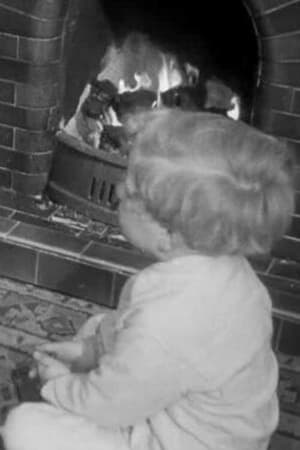
You're asking for trouble when you play with fire - and this public information film is the stuff of nightmares.
Produced by the Highway Safety Foundation in 1964, this shocking film deals with a subject quite taboo for its time. The short serves as a dramatized warning, ending with graphic case studies.
Enxame
Short film that emphasizes the importance of keeping a tidy home when facing an atomic bomb.
The results of serious traffic accidents caused by careless driving are displayed. One of several Driver's Education films produced by Highway Safety Films, filmed at actual auto accident scenes and consisting largely of color closeups of mangled accident victims.
This late 1940s/early 1950s rather graphic color film about carelessness and safety operating heavy machinery is presented by Caterpillar.
An educational short made by the New Zealand National Film Unit for the National Mountain Safety Council to promote awareness of bush safety.
A more experimental aproach to labor protection films. In the line of Săucan's style, the soundtrack is as important as the image, the threatening music, full of shrillness, composed by Ion Dumitrescu potentiating the visual construction that mixes - in a montage reminiscent of the Soviet avant-garde school of the 1920s - all kinds of shooting techniques and frame combinations.
The Defense Civil Preparedness Agency began an informational campaign in 1972 called Your Chance to Live. As part of the campaign, a series of films was released along with a companion book. Each installment covers a different disaster scenario, including tornadoes, blizzards, earthquakes, forest fires, blackouts and a nuclear disaster. The California Department of Education helped produce the films and hosted a workshop of educational professionals to discuss the best ways to present the desired emergency preparedness information to school age audiences. The process was filmed and assembled, along with clips from each production, and distributed as an Instructor's Guide in 1975.
Coast Guard film about the importance of life jackets. Stresses safety in boating and shows how boating accidents can happen.