He was the most prolific within the New Portuguese Cinema generation. He would try western spaghetti, esoteric allegory, supernatural, and science-fiction. Without state subsidies, he would quit filmmaking in the 1990s. Who remembers António de Macedo?
Chinese-Australian artist Jiawei Shen's plans to create an epic work depicting his homeland's tumultuous recent history.
The Journey of a young man who is making a documentary about forgotten narratives around an old piano, takes him through an unknown path towards restoring history, culture and identity of his homeland, Iran, in dusty and abandoned objects.
Regresso à casa de partida antes que a partida seja definitiva
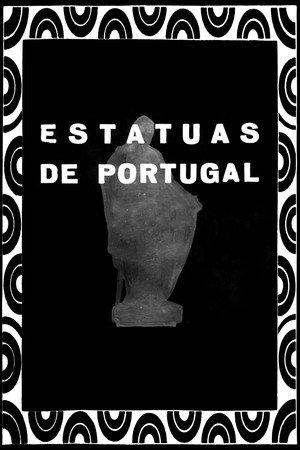
A showcase of bullfighting in Portugal, explaining how the country's version of the sport differs from those in Spain and Latin America and helps define the national character. After showing the training techniques for the bulls and horses, a bullfight is presented.
Documentary covering the current state of both the theoretical and practical development of the various scientific basic principles that served, as per Gene Roddenberry's dictum, as a believable basis at the time for The Original Series. Several real-world scientists are interviewed, not a few of them unabashedly admitting they went into their chosen field of profession because of Star Trek: The Original Series.
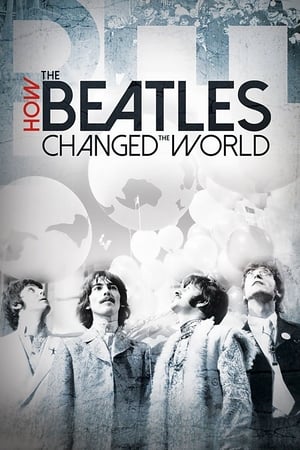
The rock-wild youth of the 1960s during the apparitions of their idols.
A documentary that brings together interviews with 20 activists who address the issue of intersectional feminism and patriarchy in Portugal.
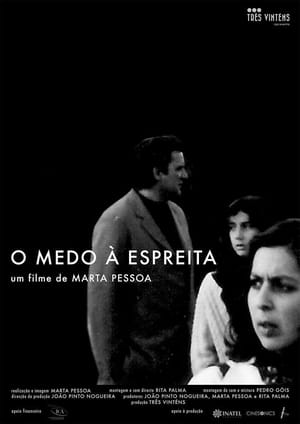
Três Realizadoras Portuguesas
"O Regresso" is a documentary featuring renowned Portuguese actor Ruy de Carvalho as he returns to Macau after a 10-year absence. Directed to mark the 10th anniversary of his visit, the film captures Ruy de Carvalho revisiting key locations across the city, reflecting on the cultural and social transformations that Macau underwent in the lead-up to its handover from Portuguese to Chinese administration in 1999. Blending personal memories with the evolving landscape, the documentary offers a nostalgic look at Macau's unique blend of Portuguese and Chinese heritage, seen through the eyes of one of Portugal’s most beloved actors.
A behind-the-scenes look at "Viagens", one of the greatest portuguese records of the 1990s, in the year of its 20th anniversary.
Three juxtaposing stories taking place in Portugal, Austria and Cuba create an intimate and poetic portrait of the daily lives and struggles of the elderly in an unstable world, seen through the eyes of their grandchildren.
A group of elders spends their weekdays in a retirement home in Sandim, in the north of Portugal, where they talk, do arts and crafts, practice yoga and pray. We follow them between October 2012 and March 2013, when an economic crisis overshadowed Portuguese society and unemployment rates reached record levels. Meanwhile, arrangements are made for the Carnival ball. Will they bring the first place home this time?
After the Carnation Revolution, Portugal became a democracy and opened itself to the world. One of its consequences was the spread of erotic and pornographic films. This documentary tells the story of how these films arrived at Theatro Gil Vicente, an emblematic cultural venue of Barcelos.
Documentary about the life and work of Mário Eloy, one of the greatest painters of the second generation of modernism in Portugal.
The young Portuguese artist Rafa. is facing a turning point in his career, composing, recording and balancing roots and ambitions as he prepares to leave for Leeds and finalize his first EP.
As the Communist Party of China celebrates its 100th anniversary, this documentary looks back at the party’s history, from the 1920’s, to the Civil War, the Great Leap Forward, the Great Famine, the Cultural Revolution and the reforms by Mao Zedong and Deng Xiaoping. Did the Great Famine cost more than 15 million lives? How does the Cultural Revolution continue to shape Chinese politics today? What was capitalism like after Mao’s death? Through rare and never-before-seen historical footage, expert interviews and eyewitness accounts of the Great Famine, Tiananmen incident, and the Cultural Revolution, get to know how one party has so profoundly shaped China.
After the 1999 premiere of the first Matrix movie, it became a pop culture phenomenon. A special documentary about the Matrix saga and its prophetic aspects.
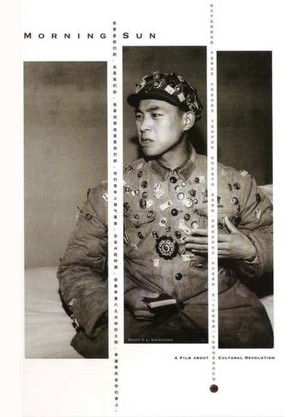
The film Morning Sun attempts in the space of a two-hour documentary film to create an inner history of the Great Proletarian Cultural Revolution (c.1964-1976). It provides a multi-perspective view of a tumultuous period as seen through the eyes—and reflected in the hearts and minds—of members of the high-school generation that was born around the time of the founding of the People’s Republic of China in 1949, and that came of age in the 1960s. Others join them in creating in the film’s conversation about the period and the psycho-emotional topography of high-Maoist China, as well as the enduring legacy of that period.
Nana Xu travels to the place built by her father as a prisoner during the Cultural Revolution: first a work camp, later a prison, fruit farm and treatment centre. Conversations with last remaining witnesses, where home is still shaped by a repressed past.