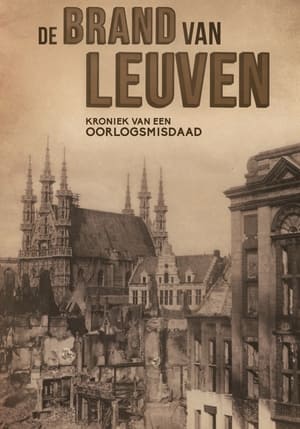
At the end of August 1914 Leuven became the victim of blind rage war. Virtually the entire city center was systematically destroyed by the Germans. War journalist Rudi Vranckx explains what happened.
The old comrades are called up for three weeks of autumn maneuvers. They are usually more interested in beer, girls, and cheerful music, but Sergeant Vældegaard is determined to scrape the civilian rust off the "boys." Their old friends from their days as recruits have remained in the system as platoon leaders and sergeants, respectively, but that does not dampen the fun. In the heat of battle, the schoolteacher finds time to flirt with his Lotte Corps colleague Birthe.
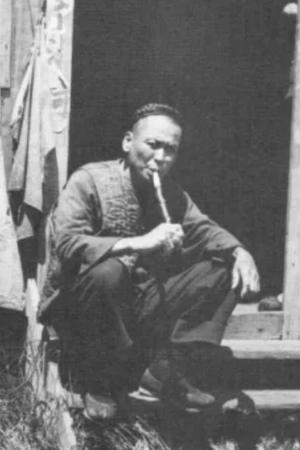
When this propaganda film begins the narrator states that before the beginning of World War II, Japan was the only one of thirty-five nations to refuse to sign an anti-narcotics treaty and alleges that this was because the country's leaders planned to use drugs as a weapon of war.
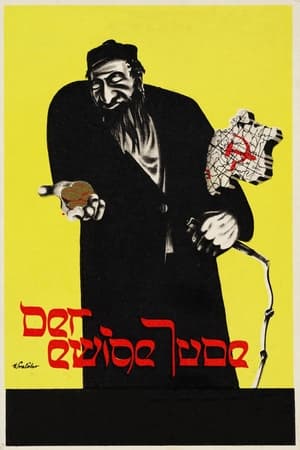
A Nazi propaganda film made to promote anti-Semitism among the German people. Newly-shot footage of Jewish neighborhoods in recently-conquered Poland is combined with preexisting film clips and stills to defame the religion and advance Hitler's slurs that its adherents were plotting to undermine European civilization.
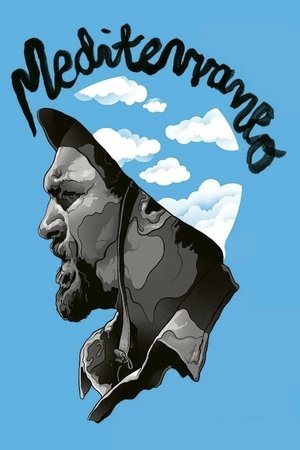
Greek Sea, World War II. An Italian ship leaves a handful of soldiers in a little island; their mission is to spot enemy ships and to hold the island in case of attack. The village of the island seems abandoned and there isn't a single enemy in sight, so the soldiers begin to relax a little. Things change when their ship is hit and destroyed by the enemy, and the soldiers find themselves abandoned there.
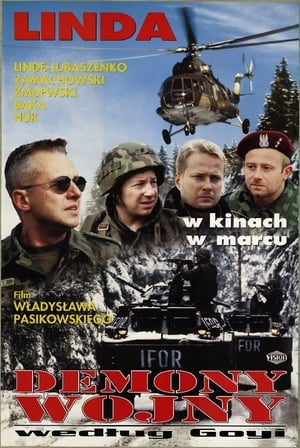
A detachment of the Polish IFOR forces in Bosnia is led by Major Keller, who is being investigated for insubordination during a patrol in Srebrenica. The investigation is to be led by two arriving officers - Lieutenant Czacki and Major Kusz who will also replace Keller as CO. When the camp's RTO receives a communication from a downed Norwegian chopper, Keller ignores his standing orders and leads a platoon to rescue the crew.
Hell on Earth (German: Niemandsland) is a 1931 German film directed by Victor Trivas. The film is also known as No Man's Land in France.
A century ago, from February to December 1916, the French and Germans provided a superhuman effort to control a few hills in eastern France, located in front of Verdun . A frontal confrontation, conducted without the help of their allies, army against army, nation against nation. Today, this battle seems absurd to us. Because it has caused almost as many casualties in each camp and its strategic utility has never really been demonstrated. But in 1916, soldiers on both sides did not consider it absurd: they agreed to fight. Why ? By reliving the rare Herculean confrontation of our ancestors, using reconstructions made in the 1920s, using a large number of animated computer-generated images that recreate the topography of the battlefield, this documentary returns, with the help of the historical adviser Paul Jankowski , on the last great victory won alone by France against Germany.
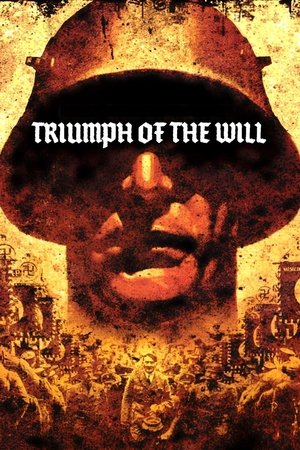
A showcase of German chancellor and Nazi Party leader Adolf Hitler at the 1934 Nuremberg Rally.
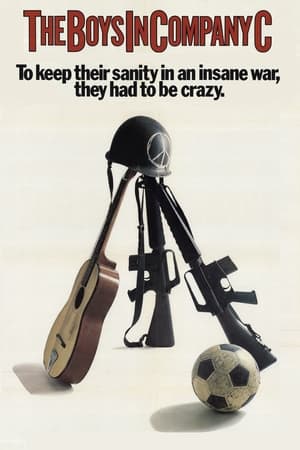
Disheartened by futile combat, appalled by the corruption of their South Vietnamese ally, and constantly endangered by the incompetence of their own company commander, the young men find a possible way out of the war. They are told that if they purposely lose a soccer game against a South Vietnamese team, they can spend the rest of their tour playing exhibition games behind the lines.
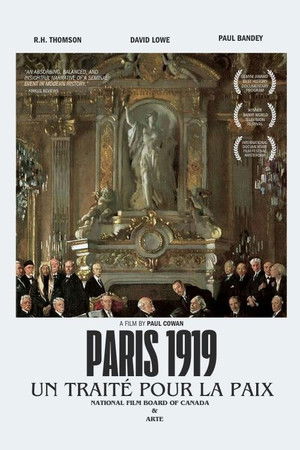
The last shots had been fired in the First World War — but peace had yet to be made. Inspired by Margaret MacMillan’s acclaimed work of popular history, Paris 1919 takes us inside the most ambitious peace talks in history, revisiting the event with a vivid sense of narrative. Evoking a pivotal moment when peace seemed possible, director Paul Cowan reflects upon the hard-learned lessons of history.
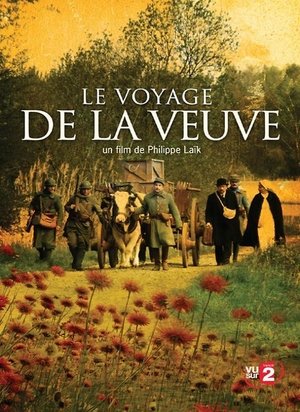
Le Voyage de la veuve
Lieutenant Lukáš was transferred to the marching battalion in České Budějovice together with Švejko. On the way, Švejk makes Lukáš uncomfortable with a bald superior, a passenger in civilian clothes, and then because of pulling the handbrake, he is removed from the train and brought to the station master. The fine for Švejk will be paid by one lucky man, for whom Švejk's stopping of the train catapulted his beloved woman directly into his arms. Švejk goes to Budějovice on foot. His journey is full of humorous incidents. After arriving at the barracks, the regiment with Švejk and Lukáš is soon sent to Hungary, where Lukáš has an adventure with Mrs. Kakonyová. Eventually, the unit including Švejk arrives all the way to the Russian front. (According to the period label.)
Directed by Svatopluk Innemann.
Made by the highly influential Russian cameraman Roman Karmen, this documentary vividly features Albanian life immediately after the communists came to power in 1944. The film is especially memorable since it’s missing much of the heavy socialist realism that marked Albanian doc making. Shortly after he completed the film, Karmen set off for Berlin to shoot the Soviet victory over Nazi Germany.
The story of Viktor Stratoberdha (1921-1991) mirrors many of Albania’s tragedies. Stradoberdha’s humorous, buoyant style led him to be one of the country’s most promising filmmakers. But after being denounced in 1956, he was expelled from the Kinostudio and sent into internal exile. In 1967, Stratoberdha directed a local theater play in which the economic five year plan was placed in a coffin. He was then jailed for the next two decades. Urime Shokë Studentë! is one of the surviving documentaries of Viktor Stratoberdha’s all too short career.
No one knows why for certain, but from 1968 to 1973 communist Albania enjoyed a brief liberalisation in the arts. Banned books and Beatles records changed hands. Albania’s Nobel-nominated novelist Ismail Kadare wrote two of his most famed masterpieces, Kështjella (The Castle) (1970) and Kronikë në gur (Chronicle in Stone) (1971) during this period. The rock'n'roll and jazz arrangements featured in this concert documentary were the pretext that brought about the end to the artistic thaw. Several performers seen in the festival were sent to prison or internal exile. The portly, smiling music conductor, Gasper Çurçia, was later accused of forging bus tickets and executed.
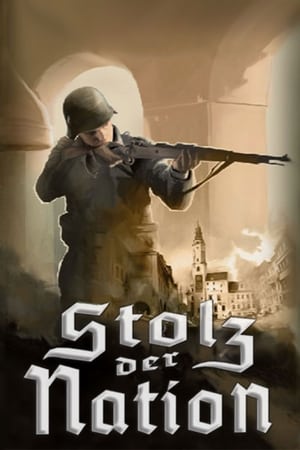
The "true" story of Wehrmacht sniper Fredrick Zoller as he single-handedly fends off an Allied siege of a Sicilian town.
Forever England gives John Mills his first leading role as Brown. Born after a brief affair between his mother and a naval officer, he joins the Royal Navy during the First World War. There his bravery and marksmanship keeps a German ship in port so a British ship can sink it. He becomes a hero, but at what cost?
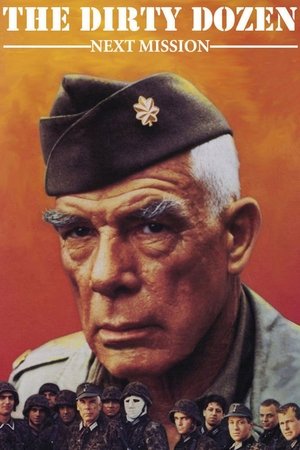
Major Reisman is "volunteered" to lead another mission using convicted army soldiers, sentenced to either death or long prison terms. This time their mission is to kill a Nazi general who plans to assassinate Hitler.