Odjezd branců
To help prevent the unthinkable from ever coming true, it is important to know what could really happen....the most awesome and deadly display of warfare that the world has ever seen.
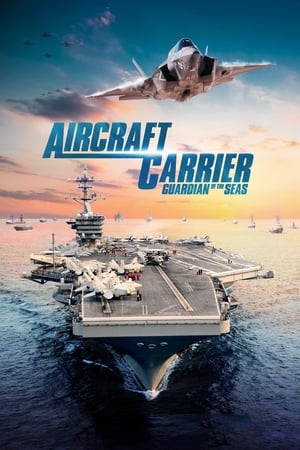
One of the greatest engineering feats in history, the modern US nuclear carrier is a masterpiece of technology, and the flagship of a fleet.
A young man decides to join the army. He becomes the drummer in the military band, and his everyday life is now a combination of military training and music. What does the Argentine Army do these days, more than thirty years after the dictatorship? What does it mean to be a soldier in a country without wars?
In this exciting tour of the National Air and Space Museum- Smithsonian Networks puts you in the cockpit. From humble beginnings to the sprawling institution which has become the most visited museum in the world- the story of our struggle to leave the ground is embodied in the machines that carry us. Our HD cameras are your eyes as you view the epic achievements of the first century of flight. See famous "space race" aircraft like Sputnik and Apollo 11.
The story of the Americans who are fighting against one of the largest- known polluters in the country - the United States military.
At 18, a young man commits to 17 years in the military. Inside the system, he witnesses things he hadn't thought possible.
Voices in Wartime is a 2004 documentary that explores the human experience of war through poetry. Combining interviews with soldiers, journalists, and historians, it reveals how war affects individuals and societies across time and place. The film features poets from around the world – from Homer and Wilfred Owen to Shoda Shinoe and modern writers in Iraq and Nigeria – showing how poetry expresses the pain, trauma, and truth of conflict. By linking verse with real-life accounts, Voices in Wartime highlights how poetry helps us understand the emotional and moral impact of war.
Going from 0 to 150 mph in three seconds, withstanding three Gs of force, and taking off from what's often called "the most dangerous place on the planet" are just parts of everyday life for an aircraft carrier pilot-and it's no different for the crew aboard the USS Enterprise. After being stationed in the Middle East for a year, these pilots have seen heavy action in Afghanistan and Iraq. Now, finally, they're returning home. With amazing personal stories and real-time footage from missions, this is an exciting insider's peek at life onboard a wartime aircraft carrier.
Anastasia Trofimova, a Russian-Canadian filmmaker, gains unprecedented access to follow a Russian Army battalion in Ukraine. Without any official clearance or permits, she earns the trust of foot soldiers and embeds herself over the span of a year with one battalion as it makes its way across Eastern Ukraine. What she discovers is far from the propaganda and labels pushed by the East or West: an army in disarray, soldiers disillusioned and often struggling to understand what they are fighting for.
Ahmet has not cried anymore since he was 13 years old. Out of the need to deal with his emotions, the 29 year old professional soldier and boxer takes acting lessons. The desire to combine his everyday life with the increasingly important passion for acting, threatens to fail in the prejudices of the people around him - in the familiar environment with its tight structures as well as in the seemingly liberal world that has opening up to him.
An actuality and reportage film. This film captures Lord Frederick Roberts (British Army rank Field Marshal) departing England for South Africa on 23rd December 1899, where he commanded British forces for a year in the Second Boer War. The ship in this film is the RMS Dunottar Castle. Going with Roberts is his chief of staff, Lord Kitchener, whose future role as Secretary Of State for War during World War One awaits him. This film was produced and distributed by the Warwick Trading Company, a London based company at its peak at this time, involved in the majority of British films.The Warwick Trading Company specialised in travel, reportage and actuality films and had substantial catalogues. Charles Urban had taken over as managing director in 1897 and was in that role when this film was produced. According to the BFI programme entry, the company had a large amount of resources already in South Africa. This meant they could capture historic moments as part of its Boer War coverage.
Spectators on the quayside at Southampton wave farewell as the crowded troopship Roslin Castle moves away to the right of the picture. Large numbers of troops on board wave back to loved ones and the crowd including thr 2nd Battaliion West Yorkshires. Date: 20th October 1899.
They are around us. Everywhere. People talk about it, movies and TV shows talk about it, but what are UFOs? What do they want? And the most important question: what do they do in our daily life?
HAS HEART is an intimate and inspiring documentary capturing the emotional journey of U.S. Navy veteran Michael Hyacinthe and artist Tyler Way, who unite to transform veterans' experiences through the power of art. After serving in conflict zones and experiencing personal loss and trauma, Michael grapples with his own sense of identity and purpose. He finds new meaning by collaborating with Tyler, a talented footwear designer, to create a unique space where veterans can express their untold stories through art and design.
Le Bataillon du Pacifique
First transmitted in 1977, this documentary follows three months in the life of the 1st Battalion of the Royal Green Jackets (also known as the Black Mafia) as they move from their Dover barracks for a tour of duty at the Tower of London. The Royal Green Jackets are light infantry, trained to move fast. Above all they are riflemen and take pride in their reputation of being thinking fighting soldiers.
Turkish democracy got over the 27th of May and the 12th of March and set off again, but the storm did not subside and the mutual reckoning was not over. On the contrary, new fronts were opened in the country and blood began to flow like a gutter. Finally, on September 12, there was a knock on the door again. Those who came that day changed everything, everything. Nothing would ever be the same again, nothing would be the same as before.
With 2 Para isolated at the Arnhem Bridge and both 1 and 4 Para Brigades thwarted in their attempts to fight their way into Arnhem and falling back, what became the Oosterbeek Perimeter started to form around Divisional HQ at the Hartenstein Hotel. Beaten but not defeated, the remnants of 1st Airborne Division fought a grim battle with the SS supported by reinforcements and armour rushed to Oosterbeek from all over the West. Veterans and experienced battlefield guides vividly relate their experiences and take the viewer to the scene of the action. The seven days of grim and bloody fighting in the Oosterbeek Perimeter was amongst the hardest fought of all the battles in the West. It was one that the SS veterans of the Eastern Front in the Hohenstaufen Division christened the Hexenkessel or “Witches Cauldron”. All the while the the airborne soldiers were waiting for XXX Corps to arrive from the south, with the enemy pressing ever closer.