In a cluttered news landscape dominated by men, emerges India’s only newspaper run by Dalit women. Armed with smartphones, Chief Reporter Meera and her journalists break traditions on the frontlines of India’s biggest issues and within the confines of their own homes, redefining what it means to be powerful.
From the front lines of the bankrupt Chicago Tribune, to the vibrant local online publishing and start-up scene, pioneering journalists struggle to reinvent a storied, yet troubled industry. "Mashed Media" visits bloggers, independent publishers, hacker journalists, and social media mavens working in the trenches of Chicago, providing a rare and intimate look at the future of journalism now.
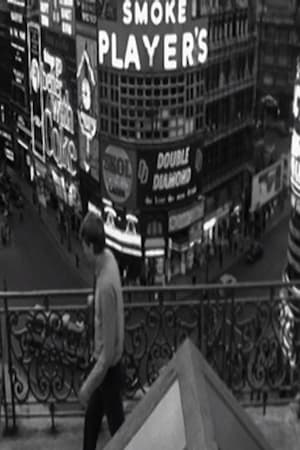
Film made at Hyde Park Corner in 1896 by an unknown filmmaker. It looks south west across Grosvenor Place. The southern wing of St George's Hospital (today the Lanesborough Hotel) can be seen on the right of the picture. The road stretching away in the centre of the picture is Grosvenor Crescent. The busy two way horsedrawn traffic movement is seen on what would today be Grosvenor Place and Apsley Way (the road layout now is different to 1896). The approximate camera position would be today on Apsley Way, just east of the Royal Artillery Memorial. Not to be confused with another Hyde Park Corner film by British Pathé made in the same year but with a different view. (That film looks north towards the triumphal arch at the corner of Hyde Park next to Apsley House.)
The National Library of France is the guardian of priceless treasures that tell our history, our illustrious thinkers, writers, scholars and artists. Telling the story of the exceptional treasures of the National Library of France is like opening a great history book rich in many twists and turns. Without the love of the kings of France for books and precious objects, this institution would never have seen the light of day. The story begins in the 14th century under the reign of a passionate writer, Charles V, who set up a library in his apartments in the Louvre. But it was not until the 17th century, and the reign of Louis XIV, a lover of the arts and letters, that the royal library took over its historic quarters in the rue Vivienne in Paris, which it still occupies.
The 100 years of history of the Chosun Ilbo and the Dong-A Ilbo show that wrong press can be a social weapon.
"Was it the President who ordered the rivers to be six meters deep?" In 2008, under President Lee Myung-bak's administration, South Korea's Four Major Rivers Restoration Project turned the country's beautiful rivers into scenes of devastation. What were once pristine first-grade waters became lifeless rivers, choked with toxic green algae emitting foul odors. Crops irrigated with this contaminated water are now served on the table of Korean people. The government disguised a grand canal project as river restoration, and the media turned a blind eye — together enabling one of the greatest environmental destructions in Korean history. The consequences of this deception will be borne by future generations. To ensure that future generations can once again run freely along the rivers, we must act—now. We must make Korea's rivers flow again.
This documentary on the "youth movement" of the late 1960s focuses on the hippie pot smoking/free love culture in the San Francisco Bay area.
A total of 17 journalists have been fired since 2008, the beginning of LEE Myung-bak’s presidential term. They fought against the companies that they worked for succumbing to power and are now frustrated at reality where censorship of the press by authority has now become a norm. Can they continue their activities as journalists?
This feature documentary is a profile of Canadian press tycoon Roy Thomson, whose single-minded attention to business brought him riches, power, and even a baronetcy in England. A native of Timmins, Ontario, Thomson had a tremendous career as publisher, television magnate, financier, and owner of many newspapers, including leading London dailies. The film is a frank study of an equally frank man.
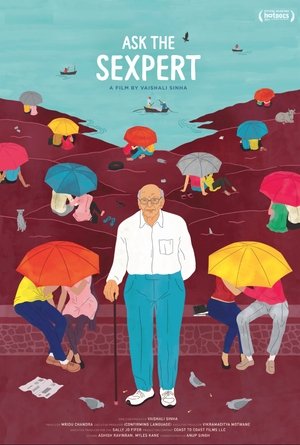
A sex columnist gains popularity even while a ban on comprehensive sex education in schools is adopted by approximately a third of India’s states.
Narrated by Academy Award winners Sissy Spacek and Herbie Hancock, River of Gold is the disturbing account of a clandestine journey into Peru's Amazon rainforest to uncover the savage unraveling of pristine jungle. What will be the fate of this critical region of priceless biodiversity as these extraordinarily beautiful forests are turned into a hellish wasteland?
Famous Spanish film critic Alfonso Sánchez talks about his personal life, his work and Anouk Aimée. A sentimental tribute to one of the most relevant figures on the Spanish film scene.
Between 1968 and 1970, J M Goodger, a lecturer at the University of Salford, made a film record of the living conditions in the slums of Ordsall, Salford, which were then in the process of being demolished. Under the title 'The Changing face of Salford', the film was in two parts: 'Life in the slums' and 'Bloody slums'.
An investigative reporter seeks to expose the whereabouts of a slush fund belonging to the former president of South Korea, Lee Myung-bak.
In 1997, Osama bin Laden declared war on the USA and Pulitzer Prize winning CNN correspondent Peter Arnett embarked on a mission to locate and interview him. A War Story follows the dramatic events leading up to the interview and the Kiwi journalist's horror on 9/11, as he recalled bin Laden's veiled threats.
In 2008 two best friends found themselves trapped in one of the most dangerous places on earth - the only western journalists in the Gaza Strip on what was supposed to be a 24-hour assignment. The War Around Us captures the collision of veteran war correspondent and one of TIME's most 100 influential people, Ayman Mohyeldin, with rookie reporter Sherine Tadros. As missiles shower the city and unspeakable atrocities emerge, the pair is torn by fierce professional rivalry, private terror and grim humor - with no way out and the whole world watching.
Memories of his four-year journey focused on the Hong Kong protests. Narrated in the first person, is rich with reflections and contemplations, most intertwined with feelings of guilt.
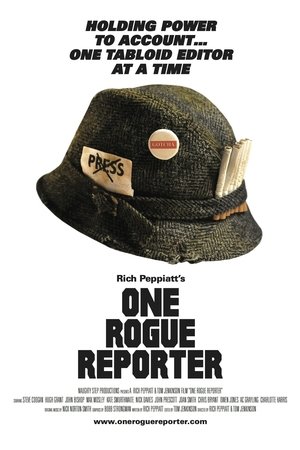
Rich Peppiatt delivers a satirical dissection of the newspaper trade by turning the tables on unscrupulous editors. Through a series of mischievous stunts and interviews with heavyweights of journalism, comedy & politics, Peppiatt hilariously exposes the hypocrisy at the heart of modern journalism.
A witness to the history of the Fifth Republic for more than half a century, Jean-Pierre Elkabbach left his mark on the profession of radio and television journalism. This film tells the story of the man and his career through the voice of his daughter, Emmanuelle Bach, and previously unpublished private interviews recorded shortly before his death in 2023. It offers a portrait of this hyperactive, versatile, demanding, and inventive journalist, and reveals the private man: funny, sensitive, warm, and secretive. Emmanuelle Bach recounts with tenderness and humor her father, absorbed by his consuming passion for journalism, and with whom she struggled to find her place.
The Morning Sun Shines is a fiction-documentary film by Kenji Mizoguchi and Seiichi Ina. The film is a combination of a drama about a reporter, and documentary footage about newspaper production. Only 25 minutes of footage has survived.