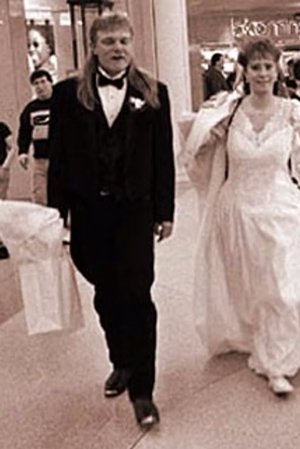
Wedding rituals grounded on non-verbal social agreements represent the perception of society in general. Wedding dress is a symbolic part of these rituals. The process that a wedding dress has went through can be considered as an embodiment of the formation of women identity in society. Like most of the women, wedding dressmakers also dream of being a princess once they wear their wedding dress. On the other hand, dressmakers are certainly aware of the fact that they promote the already existing image of women in society because of their job. While they also recognise the truth is way different.
The Manaki brothers document the elegant wedding of a presumably popular couple.
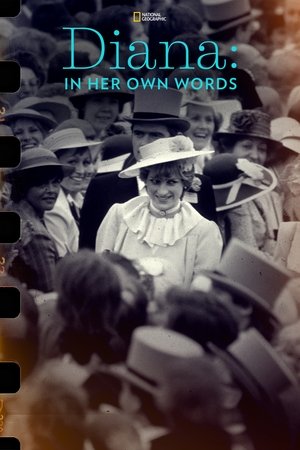
Take your seat on the aisle for weddings the world will never forget: the stunningly beautiful Jacqueline Bouvier to the strikingly charismatic John Fitzgerald Kennedy, the shy yet buoyant Lady Diana Spencer to the mischievous yet maturing Prince Charles, Hollywood's queen Grace Kelly bringing a fantasy to life in a glorious Monaco cathedral, and Elizabeth Taylor to a series of handsome beaus, bridal gowns and wedding bouquets. Legends in Love. Stories to behold, stories to be told. With all the enchantment, elegance, excitement - and mystery - that surrounds the lovestyles of the rich and famous.
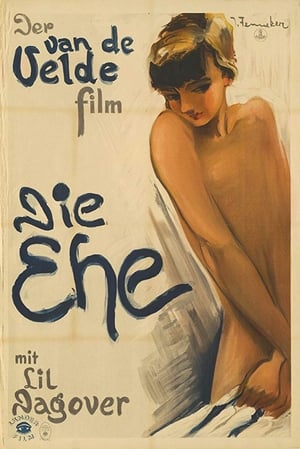
The film is about metamorphosis of wedding traditions. What happened to the old wedding ways and customs that were market by joy, mystery and sadness?
The daughter of famed actor-manager Sir Herbert Beerbohm Tree gets hitched to a military Captain during WWI.
Violet Asquith, daughter of the Prime Minister Herbert Asquith, arrives at church to marry Maurice Bonham Carter.
Guests step out in smart hats and sumptuous furs for a Jewish wedding at London’s Central Synagogue.
Follow the happy couple from the family shop on Brick Lane to a garden party serenaded by the San Diego Dance Band.
Crowds block the streets to catch a view of a handsome old carriage at a Jewish wedding.
Liz tries to keep her friend from making the worse mistake of her life.
The Woven Path: Perempuan Tana Humba is made up of two short movies that highlight the role of women in Sumba culture. The first part of the documentary, The Woven Path, is a 10-minute movie featuring picturesque footage and images that serve as a backdrop to two poems centering on the theme of mothers. The 30-minute Perempuan Tana Humba is a much more straightforward documentary, focusing more on Sumba culture and women in three short chapters: “Marapu”, “Belis” and “Perkawinan”.
Thomas Haemmerli is about to celebrate his fortieth birthday when he learns of his mother's death. A further shock follows when he and his brother Erik discover her apartment, which is filthy and full to bursting with junk. It takes the brothers an entire month to clean out the place. Among the chaos, they find films going back to the 1930s, photos and other memorabilia.
The priest Børre Knudsen is Norway's most infamous anti-abortionist, and much hated for this. He fought for his cause without thinking about the consequences for his family and his children even in the worlds most democratic country.
When Sarah accidentally proposes to her girlfriend in Provincetown, the mixup turns their loving relationship into a minefield of marital exploration.
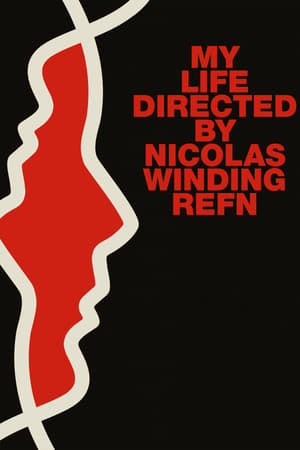
A documentary directed by Winding Refn's wife, Liv Corfixen, and it follows the Danish-born filmmaker during the making of his 2013 film Only God Forgives.
Horňácká svatba
Filmmaker and her mother, a village housewife: their experiences of life, abusive marriages, violence, and home. Although it’s a personal story, it could be the story of countless women in a patriarchal society of Bangladesh.
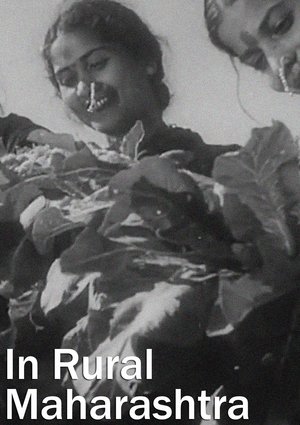
Happy farmers, a wedding and some giant cauliflowers...
Documentary film about Tony Halme, masculinity and populism. The film follows how Tony Halme created a mythical, highly masculine freestyle wrestling character, The Viking, who gained fame both in the ring and in the public eye and eventually became captivated by it. With his brash speeches, Halme fired the starting shot for the rise of the Finns Party. The voice of a forgotten section of the population, a protest against the ruling elite, were the building blocks of Halme's popularity. Halme's great popularity has served as a good example of a populist figure, admired within the deep ranks of the nation, who comes from outside the political elite and changes the direction of politics. Also, despite - or perhaps because of - his openly racist statements, he was part of changing the political climate in Finland to a more acrimonious one.
A Valentine's Day story about a young couple, how they get together, and how they fall apart. All because of one tree.