Sake is a traditional alcoholic beverage from Japan and is otherwise known as rice wine. Women were prohibited from entering the many large and small sake breweries dotting Japan for centuries. However, times have changed and women are present on the sake scene today. In several cases, they are integral to the Japanese brewery business. The documentary depicts women who are not only enthusiasts, but also leaving their marks on the evolution of this Japanese mainstay.
Boire
A paralysingly beautiful documentary with a global vision—an odyssey through landscape and time—that attempts to capture the essence of life.
2021 was a turning point for Belarus and 6 Belarusian students - as well as for the city of Łódź, Poland, in which they found themselves. Across the rails of change and transformation, documenting a time that has not been before and will not repeat again. Heroes of the film have very different fates and experiences, but they are all connected by the place they found themselves in - the post-industrial and post-apocalyptic city, which becomes a part of their story and a hero of its own. Students, transport, quaters, youth, revolution, local apocalypse, changes and turns - they all mix in a documentary kaleidoscope 'Across the Rails'.
Founded in the second half of the 1990s, the experimental film association L'Etna witnessed the transition from film to digital cinema. Its premises, located in the heart of Paris, were unable to withstand gentrification.
From the moment we got engaged and set a wedding date, we began thinking about the reasons we chose one another. What was so special about this relationship that we decided to spend our lives together? Would our love be the same if we were born in another time or at another place? What is love exactly? Driven by those questions, we decided to embark on a one year journey around the world to research whether love, one of the highest values in our lives, is universal, or it is completely conditioned by the circumstances around us.
As the Internet finally arrives in tiny Bhutan, documentarian Thomas Balmès is there to witness its transformative impact on a young Buddhist monk whose initial trepidation gives way to profound engagement with the technology.
Stories of Waitara combines oral histories, state of the art animations and powerful dramatic re-enactments to bring to life the narratives of Te Ātiawa in their epic battle against the military might of the British Empire. Created and presented by award-winning journalist Mihingarangi Forbes NZ Wars: Stories of Waitara documents the epic battle for control over the fertile lands of Taranaki. Shared through the eyes of Te Atiawa descendants including Dr Ruakere Hond with insights from acclaimed historian Dr Vincent O'Malley this digital documentary project focuses on the beginning of the Taranaki wars which started in Waitara and raged across the region for over two decades. The Taranaki pa site of Pukerangiora holds a significant place in New Zealand's military history as a lasting symbol of Maori resistance and resilience. Pukerangiora is now the backdrop for the latest installment of RNZ's award-winning docu-series on the bloody birth of modern New Zealand.
Kirby Dick's provocative documentary investigates the secretive and inconsistent process by which the Motion Picture Association of America (MPAA) rates films, revealing the organization's underhanded efforts to control culture. Dick questions whether certain studios get preferential treatment and exposes the discrepancies in how the MPAA views sex and violence.
Will bring together stories that celebrate their contributions to British life and culture, as well as shedding light on the reality of the struggle many faced to gain citizenship despite having lived and paid taxes in the UK for many years as a result of what became known as the Windrush scandal.
THE ARYANS is Mo Asumang's personal journey into the madness of racism during which she meets German neo-Nazis, the US leading racist, the notorious Tom Metzger and Ku Klux Klan members in the alarming twilight of the Midwest. In The ARYANS Mo questions the completely wrong interpretation of "Aryanism" - a phenomenon of the tall, blond and blue-eyed master race.
A documentary on the expletive's origin, why it offends some people so deeply, and what can be gained from its use.
Documentary covering the current state of both the theoretical and practical development of the various scientific basic principles that served, as per Gene Roddenberry's dictum, as a believable basis at the time for The Original Series. Several real-world scientists are interviewed, not a few of them unabashedly admitting they went into their chosen field of profession because of Star Trek: The Original Series.
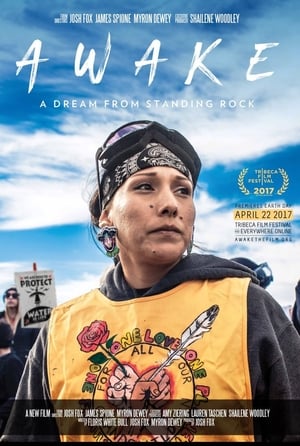
The Water Protectors at Standing Rock captured world attention through their peaceful resistance. While many may know the details, this film captures the story of Native-led defiance that forever changed the fight for clean water, our environment and the future of our planet.
Coffee is the second most important commodity in the world after oil. The drink has a long history and what's more, its effect seems to be stimulating in two senses.
Polvere in Sala
"CATANAS POINT - A Surf Documentary" portrays the reality of the sport of surfing in Angola and compares it with what surfing was like in Brazil from the 1980s to the present day.
In French Polynesia, transgender people evolve with apparent fluidity in all components of society. Their presence, observed as early as the 18th century by Western travelers and missionaries, has never ceased to intrigue and fascinate, producing over time numerous myths that the transgender women and men of Polynesia are today attempting to deconstruct. Through a series of luminous and intimate portraits, this documentary gives them a voice and proposes a rereading of gender issues in the light of Oceanian thought: an obvious enrichment.
Liliana Cavani's "The Night Porter" is a film that, fifty years after its release, continues to spark debate and mixed reactions. The story, set in Vienna in 1957, follows doorman Max Aldorfer and his former concentration camp prisoner, Lucia, who reunite after years in a hotel.
The story of a young boy forced to spend all five years of his short life in hospital while the federal and provincial governments argued over which was responsible for his care, as well as the long struggle of Indigenous activists to force the Canadian government to enforce “Jordan’s Principle” — the promise that no First Nations children would experience inequitable access to government-funded services again.