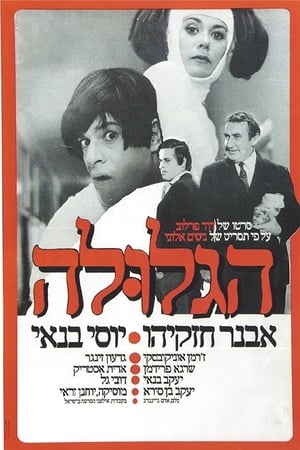
A burlesque fantasy about a fountain-of-youth pill and its effects on Getz, a down-and-out Tel Aviv night-club singer. After taking this much sought after pill, Getz becomes the epitome of youthful energy, and therefore a teen idol, a symbol of beauty and youth, up to the cathartic ending of the movie.
Roadrunner United was a project organized by American heavy metal record label Roadrunner Records to celebrate its 25th anniversary. It culminated in an album released worldwide on October 11, 2005,[1] entitled The All-Star Sessions. Four "team captains" were chosen to lead 57 artists from 45 past and present Roadrunner bands, and produce and oversee the album's 18 tracks: then-Slipknot drummer Joey Jordison, Trivium frontman and guitarist Matt Heafy, Fear Factory guitarist Dino Cazares, and Machine Head frontman and guitarist Robb Flynn. The project was the brainchild of Roadrunner UK general manager Mark Palmer and Roadrunner USA VP of A&R Monte Conner. The album project was coordinated by Lora Richardson and was mixed by Colin Richardson and Andy Sneap. The All-Star Sessions spawned one single and music video ("The End"). The DVD included with the CD purchase is a documentary of the "Making Of" the songs. It features the sessions of the four team captains making their songs.[2]
1. The Main Event - What are PanoptiCons like to organise? What do the fans think of them? What do the stars think of the fans? All this, and there’s still time for a liberal sprinkling of stories from the production team! However, you’ll see lots of other personalities from other eras as we stop along the way to look at particular aspects of the programme.
The film explores the sexual aspects of Serbian folklore. Ancient myths that have trickled into everyday household remedies or explanations are juxtaposed with the joys of the female and male sexual forms from which all human life originates. Functioning as both sexual liberation and reinvented modern myth, Balkan Erotic Epic is a display of the need for a cultural change in viewpoint around sex.
Critic Sara Imogen Smith discusses the visual style of The Story of Temple Drake and Miriam Hopkins' performance.
Description in the form of a cinematographic essay of Coaraze, a small village in the Alpes-Maritimes. An impressionist film showing life and death.
2. The Early Years - The stars and production team give a unique insight into Doctor Who from its beginning with William Hartnell to Patrick Troughton’s portrayal of the Doctor. However, you’ll see lots of other personalities from other eras as we stop along the way to look at particular aspects of the programme.
激闘の1日〜キングオブコント2022の裏側に完全密着〜
4. The JNT Years - Peter Davison and Colin Baker’s portrayals of the Doctor conceded with one of the most controversial periods of the programme’s history. Was the programme as good as it used to be… or just different? What did the production staff, both past and present, think? However, you’ll see lots of other personalities from other eras as we stop along the way to look at particular aspects of the programme.
5. Dragonfire - How is a Doctor Who story made? Cast and crew from the Doctor Who story Dragonfire got together at Panopticon IX in a lively and sometimes hilarious discussion which covers every aspect of the making of a television programme. However, you’ll see lots of other personalities from other eras as we stop along the way to look at particular aspects of the programme.
6. Panopticon VII - 1986 was the 10th Anniversary of the DWAS and for the first time professional cameras were there to record the event. This special production includes highlights from the convention, home movies from early Panopticons (featuring Tom Baker and Patrick Troughton) and the reminiscences from organisers, actors and production staff about the early days of fandom. However, you’ll see lots of other personalities from other eras as we stop along the way to look at particular aspects of the programme.
伝説の美女 楊貴妃~藤原紀香 西安1300年紀行~
Konnie Huq celebrates the very best of British children’s television, with a dazzling array of clips from some of the most treasured programmes ever made and revealing chats with some of TV’s most beloved stars. But Konnie also tells a perhaps more surprising story: of how kids’ TV has frequently been at the forefront of social change, in terms of the stories it tells and the people who get to tell them.
Trans women face extreme violence in Mexico City, and sex workers are even more vulnerable. This raw and deeply affecting portrait of Kenya gives an insider’s view of the impact that violence has on the community, and how complex life is for them. The film begins shortly after Kenya witnesses her friend Paola being murdered by a client. The film follows Kenya closely. Will the family accept burying Paola as she was: a flamboyant trans woman? Kenya approaches Paola’s loved ones with great respect and understanding—something she rarely experiences herself. When the murderer is released, she embarks on a lengthy battle for justice, backed up by her “sisters.”
On July 4th 1975, Juanita Nielsen - style icon, journalist and activist - went to what she thought was a business meeting at The Carousel Club, Kings Cross and vanished, never to be seen again. Juanita was an unforgettable Sydney character with her large beehive hairdo, long false eyelashes and fashionable clothes. Glamorous and well-connected, Juanita built a powerful alliance between construction workers and residents that stopped Sydney's developers in their tracks. With millions of dollars at stake, Juanita's disappearance remained unsolved. Filmmaker and artist Zanny Begg explores this mystery through the eyes of those living in Sydney today. Bringing together a cast of actors, performers, activists, stripers, sex workers and beekeepers, Juanita Nielsen NOW probes what it means to live in a city that killed one of its own.
A day in the life of Mr. Istvan and Ms. Magdi, neighbors for many years, is narrated by the building of Budapest where both live. The walls surrounding them reveal their small passions, stories and routines.
This is an interesting little documentary about the Nova Scotia College of Art and Design, which was apparently one of the global hotbeds of experimental/avant garde art- particularly video art- back in the 70's & 80's. MacGillvary interviews a number of the artists that were formative to the program. Many of whom would go on to become teachers at the school.
Documentary examines the history and evolution of the Olympic Games, taking a close look at the Olympic charter, oath and ideals. Also featured are rare home movies and interviews with Olympic athletes and the oldest known color footage of the Olympic Games from Berlin in 1936.
Documentary about Giger's work for the movie Alien (1979).
Internet Rising is a digi-documentary investigating the evolving relationships between the Internet and collective consciousness of humanity.