Mirabal: Um Foco de Resistência
Filme de Luta
Do Lado de Fora
Ijó Dudu: Memórias da Dança Negra na Bahia
Gerais da Pedra
Filmmaker Karim Aïnouz decides to take a boat, cross the Mediterranean, and embark on his first journey to Algeria. Accompanied by the memory of his mother, Iracema, and his camera, Aïnouz gives a detailed account of the journey to his father’s homeland, interweaving present, past, and future.
Amazônia, a Nova Minamata?
The last two surviving members of the Piripkura people, a nomadic tribe in the Mato Grosso region of Brazil, struggle to maintain their indigenous way of life amidst the region's massive deforestation. Living deep in the rainforest, Pakyî and Tamandua live off the land relying on a machete, an ax, and a torch lit in 1998.
During the 2018 Brazilian presidential elections, a woman floats in waters far from home. When everything seems calm, a wave hits and carries her to the depths of her being. Water and Salt is a journey through the consciousness of someone whose country is under threat from a fascist government.
The third installment in Dan Přibáň's series of travel documentaries describes the author's journey with his friends across South America in vehicles that are often notorious but cult in their own way. The charming dynamics of the group on screen are further enhanced by the high-quality craftsmanship.
The documentary tells the story of Júlio César, a young Afro-Brazilian who was executed by the Police in the 1980s in Porto Alegre. The crime became notorious when the press published photos of Julius being put alive in the police car and arriving 37 minutes later shot and dead at the hospital.
The documentary follows oral accounts from people in the Cariri region of Paraíba and Pernambuco who have witnessed or heard stories about the "pagan baby." This refers to the practice of burying infants who were born and died before being baptized near crossroads and gateways—an old custom that was once widespread in the region. According to tradition, some people would later hear the cries of these souls and would perform improvised baptisms to help guide the child's spirit to heaven.
5 Times Chico: The San Francisco River and His People
Noeli lives in a suburb of Porto Alegre, is a housewife and has two children. She was born in a country town, went to the capital, worked in a bakery, got married. She's an ordinary person. But there are no ordinary people.
Minha Perna, Minha Classe
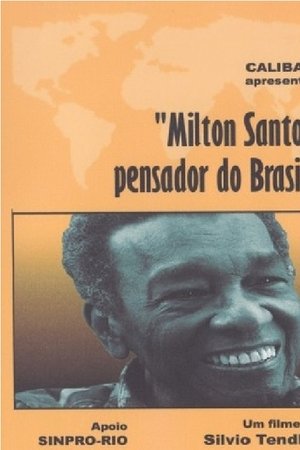
The interview, held on January 4, 2001, was the last given by Professor Milton Santos, who died from cancer on June 24 of the same year. The geographer is gone, but his thoughts remains. Its political and cultural ideals inspire the debate on Brazilian society and the construction of a new world. His statement is a true testimony, a lesson that the world can be better. Based on geography, Milton Santos performs a reading of the contemporary world that reveals the different faces of the phenomenon of globalization. It is in the evidence of contradictions and paradoxes that constitute everyday life that Milton Santos sees the possibilities of building another reality. He innovates when, instead of standing against globalization, proposes and points out ways for another globalization.
The last part of the triptych is dedicated to the struggle of the peasant communities of northeastern Brazil; on the banks of the São Francisco River, the indigenous residents of the village of Caiçara fight to keep their Island of São Pedro, enclosed in a farm; all that remains is an abandoned chapel to which they go in procession. Tyrannized by their powerful neighbors, they talk about their lawsuits and sing about their two-century struggle, filmed in the village, during a procession to San Pedro and an expedition to the court where a delegation will file a complaint.
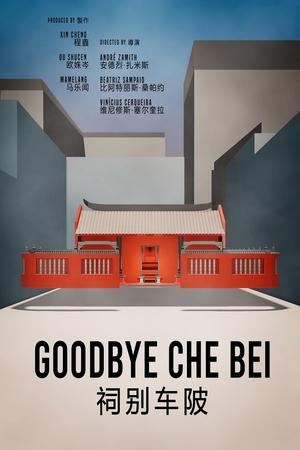
Goodbye Che Bei
Dvě města
Indigenous chief Juma Xipaia fights to protect tribal lands despite assassination attempts. Her struggle intensifies after learning she's pregnant, while her husband, Special Forces ranger Hugo Loss, stands by her side.