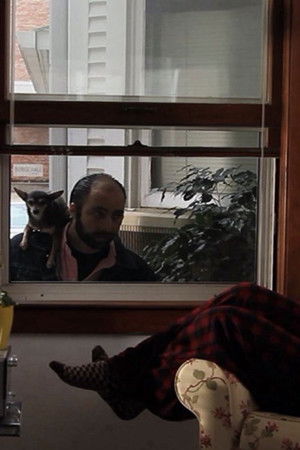
The Lentz Triplets are the biggest movie stars in the world. When it's time to renegotiate their contract, it's up to Biggs Tomlinson to get that ink on paper. He ventures to the mysterious Lentz household with his trusty briefcase in hand. There he meets Milly, aging film star and mother of the triplets. What follows is a game of cat and mouse as Biggs must solve the mystery of the Lentz family before it's too late.
A man must face his inner demons when he is confronted with the decision to euthanize his mother, who suffers from an incurable disease.
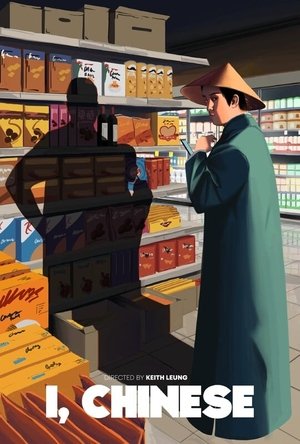
WARNING This cartoon features ignorant racial stereotypes and is NOT meant for children or the sensitive.
Flint's mischievous gummy bear grows to 50-feet by using his new food-modifying invention.
A man "unboxes" a vintage doll that bears a likeness to television and film star James Franco. As the man plays with the doll, it spouts soundbites from Mr. Franco's past; the man becomes obsessed.
US Army Corporal George Kritzman recounts the aftermath of what was his third combat wounding in the Korean War. A former LA police officer, Kritzman was under heavy sedation due to the severity of his leg injury, which was initially operated on at the 8055 MASH unit. Unaware of what would happen to him and what his long term prognosis was and would be, he, along with many of his fellow wounded, was transferred from hospital to hospital, each a little better equipped to deal with his injury. However, his ultimate goal was to make it back home to his wife and son, from who his thoughts were never far.
A motorcycle cop buys a used car to take his family on vacation to the East Coast. Minor car trouble along the way causes him to meet first a reckless driver, and then a highway patrolman who shares stories of bad drivers with him. Various dangers of careless driving - both fictional and real - are depicted as the patrolman continues on the job, later crossing paths with the reckless driver again. When the police officer makes the return trip from his vacation, he finds that the situation has changed in a surprising way.
This Warner Bros. short reviews in an often humorous way the impact of the automobile on the United States. By 1900, the horseless carriage was beginning to have an impact. Early adopters were often the object of attention by large curious crowds. There were many car manufacturers and the quality of their product varied considerably. Traffic jams, pollution and automobile racing were only a few of the outcomes.
Impressionistic picture of the Third Avenue Elevated Railway in Manhattan, New York City, before it was demolished. Preserved by the Academy Film Archive in 2010.
Mirta is Cuban and lives in Madrid. As many others immigrants she works in cleaning industry. Today at six o'clock p.m. her daughter is going to marry. But nothing turns out as she hopes, and to reach this wedding is more difficult than it appeared at first sight.
Longtime playwrights and performers of the Abbey Theatre share colourful reminiscences of the national institution founded by W.B. Yeats and Lady Gregory in 1904. Oscar Nominee: Best Documentary Short
The film focuses on the thoughts inside the head of a man, an astronaut scheduled to go to the Moon. As he ponders the flight, he laments having an “ordinary” name he fears will not resonate throughout history. His thoughts lead him to consider some of the pioneers of flight-Icarus and his wings, the Montgolfier brothers and their balloon and the Wright brothers and heavier than air flight.
Thirty Million Letters is a 1963 short documentary film directed by James Ritchie and made by British Transport Films. It was nominated for an Academy Award for Best Documentary Short.
An elevator operator and an engaged girl in love dodge the girl's fiancee and attempt to win over her father.
This documentary shows how an Inuit artist's drawings are transferred to stone, printed and sold. Kenojuak Ashevak became the first woman involved with the printmaking co-operative in Cape Dorset. This film was nominated for the 1963 Documentary Short Subject Oscar.
Jenny is a Good Thing is a 1969 American short documentary film about children and poverty, directed by Joan Horvath. Produced by Project Head Start, it shows the importance of good nutrition for underprivileged nursery school children. The film was nominated for an Academy Award for Best Documentary Short.
Sticky My Fingers ... Fleet My Feet is a 1970 short film directed by John D. Hancock. It follows a group of Madison Avenue touch football buffs who are beaten by a teenaged boy and begin to feel their age. The film was nominated for an Oscar for Best Live Action Short Film.
Wehrhafte Schweiz is a Swiss Army propaganda film, made for the Expo 64 national exhibition in the then-prevailing spirit of geistige Landesverteidigung, "cultural national defense". It portrays the Swiss Army fighting against an unnamed, unseen enemy, using heavy weapons such as flamethrowers, artillery, tanks and bomber aircraft. After the enemy is repelled, the film closes with idyllic shots of beautiful Swiss landscapes. The 20-minute film was shot using the latest action film techniques in the Cinerama format on expensive MCS-70 Super Panorama 70mm stock. (Wikipedia)
Comprising train and track footage quickly shot just before a heavy winter's snowfall was melting, the multi-award-winning classic that emerged from the cutting-room compresses British Rail's dedication to blizzard-battling into a thrilling eight-minute montage cut to music. Tough-as-boots workers struggling to keep the line clear are counterpointed with passengers' buffet-car comforts.
Oscar nominated animated short from 1973. Pulcinella dreams himself into a wild nightmare of a dream that leads us through an abstract world.