A chronicle of the first nine years of Pope Francis' pontificate, including trips to 53 countries, focusing on his most important issues - poverty, migration, environment, solidarity, and war - while also giving rare access to the public life of the pontifical.
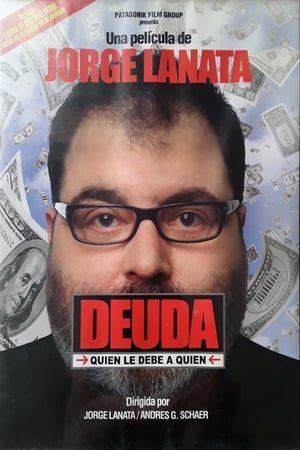
DEBT is the story of a frantic pursuit: the search for the responsible for the televised cry of hunger of Barbara Flores, an eight-year-old Argentinean girl. Buenos Aires, Washington, the IMF, the World Bank and Davos; corruption and the international bureaucratic lack of interest.
A tomato is planted, harvested and sold at a supermarket, but it rots and ends up in the trash. But it doesn’t end there: Isle of Flowers follows it up until its real end, among animals, trash, women and children. And then the difference between tomatoes, pigs and human beings becomes clear.
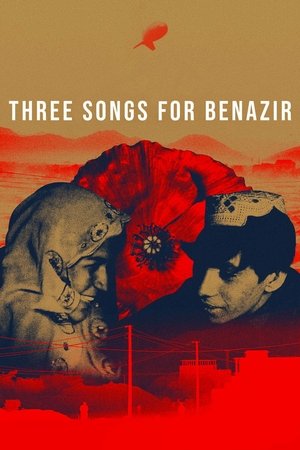
The story of Shaista, a young man who—newly married to Benazir and living in a camp for displaced persons in Kabul—struggles to balance his dreams of being the first from his tribe to join the Afghan National Army with the responsibilities of starting a family. Even as Shaista’s love for Benazir is palpable, the choices he must make to build a life with her have profound consequences.
The film is a controversy on democracy. Is our society really democratic? Can everyone be part of it? Or is the act of being part in democracy dependent to the access on technology, progression or any resources of information, as philosophers like Paul Virilio or Jean Baudrillard already claimed?
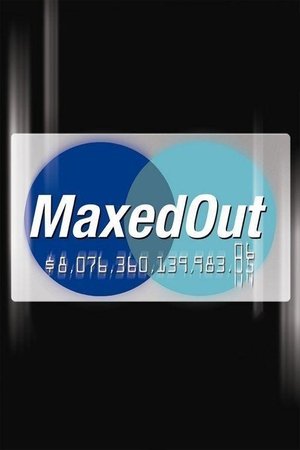
Maxed Out takes us on a journey deep inside the American debt-style, where everything seems okay as long as the minimum monthly payment arrives on time. Sure, most of us may have that sinking feeling that something isn't quite right, but we're told not to worry. After all, there's always more credit!
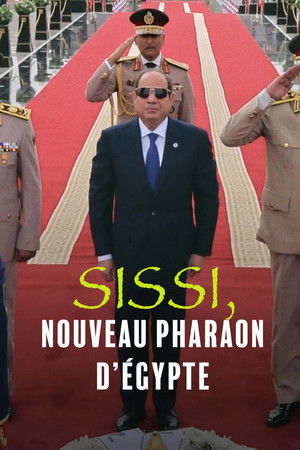
Egypt, nicknamed "the mother of the world" by its people, is unrecognizable. Gigantic construction sites have sprung up in the desert at an exponential rate, including roads, bridges, and megaprojects on the Mediterranean coast. This new Egypt is an illusion: in 10 years, the population has sunk into unprecedented poverty. The regime shows no mercy to the poor. Abdel Fattah el-Sisi, the new pharaoh, and his army have set up a pyramid-shaped financial system, built on subsidies from major international institutions—including the European Union—and foreign investment. The most populous nation in the Arab world finds itself on the brink of collapse.
Through interviews filmed over four years, Noam Chomsky unpacks the principles that have brought us to the crossroads of historically unprecedented inequality – tracing a half-century of policies designed to favor the most wealthy at the expense of the majority – while also looking back on his own life of activism and political participation. He provides penetrating insight into what may well be the lasting legacy of our time – the death of the middle class, and swan song of functioning democracy.
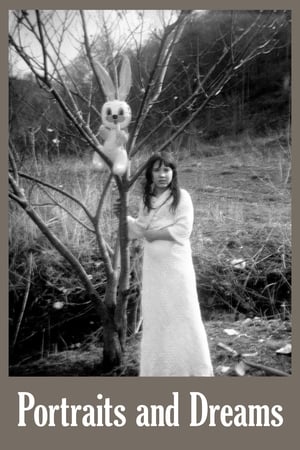
Revisit photographs created by Kentucky school children in the 1970s and the place where their photos were made. Photographer and artist Wendy Ewald, who guided the students in making their visionary photographs, returns to Kentucky and learns how the lives and visions of her former students have changed.
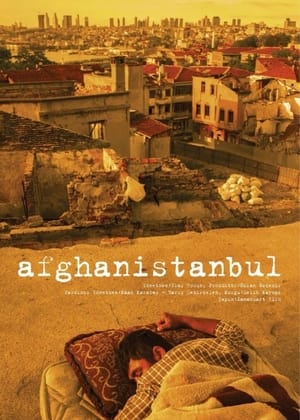
Afganistanbul
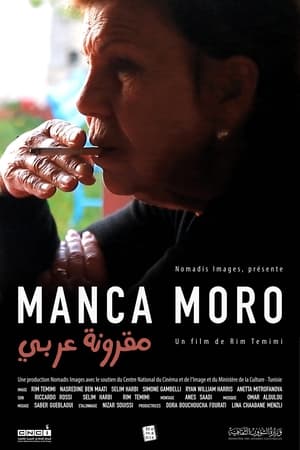
Born to an Algerian father and a Sicilian mother in Tunisia, I have always been wealthy of three cultures. This motherland is where were born my Algerian ancestors when it was called Ifriqya but also my Sicilian grand-parents whose parents were part of the important migration flux of the beginning of the last century. A reservoir of workforce by the thousands reached the shores of this "promised land". A hundred years later, I embark on a quest to rediscover my Sicilian family, exiled for the past sixty years, scattered between Italy and France.
Do you have to be miserable to be funny? More than sixty comedians—including stand-ups, writers, actors, and directors from the US, Canada, and abroad—take on this question, sharing anecdotes and insights with lively enthusiasm.
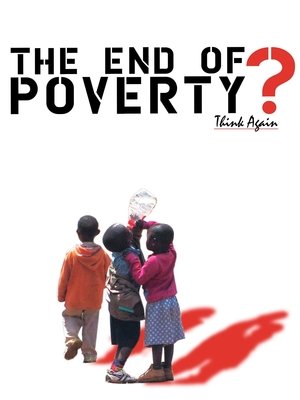
The End of Poverty? asks if the true causes of poverty today stem from a deliberate orchestration since colonial times which has evolved into our modern system whereby wealthy nations exploit the poor. People living and fighting against poverty answer condemning colonialism and its consequences; land grab, exploitation of natural resources, debt, free markets, demand for corporate profits and the evolution of an economic system in in which 25% of the world's population consumes 85% of its wealth. Featuring Nobel Prize winner Amartya Sen and Joseph Stiglitz, authors/activist Susan George, Eric Toussaint, Bolivian Vice President Alvaro Garcia Linera and more.
HOMELESS is a documentary that humanizes unhoused people and explores their backgrounds, dreams and struggles to find the way home. The film aims to raise awareness and funds to end homelessness, which is an ever more urgent global challenge: The United Nations Human Settlements Program estimates that 1.6 billion people live in inadequate housing, and the best available data suggests that more than 100 million people have no housing at all.
Josephine has all her life been told that her Peruvian aunt Augusta died in an armed struggle for the rights of the poor. As an adult Josefin decides to find out the truth about the legendary Augusta.
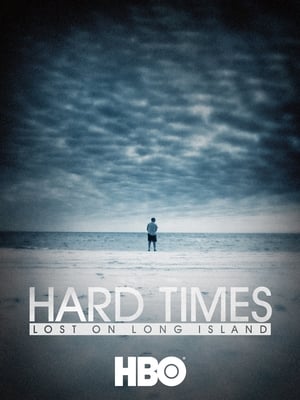
Documentary feature film that follows the personal stories of families struggling in the aftermath of the worst economic crisis since the Great Depression. Filmed over the course of one winter in one American city, the film presents an intimate snapshot of the state of the nation's economy as it is playing out in millions of American families, and highlights the human consequences of the decline of the middle class and the fracturing of the American Dream
If income inequality were a sport, the residents of 740 Park Avenue in Manhattan would all be medalists. This address boasts the highest number of billionaires in the United States.
In an office, a row of desks, with people facing each other. This is where unemployed people come to meet with their supervisors. At stake: their benefit payments. Here everyone has to abide by the same rigid procedure and bureaucracy but each has their own life, their own story. © Filmer à tout prix
Though the recession officially ended in summer 2009, the fallout continues for some 25 million unemployed and underemployed Americans, many of whom worked their way up the corporate ladder..
Based on Reich's 2010 book Aftershock: The Next Economy and America's Future, the film examines widening income inequality in the United States. U.S. Labor Secretary Robert Reich tries to raise awareness of the country's widening economic gap. He publicly argued about the issue for decades, and producing a film of his viewpoints was a "final frontier" for him. In addition to being a social issue documentary, Inequality for All is also partially a biopic regarding Reich's early life and his time as Secretary of Labor under Bill Clinton's presidency. Warren Buffett and Nick Hanauer, two entrepreneurs and investors in the top 1%, are interviewed in the film, supporting Reich's belief in an economy that benefits all citizens, including those of the middle and lower classes.