What happened to Figaro and his friends after the events told in Rossini’s and Mozart’s operas? One possible sequel is told in John Corigliano’s “grand opera buffa” The Ghosts of Versailles—an uproariously funny and deeply moving work inspired by Beaumarchais’s third Figaro play, La Mère Coupable, and commissioned by the Met to celebrate its 100th anniversary. This telecast captures its world premiere run, conducted by James Levine. Håkan Hagegård is Beaumarchais, Figaro’s creator, who is deeply in love with Marie Antoinette (Teresa Stratas in a heart-searing performance) and determined to rewrite history and save her from the guillotine. A young Renée Fleming, at the beginning of her international career, sings the unfaithful Rosina. Gino Quilico is the wily Figaro who tries to take matters in his own hands, and Marilyn Horne stops the show as the exotic entertainer Samira.
The complete version of Verdi's Otello performed by Placido Domingo and Kiri Te Kanawa, at the Royal Opera House, Covent Garden. Gala Performance in honour of Sir Georg Solti's 80th birthday.. 27 October 1992. BBC 2 Television live relay.
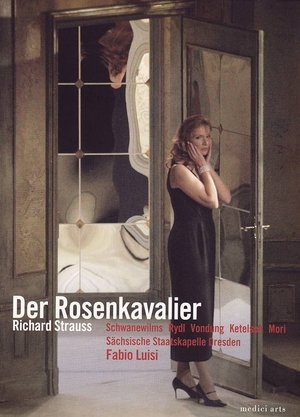
The Semperoper caused a sensation in November 2007 when it visited Japan for the first time in twenty-six years. The demand for tickets and the audience's enthusiasm were unprecedented, not least because the company was staging a piece that is performed more authentically in Dresden than anywhere else in the world: Richard Strauss' Der Rosenkavalier, which received its first performance in Dresden in 1911. Leading the ensemble was the radiant-voiced and profoundly thoughtful Marschallin of Anne Schwanewilms.
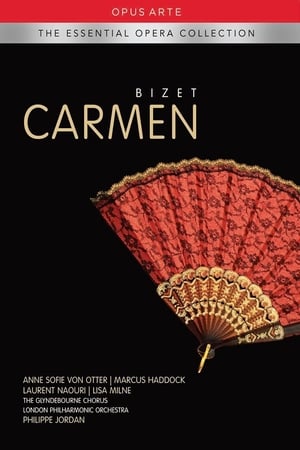
David McVicar's exhilarating new production, with Anne Sofie von Otter in the title role, restores the Opera Comique to Bizet's masterpiece. Philippe Jordan, in his Glyndebourne debut, conducts the London Philharmonic Orchestra, the Glyndebourne Chorus, and a cast which includes Marcus Haddock, Laurent Naouri, and Lisa Milne.
Among DVDs of "Hoffmann" currently available, this is the only one that even begins to stand comparison with the superlative Powell and Pressburger film (whose ideas it occasionally borrows). Olivier Py's baroque imagination, which sometimes leads him into self-indulgence and incoherence, is well suited to bringing out this opera's darkness and he does an excellent job
This is a joy from beginning to end. Although there are many tricks and ideas from Laurent Pelly, as always he seems to still retain the Offenbach magic. La Lott and Monsieur Beuron are a joy, but so is everyone else. The Patriotic Trio by the sea is both a hoot and wonderfully sung, the score seems truly complete yet never flags and the finale sequences for especially acts 1 & 2 are a joy of movement and sound fused as one glorious Offenbachian moment.
Live 2001 production from the Zurich Opera House of the classic Mozart/Da Ponte opera, with Nikolaus Harnoncourt conducting and directed for television and video by Brian Large.
Jean-Marie Villegier's modern interpretation of Handel's "Rodelinda" – filmed live at the world-renowned Glyndebourne Opera House in the United Kingdom, sets the timeless tale of jealousy and treachery in the black-and-white world of the silent-movie era. Soprano Anna Caterina Antonacci sings the title role of Rodelinda, with tenor Kurt Streit and bass Umberto Chiummo performing the parts of Grimoaldo and Garibaldo, respectively.
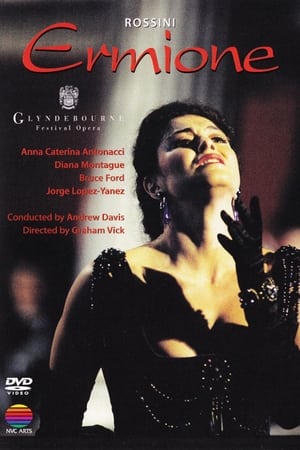
Recorded at the Glyndebourne Festival Opera in 1995, this acclaimed presentation of composer Gioachino Rossini's epic opus ERMIONE is based on Jean Racine's play "Andromache." Set in Troy after the city fell to the Greeks, the production recounts the rancorous battle between widow Andromache and Helen of Troy's green-eyed daughter, Ermione for the love of Pyrrhus
"William Christie and Les Arts Florissants propel this exuberant production of Jean-Philippe Rameau's second opera to great heights. Andrei Serban's extravagant, highly baroque staging presents the four exotic love stories vibrantly. In 'Le Turc généreux' Osman sets free his captive, Emilie, whom he loves, so that she may be reunited with her former lover, Valère; 'Les Incas de Pérou' is all about the rivalry of the Inca Huascar and the Spaniard Don Carlos, both in pursuit of Princess Phani; 'Les Fleurs' offers a Persian love intrigue, as the Sultana Fatime tries to detect whether her husband Tacmas has his eye on the lovely Atalide; and 'Les Sauvages' takes us to North America, where a Spaniard and a Frenchman compete for the love of Zima, daughter of a native chief, who prefers one of her own people." — from the DVD cover
Production of Mozart's opera about the Spanish nobleman who seeks to rescue his beloved Konstanze from the hands of the Pasha. Karl Bohm conducts the Chorus and Orchestra of the Bayerischen Staatsoper with the right balance of serious purpose and light lilting lyricism. This production, staged by August Everding with set and costume design by Max Bignens, was filmed from a live television production relayed on the First Programme (Channel 1) of German television on 25 April 1980,
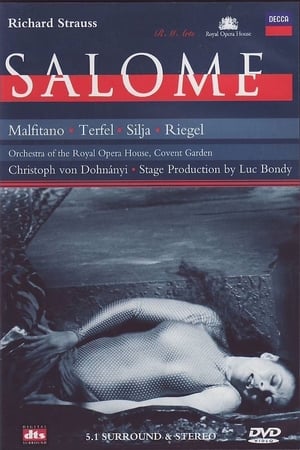
Met performances of Strauss’s white-hot one-act tragedy, which receives its first new production at the company in 20 years. Claus Guth, one of Europe’s leading opera directors, gives the biblical story—already filtered through the beautiful and strange imagination of Oscar Wilde’s play—a psychologically perceptive Victorian-era setting rich in symbolism and subtle shades of darkness and light.
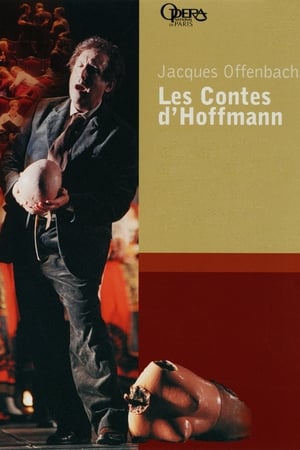
Live performance, Bayerische Staatsoper, 2011. The Tales of Hoffmann (French: LES CONTES D'HOFFMANN) is an opéra fantastique by Jacques Offenbach that combines three short stories by E.T.A. Hoffmann into a haunting whole: a melancholy poet reflects on three women he loved and lost in the past: a mechanical performing doll, a Venetian courtesan, and the consumptive daughter of a celebrated composer. One of the questions this opera poses for any director is how to link the 'tales' of Hoffmann's three lost loves together and knit them satisfactorily into the Prologue and Epilogue. In this production, Richard Jones solves the puzzle by turning it into an autobiographical journey which ends with a grand meet-up of all the characters Hoffmann has encountered: for once, Hoffmann is not presented as a rollicking kind of drunken story-spinner, but rather a sad-eyed, sobered-up depressive, who reaches for the bottle only because his disastrous love life has gone wrong yet again.
Part of Tutto Verdi series - Nabucco (2009) Parma. NABUCCO was Verdi’s third work for the stage and proved his first great success when performed in 1842. It deals with the Hebrew’s attempts to break free from the yoke of their Babylonian oppressors and is nowadays numbered among Verdi’s most popular works, not least on account of its famous Chorus of Hebrew Slaves, which has one of the best-loved melodies in the whole history of opera.
The award-winning show is re-imagined as a live concert event, featuring an all-star cast of recording artists, set during the last week of Jesus' life as he deals with betrayal, love and jealousy, and told from the perspective of Judas.
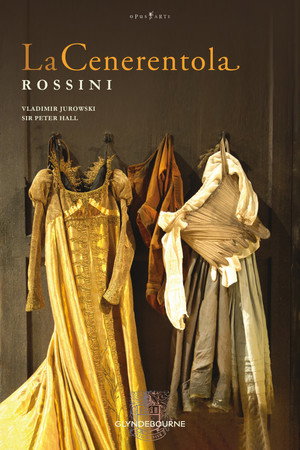
"Irresistible" (Opera News) rising-star mezzo Elina Garanca triumphs as Rossini's Cinderella in this delightful Metropolitan Opera production. "As close to pure joy as you will find in a big-time opera house" (New Yorker), conquering audiences and critics alike, "Garanca has a gorgeous voice that she uses with exceptional skill, melting tenderness; but when the part calls for coloratura fireworks, she unleashes a flawless technique and ringing high notes of impressive power" (Associated Press). Filmed in High Definition Widescreen.
Verdi’s IL TROVATORE again storms the Met stage in a star-studded, anvil-wielding cast , including Sondra Radvanovsky, Dolora Zajick and Dmitri Hvorostovsky. Marcelo Álvarez sings Manrico, the troubadour of the title. The story is well-known already: The gypsy Azucena has harbored a grudge for thirty years, but she is about to have revenge at last. Meanwhile, her son Manrico is in love with Leonora, but so is his arch-enemy, the Count Di Luna. A pot-boiler, where every tune is a hit.
Live peformance from the Sferisterio Opera Festival, August 2004. Our edition has an Italian cast of exceptional quality, in which stand out the amazing voice of Desirée Rancatore, the extraordinary artistry of Ruggiero Raimondi and the fascinating direction of Pier Luigi Pizzi, one of today's most creative directors. Interesting overview here: http://www.operatoday.com/content/2006/08/offenbach_les_c.php
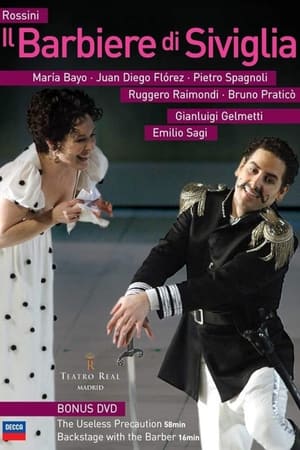
23-year-old Gioachino Rossini completed his masterpiece IL BARBIERE DI SIVIGLIA incredibly quickly – legend has it in just 13 days – which Rossini attributed to ‘facility and lots of instinct’. The opera, characterized by youthful energy and bold wit, has all the ingredients for comic chaos: an imprisoned young woman, her lecherous guardian and a young noble suitor. Skilfully plotting behind the scenes is Figaro, an irrepressible and inventive character in whom many have seen a resemblance to the young Rossini himself. The score fizzes with musical brilliance, from Figaro’s famous entrance aria to the frenzy of the Act I finale. This recording sees Joyce DiDonato (Rosina) bring literal meaning to the old theatrical motto Break a leg! She did just that in an earlier show but was determined to finish her commitment and was re-staged into the production to allow for the additional challenges that come when a leading lady in a lively physical role must wheel around the other performers...
A musical adaptation of Victor Hugo's novel "Notre Dame de Paris" which follows the gypsy dancer Esmeralda and the three men who vie for her love: the kind hunchback Quadimodo, the twisted priest Frollo, and the unfaithful soldier Phoebus.