Shere Hite’s 1976 bestselling book, The Hite Report, liberated the female orgasm by revealing the most private experiences of thousands of anonymous survey respondents. Her findings rocked the American establishment and presaged current conversations about gender, sexuality, and bodily autonomy. So how did Shere Hite disappear?
Fashion revolutionary Bethann Hardison looks back on her journey as a pioneering Black model, modeling agent, and activist, shining a light on an untold chapter in the fight for racial diversity.
While navigating daily discrimination, a filmmaker who inhabits and loves her unusual body searches the world for another person like her, and explores what it takes to love oneself fiercely despite the pervasiveness of ableism.
A young woman of the Tarahumara, well-known for their extraordinary long distance running abilities, wins ultramarathons seemingly out of nowhere despite running in sandals.
Sur les pas de Robespierre
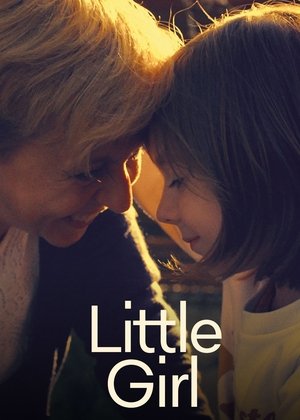
Mariam, Asiya, and Anissa were 11, 7, and 5 years old when they were raped. The attackers were their paternal uncle, a neighborhood youth, and the nanny's son. They have no memory of the event. To protect them, their bodies developed traumatic amnesia. Years later, the memories returned, and they decided to file a complaint.
His signature roles were the edgy North German characters: Jan Fedder was one of the most popular actors in the North. He was one of the most popular actors, a real guy with rough edges and a lot of heart: Jan Fedder. He was already on stage as a child and had his first acting lessons at the age of 13. He knew early on what he wanted: to become an actor. Antje Althoff's film traces his life and career, showing his incorrigible nature, an endearing symbiosis of a big mouth and a similarly big heart.
In this portrait film, we meet Inger Christensen in her apartment in Østerbro, Copenhagen, where she tells of her life and work, and reads excerpts from her major works.
Loran, a filmmaker from the notorious suburb Gottsunda, grapples with the desire to move away but is torn by loyalty to his childhood friends who lead a criminal life. "G" marks Loran's farewell to Gottsunda but completing the film in a changed community tests his sense of belonging and identity.
Les vivants
Sean Penn is almost a living legend. His filmography paints a picture of an 'other America': the lower class, the oppressed and the outsiders. Whether as an actor or director, he turns all the great myths upside down.
When the world was on fire, they called Hans Blix. This is how the Swedish diplomat is introduced in ‘Blix Not Bombs’. And if there is one fire he is particularly associated with, it is the 2003 invasion of Iraq. Prior to the invasion, Blix led the delegation of UN officials to find out whether weapons of mass destruction were present in Iraq. And it is the invasion and its consequences that we get Blix’s formidably insightful analysis of in a thorough and honest conversation with director Greta Stocklassa. Few others understand the complexities of international politics on the world stage like Blix, and none can explain it with his intellectual elegance. But Stocklassa’s film is also a portrait of the man himself, now an elderly gentleman, writing his memoirs, walking with a cane and watching birds through the window of his apartment. His outlook and commitment is as urgent as ever, as Blix takes stock of the invasion of Iraq and the state of the world today.
'if you only had one year left of your life, what would you do?' This question asks Swiss author Franz Hohler. His answer: 'Make death your adviser to live life to the fullest.' He is one of several carefully chosen Swiss citizens who give us an insight into their personal views on life and death. Besides these colorful, oftentimes funny quotes we meet Tom, a 50-year old male that has been diagnosed with incurable brain tumor. Contrary to what one would expect, Tom takes his sickness not as a burden but as a chance and lives his life happier than ever before. This to the surprise of his family and friends and above all - himself. The film encourages people to live life more consciously.
This cinematic portrait shows the Austrian filmmaker Ulrich Seidl at work. The much-discussed ‘Seidl method’ is conveyed here vividly and directly: The camera watches over Seidl’s shoulder during the filming of his new production IM KELLER, and observes him at the rehearsals for his latest theatre production ‘Böse Buben / Fiese Männer’. The film paints the picture of a fascinating and exceptional artist using a combination of extensive interviews and excerpts from earlier works.
This film begins, so to speak, where ‘Vol spécial’ left off. The reality of migration bears its teeth: Following a scuffle, 20-year-old Koumba from France is sent back to the place where she was raised – Senegal. She returns to the lost village of her ancestors hysterical, argumentative and unproductively rebellious. Now the mother of a toddler, she continues to come to terms with the two cultures; the outcome is unforeseeable, as is the outcome of this cinematic long-term observation. The risk of its failure due to its protagonist is palpable. But Koumba’s fascinating metamorphosis is also obvious, her body and character have taken on a more harmonious nature. All hope is not lost.
In 2024, Abdelkrim Baba Aissa, aged 75, engages in a series of filmed interviews with Algerian journalist Thoria Smati. They address the chronology of the rich and committed career of this self-taught Algerian actor, director, producer and screenwriter, who made his debut on Algerian television as an assistant director then at ONCIC as a director in the years 70.
Join filmmaking duo Chris Hegedus and Nick Doob as their cameras follow Franken to book signings, campaign rallies and the launch of Air America Radio, documenting his transformation from irreverent funnyman to political pundit.
Alanis Obomsawin, a North American Indian who earns her living by singing and making films, is the mother of an adopted child. She talks about her life, her people, and her responsibilities as a single parent. Her observations shake some of our cultural assumptions.
Astor Piazzolla revolutionized the tango. By breaking with the codes of traditional tango, he brought this popular Argentine music from dance floors to concert halls around the world and is now recognized as a major composer of the 20th century. From numerous unpublished private archives, the voices of Astor and his children paint a unique portrait of this complex man.
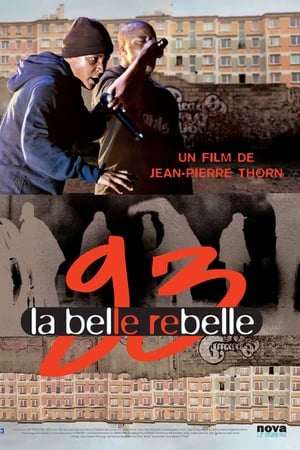
93, la belle rebelle