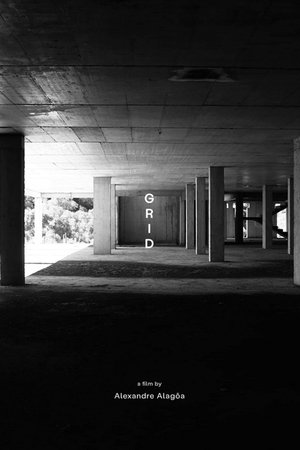
A ritual of grids, reflections and chasms; a complete state of entropy; a space that devours itself; a vertigo that destroys the gravity of the Earth; a trap that captures us inside the voids of the screen of light: «That blank arena wherein converge at once the hundred spaces» (Hollis Frampton).
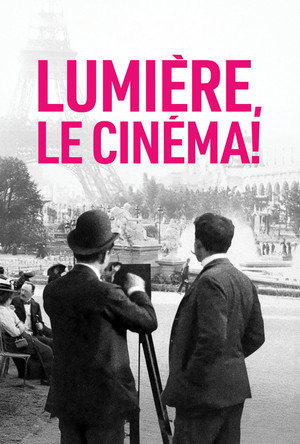
In one of those wonderful coincidences of history, lumière, the French word for “light,” was also the last name of brothers Auguste and Louis, whose brilliant invention, the cinematograph, helped to inaugurate the most beloved art form of the last 130 years. Institute Lumière director Thierry Frémaux uses Lumière, Le Cinema! to guide the viewer through over a hundred shorts—some famous, some forgotten, some never before seen—directed by Lumière and company. In the process, Frémaux illuminates how the brothers employed the camera as a creative instrument as they (and their operators) mastered framing, staging, and subject selection for quotidian and exotic microdocumentaries as well as the first ever fictional motion pictures. The result is not only a glorious re(telling) of the genesis of cinema but a profound meditation on the beautiful world captured—and the mysterious world imagined—by the Lumières.
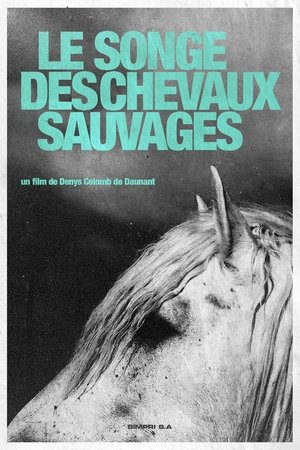
The horses in Denys Colomb Daunant’s dream poem are the white beasts of the marshlands of the Camargue in South West France. Daunant was haunted by these creatures. His obsession was first visualized when he wrote the autobiographical script for Albert Lamorisse’s award-winning 1953 film White Mane. In this short the beauty of the horses is captured with a variety of film techniques and by Jacques Lasry’s beautiful electronic score.
A study of observations around the ancient monument of the temple of Augustus and Livia and to cities of Vienne, Chonas-l'Amballan and Saint-Prim. Firstly proposed as a sort of ghost hunting, the project seems to focus on a world of figures, the whispers of the roads, diegetic/non-diegetic sounds and a camera that tries to investigate under fragments of logic and articulating cuts.
Moongazer's Moonlight Reverie
Não é Possível Garantir que Todos os Produtos Funcionem
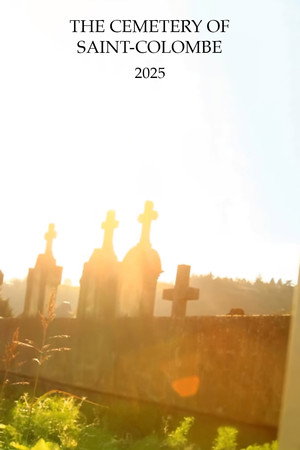
A small exploration in the cemetery from the township of Sainte-Colombe throught a focus into the light, graveyards, flaggings and funerary plaques.
Then, now, where? how?
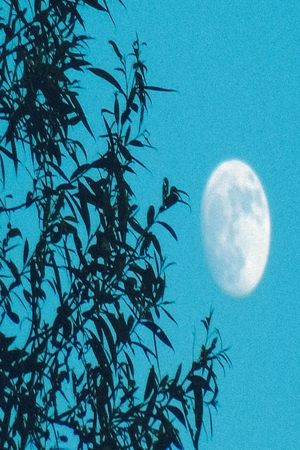
Twenty-four images of a camera running in the woods, a moonlight and a cemetery through improvised gestures, mechanical abstraction and saturated colors
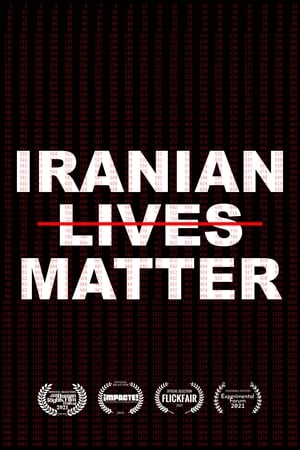
Made with virtually no budget during COVID-19 quarantine in 2020, IRANIAN LIVES MATTER abstractly recounts the true story of what occurred in Iran during the November 2019 protests, sparked by a surprise hike in gasoline prices, which quickly spread across the entire nation and was subsequently crushed by the dictator's iron fist, resulting in the death of approximately 1500 protesters, as reported by Reuters. IRANIAN LIVES MATTER is an experimental documentary, an audio-visual endurance test that audibly takes its audience through the chaos in the streets of Iran as the brutal regime cracks down on Iranian protesters, while visually showing the hands of the dictatorship as it crosses out 1500 lives one by one to further emphasize the scale of the massacre and show to a world desensitized to news of mass killings in the Middle East what the term "1500 dead" truly means.
Memory is a collaboration with musician Noah Lennox (Panda Bear), exploring the relationship between a musician and filmmaker and their personal reflection on memories. From Super 8 home movies and entirely handmade, this film explores familiar memories, the present moment combined with past experiences and how it all seems to evade from our present memory.
Experimental mash-up of circus and sideshow footage.
You go to hell, and it's Jacksonville.
A theoretical exercise can stem from a physical one: using the camera as if it was the vibrating device placed on the olive trees for the harvest of its fruit, the final result is a series of original and intriguing images. The camera shakes, gets in and out of focus, and we don’t exactly know what is happening. At first this is a strange disorientation, but then you get used to it through the cyclical mechanical noise that joins the images. The words of a peaceful female voice allows you to frame the film: a visual exercise after all can also be free.
Inspired by Lois Patiño's short movies project called "Paisaje-Duración" (Duration-Landscape) and Hiroshi Sugimoto's photo series "Seascapes", "Duração-Diferença" (Duration-Difference) reveals the difference through duration, through time; this short experimental movie seeks to capture, as Patiño and Sugimoto achived, the immanence as the entrance for something more - or something in between.
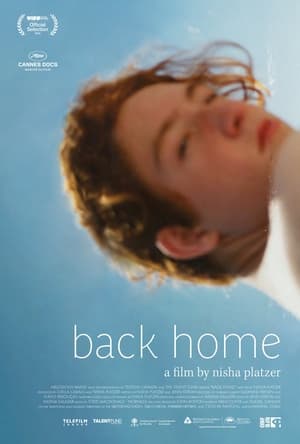
In 1999, 11-year-old Nisha Platzer lost her older brother, Josh, to suicide. Twenty years later, her search for a specialized medical treatment leads her to the door of someone who was once exceptionally close to Josh. And so it is that she finally has the chance to truly know her brother through his chosen family. Captured over five years in which synchronicities continually manifested, Platzer’s documentation of these encounters gently asserts that both grieving and healing are meant to be communal experiences.
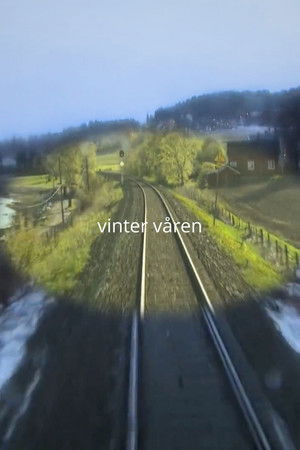
A train moves through winter as a superimposed image of the same route in spring gradually emerges. Both moments coexist within a single frame, revealing two seasons happening at once.
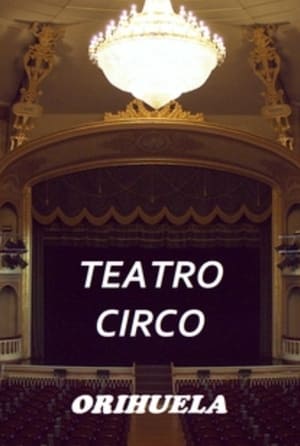
Augusto M. Torres makes a tour of images in honor of the CIRCUS THEATER of Orihuela.
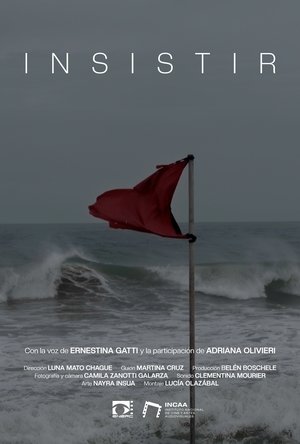
A documentary about the sea and memory. Its movement is its form. Its strength.
A seagull, a dog, a child, a call to prayer; Looking through a window, the corridor of a train, the wall of a medina; Everyday life is momentarily paused through the eyes of a stranger in an unknown land.