How Things Have Changed
It's a warm spring night, and the bee cowboys of Prince Edward Island begin rounding up their hives.
A close-up portrait of the daily lives of a pair of cows: told by way of some narrative-free, intimate POV photography, with plenty of close shot images, we follow the daily routine of these animals as they live what can only be described as mundane, boring lives - all with an ultimate purpose within the human food chain.
He walked a hard path of addiction and trouble, until a moment of faith sparked a profound change. This is the raw story a working man's unconventional road to redemption and purpose.
Set against the vibrant spectacle of the jaripeo, a symbol of Mexican cowboy tradition and machismo, this story unveils a hidden world of queer desire and quiet rebellion. As glances and gestures disrupt the rigid norms of masculinity, the rodeo becomes a stage for our protagonists to navigate identity, community, and the search for belonging in an oppressively traditional space.
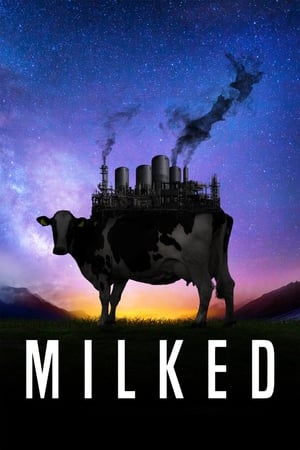
A young activist goes deep into dairy land where he takes on the giants of New Zealand's most powerful industry, and reveals how the sacred cash-cow industry has been milked dry. His journey exposes not only the sustainability crisis and the dangerous denial of impending agricultural disruption, but also what New Zealand and other countries can do to change their fate.
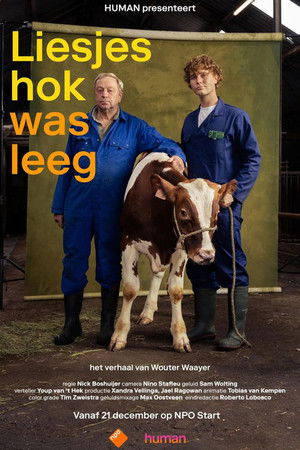
In Liesjes hok was leeg (Liesje's pen was empty), Wouter Waayer, now a convinced vegan and Extinction Rebellion activist, returns to the farm in Twente, where he receives another Liesje. We follow the bull calf from its arrival to its departure for the slaughterhouse, some five months later. A search for understanding unfolds between father Jan, the down-to-earth farmer who has devised a system to reduce emissions in barns, and Wouter, the idealist who would love to start a retirement home for cows. Between them: Liesje, a calf that slowly grows into a symbol for everything that conflicts between father and son, tradition and system change, love for animals, and farming.
On September 28th, 1903, the Urban Mountaineering Expedition, headed by Frank Ormiston-Smith, left Zermatt to attempt the conquest of the Matterhorn. On the 29th, the conquest was completed by the filming of the panorama from the actual summit of the mountain. The film consists of 20 scenes and illustrates the whole ascent from Zermatt through the Hornli Ridge. A copy of the film was found in Zermatt in 1953 and was was erroneously attributed to Frederick Burlingham and dated 1901. Since then, the film has been widely publicized as the first mountain film under the title of 'Cervin 1901', but this is incorrect. Ormiston previously had made 'Alpine series' (1901), 'The ascent of Mont Blanc' (1902), 'Climbing the Great Schreckhorn' (1902) and 'Ascent of the Jungfrau' (1903). The pictures and descriptions of the Charles Urban Trading 1903 film catalogue show without any doubt that 'Ascent of the Matterhorn' and 'Cervin 1901' are the same film.
Waylon Jennings joins a crew of cowboys from the Old 06 Ranch on a roundup.
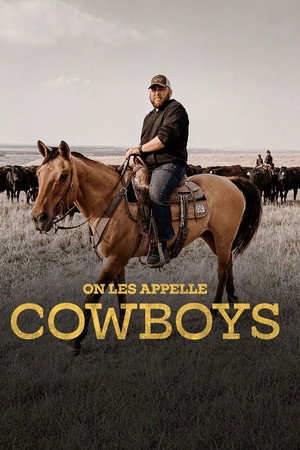
On les appelle cowboys
Blue Lagoon explores the links between industrial extraction, ecological care, and somatic release through the lens of a post-industrial North East England coastline.
A seasoned cowboy reminisces about his experiences, challenges, and the changing nature of cowboy culture. He expresses nostalgia for the past when cowboying was a way of life filled with camaraderie and hard work. The cowboy shares stories of his adventures, struggles with aging, and the decline of traditional ranching practices, ultimately revealing a sense of loneliness and the longing for meaningful connections.
Released in 1901
The world-famed Simmenthal cattle, bred by Herr Rebmann, are seen leaving the valley for the summer pastures on the Grimmalp. The herds are accompanied by the farmer and his assistants, and followed by a bevy of charmingly picturesque Swiss milkmaids carrying milk bins and other dairy impediments. Then the arrival at the farm makes up a scene of great animation, concluding with a "close-up view" of milking in the near foreground.
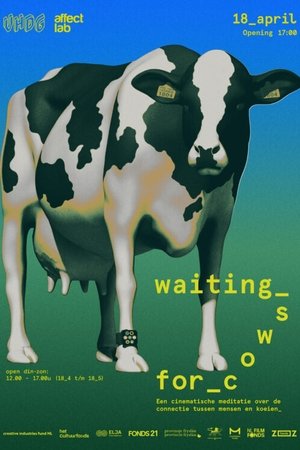
waiting_for_cows explores the complex relationship between humans, animals and technology. Set on a Frisian farm, the main protagonists are a trio of Dutch dairy cows monitored by wearables, conditioned by algorithms and quantified in data. Dairy bovines and their farmers have become some of the unlikely forerunners of agricultural automation. Both human and animal are entangled in systems of efficiency, productivity and time management where every cow is assigned a Key Performance Indicator by agri-tech companies. Through a data-led film experience, waiting_for_cows offers rare glimpses into contemporary machinic rituals of farm life where the flow of bovine data reveals much larger systems of power. Set against this backdrop of technology and control, the waiting_for_cows immersive installation reveals an allegorical tale, opening space for reflection.
Filmed in Grayson, Oklahoma, Wildcat meditatively combines documentation of a Black rodeo subculture with an abstract portrait of Joseph’s aunt who helped found the event.
Two best friends, Clint and Lenny, set out to pan for gold during the California Gold Rush. They have a stroke of luck and find a significant amount of gold in their pans. As they continue to pan, Clint becomes increasingly fixated on finding more and more gold, to the point where he becomes ruthless and starts to turn on Lenny. Lenny tries to remind Clint of the importance of their friendship and the values they once held, but Clint's greed continues to consume him. Eventually, their friendship is put to the test as Clint's behavior becomes increasingly dangerous and erratic. Will the gold be the end of their friendship, or will Lenny be able to save his friend from the destructive power of greed?
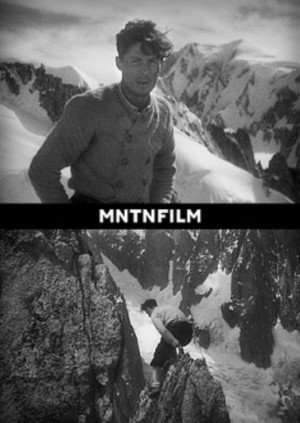
The idea is a simple one: three alpinists climb in the Mont Blanc Massif. This situation brings one face to face with the dangers of the mountain: avalanches, crevasses, fog, the climbing of the rocks, roping up, etc. All of this is magnified, transcended by a remarkable and strong use of the language of cinema. One of the first films about high mountains with Roger Frison-Roche and magnificent music by Maurice Jaubert
When Ramesh marries Kusum and hopes to have a better future, things don't go well and in a series of events a cow is accidently killed in his fields. Ramesh has to live in exile as a part of the punishment. Punishment takes a toll on the couple and Ramesh descends into madness. Slowly animals and human die in the village and people blame Kusum because of her past. A pandemic hits the village and villagers had to flee. Having served his sentence Ramesh returns to the empty village like a king.
An outrageous road movie about The Old Man and his grandkids in a 24 hour race against time to stop a milky madman hell bent on killing his prized cow to save the world.