Although he is unanimously credited with having democratised opera, making it accessible to the greatest number, focus is rarely put on the strategy he devised and implemented in order to carry out his actions, nor what his actions reveal of the man and artist, and of the resulting metamorphosis from opera singer to pop artist. Through this angle, this film sets out to pay tribute to the man who summed up his credo, obsession and life’s work, in the following way: “They led the public to believe that classical music belonged to a restricted elite. I was the way to prove to the world that was wrong.
In Madrid, Spain, Susana's flirtations with the old apothecary Don Hilarión arouse the jealousy of Julián, Susana's boyfriend.
37-year-old Italian-American widow Loretta Castorini believes she is unlucky in love, and so accepts a marriage proposal from her boyfriend Johnny, even though she doesn't love him. When she meets his estranged younger brother Ronny, an emotional and passionate man, she finds herself drawn to him. She tries to resist, but Ronny, who blames his brother for the loss of his hand, has no scruples about aggressively pursuing her while Johnny is out of the country. As Loretta falls for Ronny, she learns that she's not the only one in her family with a secret romance.
In New York, a gambler is challenged to take a cold female missionary to Havana, but they fall for each other, and the bet has a hidden motive to finance a crap game.
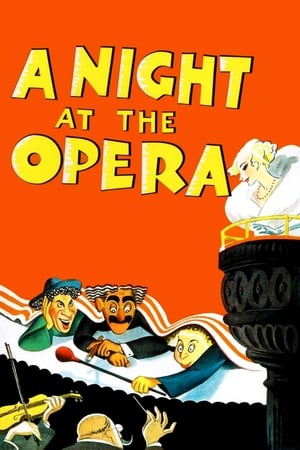
In this delightful mixture of romance, comedy and music, the director turns back the wheel of time about sixty years and shows the audience an Italy of primitive railroads, high bicycles and the famous "dolce far niente." Taking the visit of a traveling opera company to a small town, where it is scheduled to present "Il Barbiere di Siviglia" and where one of the most important citizens is a retired opera singer, the scenario writer weaves a web of merry complications well calculated to keep the spectators in a happy mood.
Two gay men living in St. Tropez have their lives turned upside down when the son of one of the men announces he is getting married. They try to conceal their lifestyle and their ownership of the drag club downstairs when the fiancée and her parents come for dinner.
Venkovská panička
Tonya Korovyak sleeps and sees itself a superstar. Dreams about glory, admirers, ovations and white limousine became her fixed idea. If at one time an ambitious girl mastered the elements of noble manners in boarding-school, now for the achievement of the put aim Tonya gathers to go to study on "Factory of Stars".
Eman Vovísek drinks away his unrequited love for Liduška, who married his cousin, the factory owner Danek. Because Eman is aggressive when drunk, he is taken to a mental health facility, where he meets his uncle Hanibal. Hanibal has a breakdown after his wife Matylda broke up with him. Matylda wanted to be free so she could marry her first love, Uncle Jonathan, who is due to arrive from America. Jonathan sends a telegram saying he will stay in Paris. Such a situation does not suit Danek. He assumed that Liduška would be visiting from America and that he himself would go to his mistress in the meantime. He therefore visits Vovísek and persuades him to play the role of Jonathan.
The bad economic situation causes the owner of a fish shop, Kateřina Udadná, to declare bankruptcy. The woman is devastated because she has worked hard all her life. She unexpectedly receives a letter from America from a certain Jonn Sam, who informs her that he is coming to Europe, where he intends to settle down. He brings her news about the inheritance that Mrs. Kateřina is to receive from his deceased uncle.
This 2021 Deutsche Oper Berlin performance is directed by Christof Loy and stars soprano Sara Jakubiak in the title role. Riccardo Zandonai’s Francesca da Rimini is a four-act opera set during the Renaissance period. The plot concerns an arranged marriage between Francesca and Giovanni, also known as Gianciotto, who is impersonated by his handsome brother Paolo, and with whom Francesca falls passionately in love.
Prince bon-vivant Levan Phantiashvili finds himself in a difficult financial situation. To make his life better he agrees to marry the merchant Adam Varakhidze’s daughter, Elo. The merchant is happy for this move opens the door in a high society for him until he finds out that Elo is not quite happy with his decision.
Vlasta Burian appears in a town of Czarist Russia impersonating an Inspector General, and he is entertained lavishly by the local political-hacks and peasants seeking his favor for whatever they are advocating or need fixed. Burain is involved in a series of comical situations as he takes everything he can gets his hands on while the peasants, who must plead for the betterment of their conditions, are left on the outside-looking-in. He makes his escape just as the real Inspector General is set to appear, but those-in-need will be no better off when the real McCoy shows up then they were with Burian.
...a mnoho štěstí v osobním životě
Svatba s generálem
A man who accused a catholic bishop of abusing him when he was a child dies in the Austrian city Salzburg. Everyone except his widow and the eccentrical detective Simon Brenner keeps silent and believes that the man killed himself.
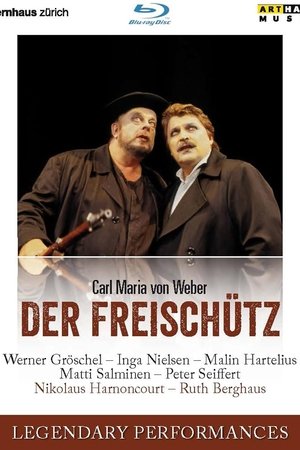
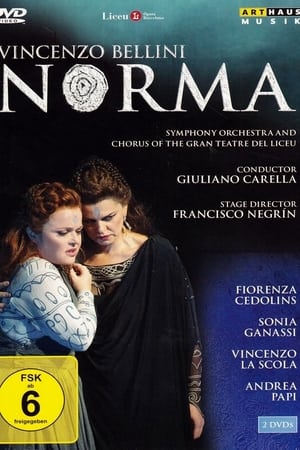
Franco Zeffirelli directs these two legendary La Scala productions telling tragic tales of jealousy. Mascagni's Cavalleria Rusticana features performances by Elena Obraztsova, Plácido Domingo, and Renato Bruson. Leoncavallo's I Pagliacci stars Teresa Stratas, Plácido Domingo, and Juan Pons. Both are conducted by George Pretre. This production of Pagliacci earned director Franco Zeffirelli the coveted Emmy as Best Director in the category of Classical Music Programming.
Charming country girl Anička Košáriková and the handsome Paľo share a tender, mutual affection, until Anička’s recently widowed mother forbids the match. Paľo is the son of the former steward who once fell on hard times while serving the Košárik family, and his family’s ruined reputation casts a shadow over their budding romance.
Based on the Take That musical, five best friends have the night of their lives seeing their favourite boy band in concert. Twenty-five years later, their lives have changed in many different ways as they reunite for one more epic show by their beloved band, to relight their friendship and discover that maybe their greatest days are ahead of them.
This first film of Cyprus' first director, Giorgios Filis, depicts music and dance customs in the form and style of a folk opera, with traditional Cypriot dances and songs. The film consists of a folkloric inventory based on the folk culture of Cyprus, as well as on similar ritual happenings. The narration and dialogue are entirely in the Cypriot dialect and are characterized by a rhetorical and poetic mood.