It's as if the world and the pain are reflected in the pool's water, but I still swim in it to stir up my memories.
When Demonetization (currency ban) is announced in India, 3 unlikely characters come face to face for a bag of cash. After that a car journey begins and some more characters come into picture. This results in a cat and mouse game with a very unexpected outcome.
Experimental Colombian short documentary on the treatment of livestock.
When actress Nikki Grace gets the lead role in a cursed film, her world becomes more and more surreal, blending realities and ideas of infidelity, reincarnation, and supernatural forces.
A small group of French students are studying Mao, trying to find out their position in the world and how to change the world to a Maoistic community using terrorism.
Martina and Sonja, cross-dress in vampire capes and werewolf claws, re-enacting familiar horror tropes. A corresponding soundtrack of stock screams and "scary" music suggests that the girls' toying with gender roles and power dynamics may have dire consequences.
An experience of a camera swinging in different gestures facing the optical distortion of the Sun. The last appearance of the smudge.
A brief look at a past relationship.
“Poussières de Juillet”, produced in 1967 by Hachemi El-Chérif, is taken from a poem by Kateb Yacine. "We made a film on the return of the ashes of Emir Abdelkader, to Algeria. It was the opportunity to make a film on the ancestors with M'hamed Issiakhem. He designed glass plates on the basis of my texts. Then we had actors collaborate. It was a film which cost us a total of 300 dinars, proof that we could do work for television without too much money. We won two first international prizes at the Belgrade festival. We left the original of the film with the Egyptians in Alexandria and they lost it. We kept a copy but over time I wonder what happened to it, because there is no not even had a screening, they say it still exists, but I don't know in what state." Kateb Yacine, July 28, 1986, interview with Arlette Casas.
A Landscape documentary about the silent voids the living inhabit after everyone they love has gone.
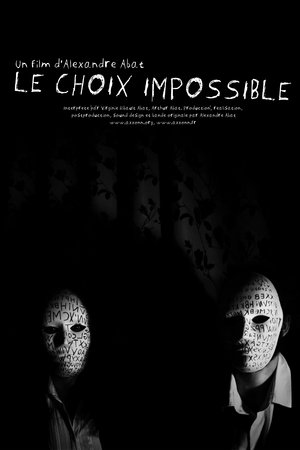
This is a story about a man who believes that he has two “selves” - external and internal. That is, an organism is a certain conglomerate of cells, each of which is a separate individual. This hybrid creature has a certain common personal “I” that uses the entire organism, and is the organism itself, which has its own will. According to the character, one can communicate with him, which is what he is trying to do. He wants to reach him and comes up with different ways of communication: injecting substances under the skin or intravenously, tattooing texts on the body, swallowing objects. The answer would come in the form of a rash or other physical manifestation that had to be interpreted. As a result, communication is carried out and the second “I” agrees to die.
A condensation of a handful of sunsets with various visual moods. Red and blue as opposites that still find a way to cohere. Concrete silhouettes over an ever-changing, expanding canvas. Every movement is collective, molecular. Over an invisible horizon, a chance presents itself to meditate on the “speed” of water (and the sea) and also for a more fluid kind of editing.
As people overrun tourist attractions, the inherent beauty crumbles to dust.
All she knows comes from the screens. All she has known is the screens. A screen breaks and everything changes.
In a remote area of northern Spain, the wind has a name: Tramuntana. Tramuntana takes what it wants—clothes, trees, boats, and the people of the landscape who live with the endless threat of being carried away by its force. This film is a lyrical portrait of this furious wind, woven from the stories passed down by local villagers.
A comfortable rhythm composed of light and shadow. Director Ogino-style absolute movie which freely manipulates geometric figures.
Under the relentless sun, a killer stalks through the mountains, where the innocence of a young couple becomes prey. With no shadows to hide their fate, the hunt is a macabre game in broad daylight, where fear is not hidden in the darkness, but burns with the rawness of the unperturbed noon.
Extracorpus
This film was made out of the capture of a live animation performance presented in Rome in January 2005 by Pierre Hébert and the musician Bob Ostertag. It is based on live action shooting done that same afternoon on the Campo dei Fiori where the philosopher Giordano Bruno was burned by the Inquisition in 1600. A commemorative statue was erected in the 19th century, that somberly dominate the market held everyday on the piazza. The film is about the resurgence of the past in this place where normal daily activities go on imperturbably. The capture of the performance was reworked, shortened and complemented with more studio performances.
An experimental tribute to Jean-Luc Godard, his documentary works and his insights in our modern world.