How does a nation slip into war? Dateline-Saigon profiles the controversial reporting of five Pulitzer Prize-winning journalists -The New York Times' David Halberstam, the Associated Press' Malcolm Browne, Peter Arnett, and legendary photojournalist Horst Faas, and UPI's Neil Sheehan -- during the early years of the Vietnam War as President John F. Kennedy is secretly committing US troops to what is initially dismissed by some as 'a nice little war in a land of tigers and elephants.' 'When the government is telling the truth, reporters become a relatively unimportant conduit to what is happening,' Halberstam tells us. 'But when the government doesn't tell the truth, begins to twist the truth, hide the truth, then the journalist becomes involuntarily infinitely more important.'
A gripping documentary about the courage and determination of a young English stockbroker who saved the lives of 669 children. Between March 13 and August 2, 1939, Nicholas Winton organized 8 transports to take children from Prague to new homes in Great Britain, and kept quiet about it until his wife discovered a scrapbook documenting his unique mission in 1988. Winton was a successful 29-year-old stockbroker in London who "had an intuition" about the fate of the Jews when he visited Prague in 1939. He quietly but decisively got down to the business of saving lives. We learn how only two countries, Sweden and Britain, answered his call to harbor the young refugees; how documents had to be forged and how once foster parents signed for the children on delivery, that was the last he saw of them.
Thirty years on from Vietnam, a government official is trying to track down soldiers who went missing in action, in the hope that it may lead her to her father. Meanwhile, a war veteran is forced to relive painful memories of how he was left for dead by his own platoon, and the heinous crimes he once committed while in the line of duty.
During the Vietnam War, a soldier finds himself the outsider of his own squad when they unnecessarily kidnap a female villager.
The year is 1965 and America is at war with North Vietnam. Commanding the air cavalry is Lt. Col. Hal Moore (Gibson), a born leader committed to his troops. His target: the Ia Drang Valley, called "The Valley of Death." As Moore prepares for one of the most violent battles in U.S. history, he delivers a stirring promise to his soldiers and their families: "I will leave no man behind...dead or alive. We will all come home together."
The men of Bravo Company are facing a battle that's all uphill… up Hamburger Hill. Fourteen war-weary soldiers are battling for a mud-covered mound of earth so named because it chews up soldiers like chopped meat. They are fighting for their country, their fellow soldiers and their lives. War is hell, but this is worse. Hamburger Hill tells it the way it was, the way it really was. It's a raw, gritty and totally unrelenting dramatic depiction of one of the fiercest battles of America's bloodiest war. This happened. Hamburger Hill - war at its worst, men at their best.
Upon receiving his draft notice and leaving his family ranch in Oklahoma, Claude heads to New York and befriends a tribe of long-haired hippies on his way to boot camp.
The film is anchored by a wartime re-encounter between a servant child and a tutor, transformed in the crucible of the spring 1968 Saigon offensive.
Jun is a university student. She meets high school student Haru. Haru is looking for Sachiko, the ex-girlfriend of her now deceased father. Jun and Haru meet Tokio. Tokio is the grandson of Sachiko and they learn that Sachiko is now deceased. They find an open-reel tape from Sachiko's articles.
As the city of Paris and the French people grow in consumer culture, a housewife living in a high-rise apartment with her husband and two children takes to prostitution to help pay the bills.
Cynical British journalist Fowler falls in love with a young Vietnamese woman but is dismayed when a naïve U.S. official also begins vying for her attention. In retaliation, Fowler informs the communists that the American is selling arms to their enemy.
The director Andrés Kaiser combines hundreds of amateur films and photographs from the treasure trove of images belonging to his migrant grandparents creating a cinematic firework of analogies.
An old Vietnam war veteran struggles with his past when his granddaughter leaves for the military.
A US Fighter pilot's epic struggle of survival after being shot down on a mission over Laos during the Vietnam War.
As a young and naive recruit in Vietnam, Chris Taylor faces a moral crisis when confronted with the horrors of war and the duality of man.
A pragmatic U.S. Marine observes the dehumanizing effects the U.S.-Vietnam War has on his fellow recruits from their brutal boot camp training to the bloody street fighting in Hue.
A disk jockey goes to Vietnam to work for the Armed Forces Radio Service. While he becomes popular among the troops, his superiors disapprove of his humor.
Follows the investigation into the assassination of President John F. Kennedy led by New Orleans district attorney Jim Garrison.
During the Vietnam War, Brian Anderson, a young Army medic, is stationed in Saigon. Initially apathetic and self-serving, he eventually has his heart won over by the children at a nearby orphanage where he does volunteer work. At first, a doctor named Katherine Cross has to persuade him to help the children. But soon, Brian willingly puts his career and safety on the line to provide the orphans with the food and medical supplies they need.
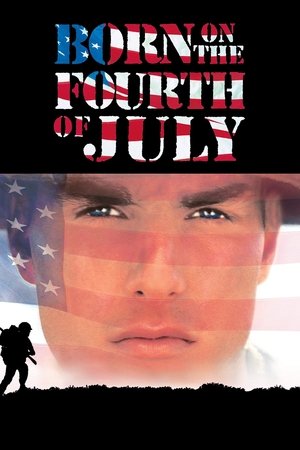
Paralyzed in the Vietnam war, Ron Kovic becomes an anti-war and pro-human rights political activist after feeling betrayed by the country he fought for.