A man takes a mysterious pill that gives him the ability to teleport into different times and different places, but with serious consequences.
A psychological thriller that delves into the intricate struggles of a man haunted by entities that only he can see. As he confronts these manifestations during therapy, a gripping journey unfolds, blurring the lines between reality and the paranormal. His therapist attempts to guide him through the chaos of his own mind, uncovering a haunting truth about his and her mental health.
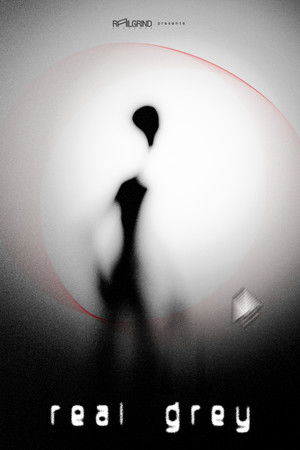
Someone wanders through a house while fleeing from a mysterious presence. Their body dissolves on-screen, and their mind is invaded by a strident gray noise.
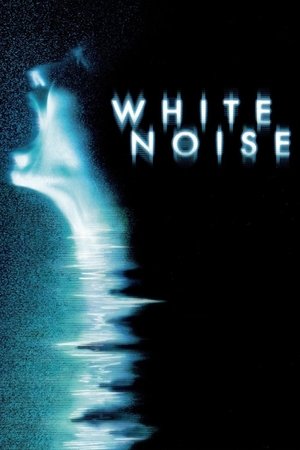
An architect's desire to speak with his wife from beyond the grave using EVP (Electronic Voice Phenomenon), becomes an obsession with supernatural repercussions.
As he falls down the spiral of personal obsession; a delusional mycologist finds himself in the midst of seeking the unattainable. Morals won't play a role in his relentless pursuit of transforming his being into fungus.
X-ray images were invented in 1895, the same year in which the Lumière brothers presented their respective invention in what today is considered to be the first cinema screening. Thus, both cinema and radiography fall within the scopic regime inaugurated by modernity. The use of X-rays on two sculptures from the Bilbao Fine Arts Museum generates images that reveal certain elements of them that would otherwise be invisible to our eyes. These images, despite being generally created for technical or scientific purposes, seem to produce a certain form of 'photogénie': they lend the radiographed objects a new appearance that lies somewhere between the material and the ethereal, endowing them with a vaporous and spectral quality. It is not by chance that physics and phantasmagoria share the term 'spectrum' in their vocabulary.
This is a story about a man who believes that he has two “selves” - external and internal. That is, an organism is a certain conglomerate of cells, each of which is a separate individual. This hybrid creature has a certain common personal “I” that uses the entire organism, and is the organism itself, which has its own will. According to the character, one can communicate with him, which is what he is trying to do. He wants to reach him and comes up with different ways of communication: injecting substances under the skin or intravenously, tattooing texts on the body, swallowing objects. The answer would come in the form of a rash or other physical manifestation that had to be interpreted. As a result, communication is carried out and the second “I” agrees to die.
Hoping to find a sense of connection to her late mother, Gorgeous takes a trip with her friends to visit her aunt's ancestral house in the countryside. The girls soon discover that there is more to the old house than meets the eye.
SOME MEMORIES CAN HAUNT YOU
Amongst the contemplative static shots of decaying architecture weaves an abstract narrative unveiling the life-cycle of a higher perception, too large to perceive. Shot at various sites across south-east England, INFRASTRATA is a study on the concept of super-organisms, and the relationship between structure and nature.
A man searches for his brother in a locked down school.
When an innocent man is captured by a mad scientist, he is used as a tragic experiment being transformed into a hideous monster and released into the wild.
Based off the poem by H.P Lovecraft, it tells the tale of a dying man who slowly enters a strange dream world where he fades into oblivion.
A former football star turned real estate broker meets with rich, spoiled young Billy to close a deal on a mansion, and nothing goes according to plan.
A cinematic and conceptually inventive film that explores the haunting memories of Asia’s late 20th-century modernization through the large-scale export of wigs during the Cold War. Yet, in every wig resides a ghost from the imperial past.
A hunter travels through the Norwegian wilderness to track down a creature meddling with time.
A socially awkward, neurodivergent youth struggles to adapt at a social gathering that quickly takes a turn into the uncanny and surreal.
A voyeuristic night photographer discovers that she has become the subject of some thing's lens.
Filmmaker and artist Jack Smith described his own film as a “comedy set in a haunted movie studio.” Flaming Creatures begins humorously enough with several men and women, mostly of indeterminate gender, vamping it up in front of the camera and participating in a mock advertisement for an indelible, heart-shaped brand of lipstick. However, things take a dark, nightmarish turn when a transvestite chases, catches and begins molesting a woman. Soon, all of the titular “creatures” participate in a (mostly clothed) orgy that causes a massive earthquake. After the creatures are killed in the resulting chaos, a vampire dressed like an old Hollywood starlet rises from her coffin to resurrect the dead. All ends happily enough when the now undead creatures dance with each other, even though another orgy and earthquake loom over the end title card.
How would a found footage film look if the footage was never found? This conceptual art experiment questions the very nature of film and cinema while serving as an ironic tribute to the found footage horror pop culture. The found footage format provides the narrative justification for such a film to exist: the non-existence exists because the footage existed yet it was lost and never found.