In the beginning it felt like a holiday, then everything changed due to Covid19.
The world lost Hayden Hunstable to suicide in the middle of the mandated stay-at-home orders on April 17th, just 4 days before his 13th birthday. Hayden did not struggle with depression nor did he have a history of mental health problems. He was a normal healthy and happy kid who was unprepared for social isolation. His parents attribute Hayden’s emotional suffering to a “perfect storm of routine disruption, social isolation, increased gaming, and a pressure stack of activity cancellations,” all created by the government’s mandated stay-at-home orders in the wake of the COVID-19 global pandemic.
COVID-19. The whole world is in Lock Down. There is panic in society. What is going on? Is this actually about our public health?
Seeking Asylum is a feature documentary that bears witness to the endless deterrents migrants face when petitioning for asylum in the United States. In a dismantled system that has been designed for failure, we follow one woman's journey as she searches for protection for her and kids. Many people view getting to the United States as the final hurdle of the migration journey, but we quickly learn that once in the U.S. the fight has just begun. During one of the most uncertain times in our country's history, Seeking Asylum documents the challenges asylum seekers face and shows why asylum is an integral part of the American Dream that we cannot afford to lose.
Filmed over five years, we follow Lily Jones, 20, as she transitions from male to female, leaves her seaside home for the city, undergoes gender reassignment surgery and finds love.
'Gideon: Searching for the truth' takes the viewer with Van Meijeren on his quest for answers to questions about the current global health crisis. Questions that are common among the population, but to which he, and therefore the people in the country, do not get an answer in the Dutch House of Representatives. A place where Van Meijeren says he often feels like 'crying in the desert'. Where he gets no answers to his 'justifiably pressing' questions. Where instead he is invariably framed and judged by form, which makes any form of democratic debate impossible in advance.
A compelling portrait of New Yorkers living on the streets as they struggle with mental health, addiction, and the onset of a global pandemic. This powerful documentary offers an unfiltered, at times mesmerizing glimpse into life on the margins, drawing viewers into the raw, human stories behind a deepening crisis.
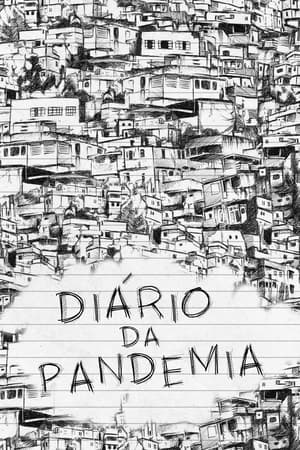
Several Portuguese creators occupy the director's chair in this collective short film shot during the COVID-19 pandemic shutdown in an unfolding of personal perspectives.
End of a trilogy started with Hold up and continued with Hold On, Hold out questions the official narrative about the COVID-19 pandemic.
This documentary recounts the experiences of people on the ground in the earliest days of the novel coronavirus and the way two countries dealt with its initial spread, from the first days of the outbreak in Wuhan to its rampage across the United States.
Following the class of 2020 at Oakland High School in a year marked by seismic change, exploring the emotional world of teenagers coming of age against the backdrop of a rapidly changing world.
Escape from everyday life in freedom and community and live utopias - for many organizers and artists, the secret of the music festivals that make culturally weak Mecklenburg-Western Pomerania a place of pilgrimage for tens of thousands of people every summer. But instead of freedom, community and utopia, there was one thing above all in the festival summers of 2020 and 2021: silence.
At the beginning of the year 2020, a relentless plague sweeps the planet and, as a consequence, a global lockdown is gradually decreed: how did people from very different latitudes, living necessarily very different situations, experience this shared solitude? How did people adapt to the restriction by decree of their personal freedoms and the transformation of many bustling metropolises into ghost cities?
El conserje
A feature documentary about Kansas City, as its people tell us how they got through the pandemic and look back at what they lost.
Humor helps people through hard times. A look at the viral videos, songs and sketches that have filled the Internet worldwide since the beginning of the COVID-19 pandemic and what this lockdown humor says about humans in distress.
The Covid hysteria began with slogans like “just 15 days to flatten the curve”, but within a year, it evolved to be “everyone must get vaccinated”. Your rights to the absence of coercion and informed consent are now under continual attack! People around the world are unable to get on planes and trains, access hospitals, attend funerals, go to restaurants and gyms, simply because they do not have a “health” pass.
A short film of the first weeks of strict national lockdown, filmed in Barcelona on a classic home video camera Hi8. Narrates the story of three women who share a flat and who create a microworld not only to survive the global pandemic but also to survive themselves.
A group of young architects, confined to a forest in Barcelona during the COVID crisis, explore the problems generated by the ambition of wanting to be completely self-sufficient.
Filmed and edited entirely in isolation, Living in Fear is an educational and inspiring documentary directed by myself, Stephanie Castelete-Tyrrell, a disabled filmmaker as I capture the fears and struggles disabled people faced before the government implemented the lockdown on the 23rd March 2020. Thousands of people with disabilities were left in the dark and had to make the call weeks before to lockdown as it was inevitable that we would die if we caught the virus. Food was impossible to access because we couldn't go out or get delivery slots, and even if we did panic buyers made it impossible to get the items we desperately needed. We were truly isolated, unable to have family and friends visit. Having carers coming in and out of the house was risky and many disabled people felt that having basic care was putting their lives at risk.