When a Mongolian nomadic family's newest camel colt is rejected by its mother, a musician is needed for a ritual to change her mind.
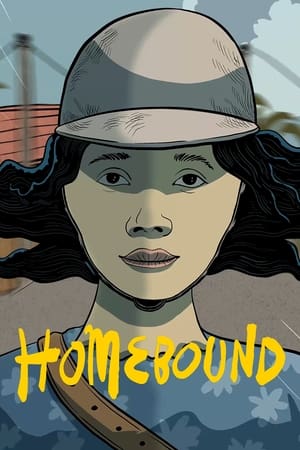
Eneida, 83 years old, makes a journey into her past, in search of her firstborn daughter, whom she has not seen for over two decades.
Earth to earth, water to water. The body weight of a newborn child is up to 85 percent water, but in adulthood, the ratio can be cut into half. In a way, people dry up as they grow older. In Claudia Tosi’s documentary, people drink water, watch the rain and wait for their death. The Perfect Circle depicts a man and a woman, Ivano and Meris, who spend their final days at a hospice in the hills of Reggio Emilia, Northern Italy. Their illnesses are in the terminal stage and they know that death is only a matter of time. But the ever-nearing end may fleetingly be forgotten, like when they close their eyes and get lost in the music – until the bodies being carried out next door once again remind them of the inevitable. Death also becomes a part of life for the patients’ loved ones, who want to spend the last available moments with the soon to be departed.
In California's Bay Area, a painful memory lingers of the Port Chicago disaster of WWII, when hundreds of the Navy's first Black Sailors perished, and the White officers in charge were protected by the chain of command.
What would your family reminiscences about dad sound like if he had been an early supporter of Hitler’s, a leader of the notorious SA and the Third Reich’s minister in charge of Slovakia, including its Final Solution? Executed as a war criminal in 1947, Hanns Ludin left behind a grieving widow and six young children, the youngest of whom became a filmmaker. It's a fascinating, maddening, sometimes even humorous look at what the director calls "a typical German story." (Film Forum)
In the table that symbolizes the value of traditional women, a woman who wants to break free from her family must face her daughter.
Jason Momoa's story of fatherhood, craftsmanship, and the legacy he'll leave behind.
A short animated documentary featuring archival recordings of the filmmaker's Volga-German Great-Great-Grandmother, Mary Frank Lind, in which she recalls key memories of childhood—her father's windmill, warm rains, wolf sightings, bone trading, and her passion for carpentry, which broke gender norms but was supported by her father.
A story of life and death, featuring Lozinski's six-year-old son Tomaszek and elderly people spending time on the benches of a Warsaw park. Riding his scooter, Tomaszek asks the elderly very adult, though basic, questions, which they are happy to answer. The boy's ideas of future and life are confronted with those of men at the end of their lives.
Arctic Tale is a 2007 documentary film from the National Geographic Society about the life cycle of a walrus and her calf, and a polar bear and her cubs, in a similar vein to the 2005 hit production March of the Penguins, also from National Geographic.
The documentary's title translates as "to be and to have", the two auxiliary verbs in the French language. It is about a primary school in the commune of Saint-Étienne-sur-Usson, Puy-de-Dôme, France, the population of which is just over 200. The school has one small class of mixed ages (from four to twelve years), with a dedicated teacher, Georges Lopez, who shows patience and respect for the children as we follow their story through a single school year.
As a career-defining chapter propels him into global stardom, musician Noah Kahan stands at a crossroads. In the wake of the breakout success of Stick Season—an album born from the quiet of rural Vermont and embraced around the world—Noah begins work on his follow-up album while facing the mounting pressure of what comes next. Over a whirlwind year of sold-out tours and unprecedented acclaim, he returns to his Vermont roots and family. Buoyed by his uncanny wit, he searches for a sense of home and creative inspiration as he confronts the deeply personal struggles that have left him out of sync with himself.
A compilation of various accidents, mayhem, death, gore, and human feats caught on tape.
Thomas Haemmerli is about to celebrate his fortieth birthday when he learns of his mother's death. A further shock follows when he and his brother Erik discover her apartment, which is filthy and full to bursting with junk. It takes the brothers an entire month to clean out the place. Among the chaos, they find films going back to the 1930s, photos and other memorabilia.
Negotiating Amnesia is an essay film based on research conducted at the Alinari Archive and the National Library in Florence. It focuses on the Ethiopian War of 1935-36 and the legacy of the fascist, imperial drive in Italy. Through interviews, archival images and the analysis of high-school textbooks employed in Italy since 1946, the film shifts through different historical and personal anecdotes, modes and technologies of representation.
Filmmaker Cam Archer examines and explores his ordinary, suburban neighborhood in search of hidden truths, new narratives and a better understanding of his fading, creative self. Combining heavily degraded video with personal photographs and real life neighbors, Archer re-imagines the concept of 'home video'. In an attempt to distance himself from his subjects, actress Jena Malone narrates the piece as Archer in the first person.
Chelsea Bledsoe and her husband Graig throw a surprise intervention for her old high school boyfriend, Henry, with a mismatched group of acquaintances from back in the day to fill out the guest list.
A deeply moving portrait of an architect tested by the impossible choices between career, country and motherhood
A journey through a century of Ambrosoli family history.
Nearly a decade in the making, The House We Lived In is a strikingly candid portrait of a family transformed by a father’s brain injury. In 2011, 61-year-old Tod O’Donnell awoke from a coma with a case of total amnesia that doctors assured his wife and children was temporary. But when it proved permanent, and for no discernible reason, the O’Donnell’s were left to themselves to untangle the mystery — a struggle for answers that would only raise more questions as they came to realize, painfully, that the real mystery was Tod himself.