Sittwe is about two teenagers separated by conflict and segregation in Burma's Rakhine state, Phyu Phyu Than, a Rohingya girl and Aung San Myint, a Buddhist boy. Both youth saw their homes burned down during communal violence in 2012. Phyu Phyu Than is confined in an apartheid-style camp and has no chance to go to school or travel to her home just a few miles away. Aung San Myint's family struggles to survive and support his high school studies to fulfill his dream to go to medical school. Interviews filmed over two years with the teenagers reveal their ideas about each other's communities and the hope of reconciliation.
Alex Jones interviews Walter Burien, commodity trading adviser (CTA) of 15 years about the biggest game in town. There are over 85,000 federal and regional governmental institutions: school districts, water and power authorities, county and city governments – and they own over 70 percent of the stock market.
Alex Jones exposes the problem-reaction-solution paradigm being used to terrorize the American people into accepting a highly controlled and oppressive society. From children in public schools being trained to turn in their peers and parents, to the Army and National Guard patrolling our nation's highways, Police State: The Takeover reveals the most threatening developments of Police State control
Total Enslavement is the third installment in the critically-acclaimed Police State series and is a must-see for all who leve freedom. This film documents the nightmare rise of the Homeland Security dictatorship, Patriot Acts 1 and 2, the Total Information Awareness Network, government-run white slavery rings, the new prison surveillance economy and much more.
Documentary giving the background on all of the major players involved in the planning of the assassination of President Lincoln, including the investigation and aftermath.
POLICE STATE 4 chronicles the sickening depths to which our republic has fallen. Veteran documentary filmmaker Alex Jones conclusively proves the existence of a secret network of FEMA camps, now being expanded nationwide. The military industrial complex is transforming our once free nation into a giant prison camp. A cashless society control grid, constructed in the name of fighting terrorism, was actually built to enslave the American people. Body scanners, sound cannons, citizen spies, staged terror and cameras on every street corner -- it's only the beginning of the New World Order's hellish plan. This film exposes how the "Continuity of Government" program has established an all powerful shadow state. Prepare to enter the secretive world of emergency dictatorship, FEMA camps, and a shredded Constitution.
In a country where bella figura is a national pastime, Prime Minister Silvio Berlusconi is the maestro of media manipulation. Having risen to political primacy with the aid of his Mediaset empire, he now controls 90% of the bel paese’s television channels including the state-run RAI network. Quantity, it seems, does not equal quality. Fed on a diet of semi-naked dancing girls, inane competitions and rickety reality shows built around the most ridiculous of premises, is it any wonder that Italians are becoming a nation of fame-hungry wannabes?
Seven militant women (fedaiyat) of the revolutionary generation tell the story of the Palestinian resistance through accounts of their own lives. Cut from 35 hours of interviews with leaders of the armed struggle, the film presents an image of confident, unapologetic and proud feminine identity. Together, the memories of these women narrate the dream of a generation, yet unrealized.
Skate: A arte da resistência
BBC's Simon Dring's film focuses on the EPLF, Eritrean People's Liberation Front, which is battling Ethiopian forces. The film includes interviews with Ali Sayed, EPLF head of foreign missions, and Mohammed Ramadan Nour, General Secretary.
Robert E. Lee, born in Virginia in 1807, was deeply influenced by his Southern heritage and the legacy of his family, particularly his father, who served in the American Revolution. Raised by his mother, Lee learned values of self-control and integrity. He graduated second in his class from the United States Military Academy and had a distinguished military career, serving the Union before the Civil War. Despite his opposition to secession, he chose to lead the Confederate Army when Virginia seceded. Lee's military strategies were notable, achieving significant victories, yet he faced ultimate defeat at Gettysburg. After the war, he became president of Washington College, promoting peace and reconciliation while embodying principles of integrity and duty.
Augusto and Paulina have been together for 25 years. Eight years ago, he was diagnosed with Alzheimer's disease. Both fear the day he no longer recognizes her.
After 52 years of armed conflict the FARC guerrillas are about to hand over their arms in exchange for political participation and social inclusion of the poor. Ernesto is one of them. The much celebrated Colombian peace agreement throws Ernesto and the polarised society around him into chaos in which everyone is afraid of the future and their own survival.
“I Beg You To Like Me”, serves as a testimony of individuals who felt oppressed about their body image for not meeting the standard beauty criteria, and demonstrates how a reckless language based on others’ physical appearance could turn violent. It aims to achieve much more than simply stating the obvious, which is that we are not obligated to submit to the ideal beauty standards dictated by the media, consumerism and the beauty industry. The intimate stories about one’s own body image as told by women, men, disabled people and LGBT individuals make it apparent that any one of us could end up being a victim and a perpetrator at the same time. What if, this iconic body image is nothing but an unobtainable fallacy? “Is it not yet the time to openly discuss the conventional perception of beauty, and step up onto the catwalk in our actual likeness?
After the coup d'état on 1 February 2021, which brought the ten-year transition to democracy in Myanmar to an abrupt end, thousands of young urbanites, both men and women, gave up their lives to join the resistance against the junta.
A documentary film that capture the moment of an old man in the dilapidated oldest cinema in Yangon reflecting his old day working in this cinema and missing the time with his beloved wife who has passed away.
These are the first images shot in the ALN maquis, camera in hand, at the end of 1956 and in 1957. These war images taken in the Aurès-Nementchas are intended to be the basis of a dialogue between French and Algerians for peace in Algeria, by demonstrating the existence of an armed organization close to the people. Three versions of Algeria in Flames are produced: French, German and Arabic. From the end of the editing, the film circulates without any cuts throughout the world, except in France where the first screening takes place in the occupied Sorbonne in 1968. Certain images of the film have circulated and are found in films, in particular Algerian films. Because of the excitement caused by this film, he was forced to go into hiding for 25 months. After the declaration of independence, he founded the first Algerian Audiovisual Center.
A Liberian refugee SAM REAYAH and his family have been separated for five years and live in uncertainty waiting for family reunion. While Sam and his younger daughter Ruth continue their lives in Buduburam Refugee camp in Ghana, his wife Decontee and his older daughter Joyce have already started a life in Rochester, USA. The film explores the idea of home. Sam's family had a home in Liberia, but they had to give it up. They were forced to build homes elsewhere. They built a home in Ghana. They build a home in The United States. They built homes together, they build homes separate of each other. But which home does the heart want?
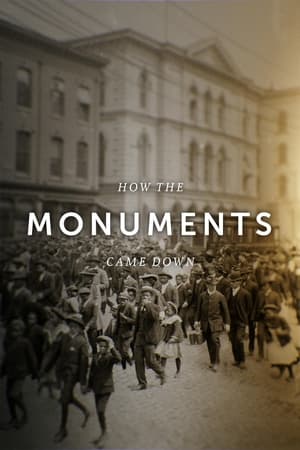
How the Monuments Came Down is a timely and searing look at the history of white supremacy and Black resistance in Richmond. The feature-length film-brought to life by history-makers, descendants, scholars, and activists-reveals how monuments to Confederate leaders stood for more than a century, and why they fell.
The documentary mixes reenactments with true accounts from four characters/actors who tell the stories of six black gay men, their experiences and their romantic relationships crossed by racism and homophobia.