The extraordinary story of disco queen Donna Summer through a rich archive of unpublished film excerpts, home video, photographs, artwork, writings, personal audio and other recordings that span the life of one of the most iconic performers ever to shake a room to its timbers. From her early career with Giorgio Moroder in Germany, to later years more focused on spirituality and family life as a shelter from troubles associated with both notoriety and intimate wounds, her story is all the more special for being told in the first person – both singular and plural.
In this film, Paul Tomkowicz, Polish-born Canadian, talks about his job and his life in Canada. He compares his new life in the city of Winnipeg to the life he knew in Poland, marvelling at the freedom Canadians enjoy. In winter the rail-switches on streetcar tracks in Winnipeg froze and jammed with freezing mud and snow. Keeping them clean, whatever the weather, was the job of the switchman.
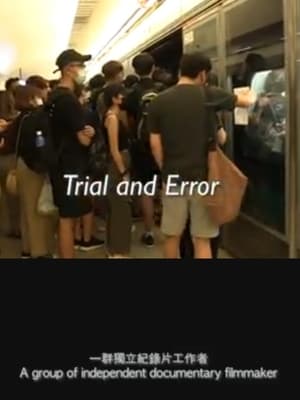
Hundreds of thousands − perhaps even millions − of protestors have taken to the streets of Hong Kong since early June. Sparked initially by the government's plans for a controversial extradition bill, the movement has now transformed into a broader push for greater freedoms and democracy, with anger over police brutality fuelling a cycle of violence. The protests are Hong Kong's biggest challenge to Beijing since its return to China in 1997. If We Burn looks at the movement through the eyes of Hong Kongers whose fates, like their city's future, now hang in the balance.
Using original footage and interviews, this documentary tells the nail-biting story of Apollo 13 and the struggle to bring its astronauts safely home.
This year marks the 50th anniversary of ABBA’s iconic Eurovision victory, a milestone that calls for a celebratory cinematic tribute fitting for the ultimate pop band. ‘ABBA: Against the Odds’ unveils the epic journey of ABBA’s rise to global fame. Starting with the moment they won Eurovision, it tells the story of how they overcame critical backlash, societal attitudes and marital break-up to deliver their ground-breaking music and prove themselves as a live act.
On the eve of the publication of a biography of Claude Jutra, one of the most famous and celebrated filmmakers in Quebec and Canada, a leak leaked to the press reveals that the book contains anonymous allegations of pedophile acts committed by the filmmaker. The rumor spread like lightning, suddenly igniting the entirety of Quebec society. By finding today some of the main witnesses propelled overnight into the heart of an unparalleled media tornado, the documentary reconstructs with archive images and other previously unpublished images, the sequence of events which led to a rewriting of the story.
In July 1951, all the sides to the Korean War sought a ceasefire. For a ceasefire, the Allied and Communist forces began to hold talks at Naebongjang, located northeast of Kaesong. However, they only sharply opposed each other and didn't make progress in the negotiation. In October 1951, the two sides met again in the small village of Neolmun-ri below Gaeseong. They set up tents there to negotiate and named the place Panmunjom. The name Panmunjeom is a combination word of Panmun, meaning Neulmun-ri, and “Jom,” of an inn.
Alfred Hitchcock is known as a giant of movie making, a facetious master of suspense, obsessed with blond heroines in peril, with the reputation of being tyrannical towards his actors. But who knows the real Hitchcock? During his last public appearance, "Hitch" paid tribute to the wife, mother, co-writer, editor and partner of a lifetime that was Alma Reville Hitchcock. The two Hitchcock were inseparable, engineering the unquestionable masterpieces together. Their genuine collaboration never stopped from the day they met until the end of their lives. It's in light of this fusional relationship that this film will revisit and shed fresh light on the legend.
Zdravý nemocný Vlastimilený Brodský
Well known for its exploration of seduction and revenge, the “Dangerous Liaisons” by Choderlos de Laclos caused a scandal from its first publication in 1782. Despite – or because of the scandal – the book was a top-seller. Since then, it stood the test of time. Combining eras, continents and people, the novel is adapted around the world. Marvelous tool for reflection on the female condition, social satire announcing the Revolution, remarkable work on the conflicting nature of love but also of the gender war, consecration of the power of the words, a libertine manual… “Dangerous Liaisons” is all of these at once.
Eldar Ryazanov reads his poetry. An introspective movie on his multifaceted work.
An absurd game of “finding happiness” is being played by local Latvian coyotes* and illegal immigrants on the Russian and the European Union border. It is a game with no winner – all participants are driven to play by the sense of despair. While one side leaves home and undertakes a perilous journey to the other side of the globe, hoping to spend the rest of their lives in a free country, the other side risks their freedom to earn a chance to stay right where they are, in their homeland. *coyote – someone who smuggles illegal immigrants
Albert Camus died at 46 years old on January 4, 1960, two years after his Nobel Prize in literature. Author of “L'Etranger”, one of the most widely read novels in the world, philosopher of the absurd and of revolt, resistant, journalist, playwright, Albert Camus had an extraordinary destiny. Child of the poor districts of Algiers, tuberculosis patient, orphan of father, son of an illiterate and deaf mother, he tore himself away from his condition thanks to his teacher. French from Algeria, he never ceased to fight for equality with the Arabs and the Kabyle, while fearing the Independence of the FLN. Founded on restored and colorized archives, and first-hand accounts, this documentary attempts to paint the portrait of Camus as he was.
Set in past, present, and future South Africa — an invitation into a poetic, memory-driven exploration of love, intimacy, race, and belonging by the filmmaker, who grew up during apartheid but didn't know it was happening until it was over.
A short kid from a Canadian army base becomes the international pop culture darling of the 1980s—only to find the course of his life altered by a stunning diagnosis. What happens when an incurable optimist confronts an incurable disease?
Jackie Chan is a true icon of Asian and Chinese culture. Over a 45-year-long career, he has carved a niche for himself as an actor, stuntman, director, and screenwriter, but also singer and formidable businessman. After starring in almost 200 films, Jackie Chan has reconciled fans of genre film and Hollywood blockbusters, whilst bridging the gap between Asian and Western cinema. Through film excerpts, archive footage and images, and an offbeat approach inspired by the visual codes of the golden age of kung fu films, this documentary will take a look back at the creation of a popular hero who has come to be an icon for China, and for the entire Asian continent.
Work. Eat. Sleep. And back to work. For a long time skippers in the North East of Scotland could not find locals to work on their fishing vessels. That was until Filipino fishermen started coming to town for work. Both nationalities strive to shorten the distance between two very different worlds.
Franco-American film pioneer Maurice Tourneur is a forgotten name in cinema history. This film traces the incredible journey of this crucial innovator from Paris to Hollywood. He inspired many of his peers and was also a mentor to some great filmmakers, including his son Jacques. Using previously unseen home movies, this film reveals the private man as well as the inspired artist whose career spanned four decades and two world wars.
Here's a little story they're about to tell... Mike Diamond and Adam Horovitz share the story of their band and 40 years of friendship in a live documentary experience directed by friend, collaborator, and their former grandfather, Spike Jonze.
Artistic director of the National Theater Eric de Vroedt writes and directs a performance about his own mother Winnie, who passed away in 2020. This piece, titled The Century of My Mother, is a family story about the migration from the Dutch East Indies to the Netherlands. It is De Vroedt's way of examining the relationship with his mother and not having to say goodbye to her yet: 'I can let her live on stage, but when the curtain falls, when the play is completely finished, then she is really dead'.