Every year, thousands of Antarctica's emperor penguins make an astonishing journey to breed their young. They walk, marching day and night in single file 70 miles into the darkest, driest and coldest continent on Earth. This amazing, true-life tale is touched with humour and alive with thrills. Breathtaking photography captures the transcendent beauty and staggering drama of devoted parent penguins who, in the fierce polar winter, take turns guarding their egg and trekking to the ocean in search of food. Predators hunt them, storms lash them. But the safety of their adorable chicks makes it all worthwhile. So follow the leader... to adventure!!
Industrialization brings progress, but also harmful influences on the environment. Warning of the dangers of waste materials dumped into the air and the waters.
The Serengeti is one of the most brutal environments on the planet. It's also home to the tough Vumbi lion pride. Using ground-breaking new tools (including a lion-proof peeping Tom robot), National Geographic explorers Michael "Nick" Nichols and Nathan Williamson embed with the lions to reveal a never-before-seen view into a world with razor thin margins between life and death.
The community of Woodberry Down in Hackney rallies to save a beloved local plane tree from development.
Wildnis 2.0 - Die Tierwelt auf Umwegen
The giant squid is a creature of legend and myth which, even in the 21st century, has never been seen alive. But now, an international team of scientists thinks it has finally found its lair, 1,000 metres down, off the coast of Japan. This is the culmination of decades of research. The team deploys underwater robots and state-of-the-art submersible vessels for a world first - to find and film the impossible.
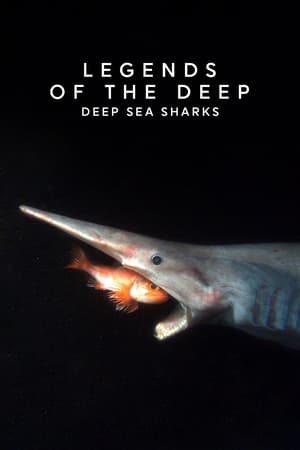
Groundbreaking documentary which follows a Japanese-led team of scientists as they attempt to shed light on the mysterious world of deep sea sharks. Only 50 specimens of the newly discovered 'megamouth' have ever been sighted. Over four years, scientists and film crews voyaged in midget submarines into the depths of Suruga Bay and Sagami Bay to film them. Prehistoric 'living fossil' sharks such as bluntnose sixgill sharks, goblin sharks and frilled sharks also lurk in the depths. As part of the investigation, a sperm whale carcass was placed at the bottom of the sea to attract these sharks, which were then studied and observed from the submersible vessels. Revealing in detail the previously unknown behaviour of deep sea sharks, the film unravels another of the intriguing mysteries of our planet's biodiversity.
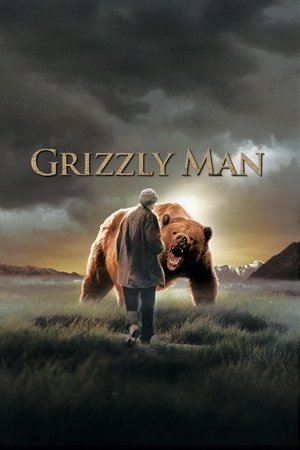
Follows the story of "Grizzly Man" Timothy Treadwell and what the thirteen summers in a National Park in Alaska were like in his attempt to protect the grizzly bears. The film is full of unique images and a look into the spirit of a man who sacrificed himself for nature.
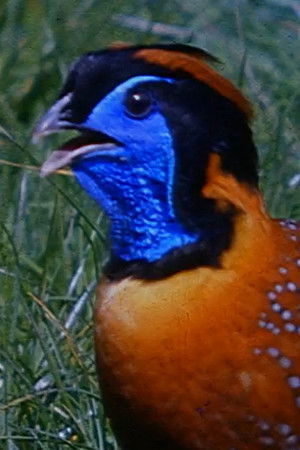
The Bornean Tree Partridge, Chinese Bamboo Partridge, and Indian Peafowl are some of the most colourful, most beautiful, and rarest species of pheasant in the world. Native to Asia, they can be found at The Ornamental Pheasant Trust at Norfolk Wildlife Park, Great Witchingham where the Trust’s devoted founder Philip Wayre has set up a breeding programme to save several species threatened with extinction.
Deep in the jungles of Peru, a silky anteater is fighting to stay awake and a mother humming bird is struggling to raise her chick. Through millions of years of evolution they have developed bizarre relationships and unexpected strategies to overcome them changing conditions, but for all their ingenuity, they were never prepared for the arrival of a new species on the scene.
This films reveals the extraordinary variety of life found in the vast blue expanses of the open ocean. Here, all the action takes place in a 10 metre deep band of water, just under the surface. Many species use this section of water to migrate and hunt while others use ingenious ways to stay hidden where there appears to be no shelter.
In the first half of the 19th century, the French ornithologist Jean-Jacques Audubon travelled to America to depict birdlife along the Mississippi River. Audubon was also a gifted painter. His life’s work in the form of the classic book ‘Birds of America’ is an invaluable documentation of both extinct species and an entire world of imagination. During the same period, early industrialisation and the expulsion of indigenous peoples was in full swing. The gorgeous film traces Audubon’s path around the South today. The displaced people’s descendants welcome us and retell history, while the deserted vistas of heavy industry stretch across the horizon. The magnificent, broad images in Jacques Loeuille’s atmospheric, modern adventure reminds us at the same time how little - and yet how much - is left of the nature that Audubon travelled around in. His paintings of the colourful birdlife of the South still belong to the most beautiful things you can imagine.
Orca Killing School
BBC The Natural World. In 2004, a team from the Planet Earth series captured the first ever film of a wild snow leopard in the mountains of Pakistan. For Nisar Malik, who led the expedition, these images sparked a passion that compelled him to return. With cameraman Mark Smith, he spent two years documenting the snow leopard's daily life, finally lifting the veil on the most elusive of all cats.
Die Bio-Revolution - Die Karriere der ökologischen Landwirtschaft
Le Bison d'Europe, colosse de la forêt
Steve Backshall travels across the world to encounter the most charismatic supergiant animals and discovers the remarkable things that their size enables them to do. Highlights include Steve swimming with Nile crocodiles in Botswana, dodging two-ton elephant seals in California and diving with sperm whales in the Caribbean.
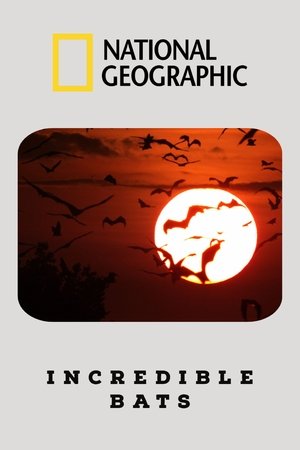
When the night falls, the sky comes alive. A flutter of wings that, for some, is the stuff of nightmares. One in every four mammals on the planet is a bat. But fear for these creatures is often misplaced, not all bats are blood-sucking beasts. The world of bats is incredibly diverse with some beautifully bizarre adaptations.
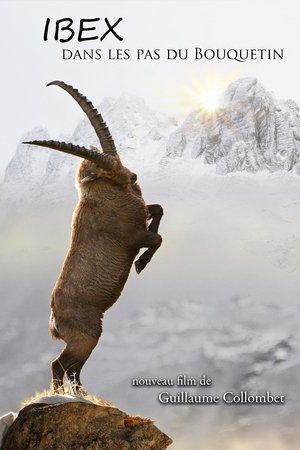
A documentary about the caprid, Ibex
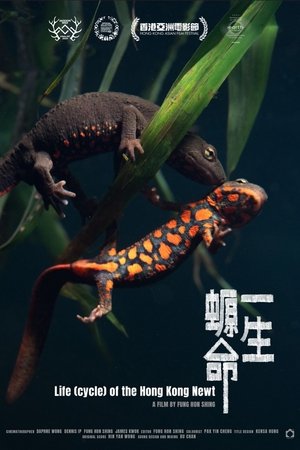
A Hong Kong Newt once resided in a narrow irrigation channel, believing it would be confined there forever. However, an unexpected flood swept it away, carrying it through a dark passage until it arrived in a serene, azure pond. The newt found companionship among its kind and thrived in the aquatic haven. But as it ventured back onto land after the breeding season, it encountered unforeseen threats.