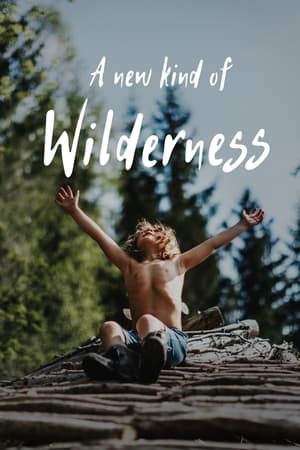
7-year-old Sasha has always known that she is a girl. Sasha’s family has recently accepted her gender identity, embracing their daughter for who she truly is while working to confront outdated norms and find affirmation in a small community of rural France.
A single tree that has witnessed events, a girl who loves Forough, and a boy who reads Sohrab.
Homelessness in the United States takes many forms. For Elizabeth Herrera, David Lima and their four children, housing instability has meant moving between unsafe apartments, motels, relatives’ couches, shelters, the streets and their car. After 15 years of this uncertainty, the family moved into their first stable housing — an apartment in the San Francisco Bay Area — in the midst of the coronavirus pandemic.
In this portrait film, we meet Inger Christensen in her apartment in Østerbro, Copenhagen, where she tells of her life and work, and reads excerpts from her major works.
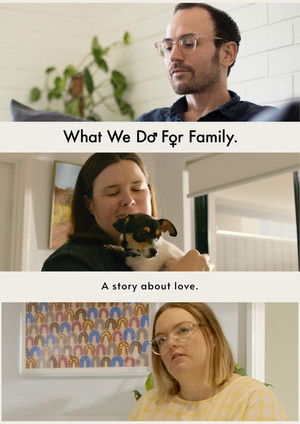
18 partners discuss the choices they’ve made in deciding on their mates. At its heart, this unscripted documentary film is about acceptance; a gentle message that we shouldn’t judge the choices of others, even if they seem a little different.
A group of educators led by Fernand Deligny are working to create contact with autistic children in a hamlet of the Cevennes.
The documentary's title translates as "to be and to have", the two auxiliary verbs in the French language. It is about a primary school in the commune of Saint-Étienne-sur-Usson, Puy-de-Dôme, France, the population of which is just over 200. The school has one small class of mixed ages (from four to twelve years), with a dedicated teacher, Georges Lopez, who shows patience and respect for the children as we follow their story through a single school year.
IDFA and Canadian filmmaker Peter Wintonick had a close relationship for decades. He was a hard worker and often far from home, visiting festivals around the world. In 2013, he died after a short illness. His daughter Mira was left behind with a whole lot of questions, and a box full of videotapes that Wintonick shot for his Utopia project. She resolved to investigate what sort of film he envisaged, and to complete it for him.
SYNCHRONOUS is an intimate portrait of love and the reverse side of love: mourning. The granddaughter/maker looks idealistically at the endless love between her grandfather and grandmother. When her grandfather dies, she decides to look for answers by filming her grandmother. What happens when you've been together all your life and your great love dies? Where is the love then?
Annedore takes care of orphan birds. They give her that which humans througout her turbulent life could never give her: love.
A young woman of the Tarahumara, well-known for their extraordinary long distance running abilities, wins ultramarathons seemingly out of nowhere despite running in sandals.
Rolland, a 70 year-old man, exiled by his family due to his sexual orientation, makes peace with the past by finding himself in a small ghost town in the western part of Jalisco, San Sebastián del Oeste. Almost 40 years later, he wants to go back to his hometown, try to regain his daughter's love and be a part o his granddaughter's life.
The Hugo's Brain is a French documentary-drama about autism. The documentary crosses authentic autistic stories with a fiction story about the life of an autistic (Hugo), from childhood to adulthood, portraying his difficulties and his handicap.
In Uganda, AIDS-infected mothers have begun writing what they call Memory Books for their children. Aware of the illness, it is a way for the family to come to terms with the inevitable death that it faces. Hopelessness and desperation are confronted through the collaborative effort of remembering and recording, a process that inspires unexpected strength and even solace in the face of death.
Arctic Tale is a 2007 documentary film from the National Geographic Society about the life cycle of a walrus and her calf, and a polar bear and her cubs, in a similar vein to the 2005 hit production March of the Penguins, also from National Geographic.
It is hard to find a family home where all the members have gone to live their separate lives in different parts of the world. Travelling between different continents, the director visits divorced parents and their new partners and also meets her sister who decided to join an alternative community. Their family exists on archival films and photographs only. Is it still possible to put it all together against all odds?
Keenly aware that his niece is going through a particularly rough time at home, Uncle James teaches Ava Dee how to use the Blackmagic Pocket Cinema Camera. As an experiment, he tells her to shoot whatever she wants and he'll edit it into a film.
The action is placed in a cramped flat in Warsaw’s district of Ochota. A father and a son, both bedridden, live in a fascinating symbiosis. The son, a well‑known photographer Bernard ben Dobrowolski, is lying in bed because a chronic condition has deformed his body and immobilized him. The father, Dominik, has recently suffered from a stroke. Now they are taking care of each other and crowds of visitors move through their room.
Examines the intergenerational impact of addiction by chronicling the love, labor, loss, and uncertainty of one woman’s struggle to live a life of sobriety. Weaving together moments of glee, fulfillment, acceptance, sorrow, and disappointment, this documentary takes an intimate look at the bonds that hold one family together and a disease that threatens to tear them apart.
An Oscar nominated documentary about a middle-class American family who is torn apart when the father Arnold and son Jesse are accused of sexually abusing numerous children. Director Jarecki interviews people from different sides of this tragic story and raises the question of whether they were rightfully tried when they claim they were innocent and there was never any evidence against them.