A teaching film for social studies, which was developed as a new educational subject in 1947. At an elementary school in Hokkaido, children have started a fly extermination campaign to improve school hygiene. In order to eliminate the causes of flies, the entire town is working to improve the sanitary environment. The short was filmed with the cooperation of Mizukaido Elementary School in Joso City and is the first film in the "Social Studies Teaching Film System" by Iwanami Film Productions.
A short film showing a typical English seaside town during the winter.
When a Mongolian nomadic family's newest camel colt is rejected by its mother, a musician is needed for a ritual to change her mind.
Eleven major film makers from Europe, America and Asia talk about Akira Kurosawa and discover surprising influences on their own work.
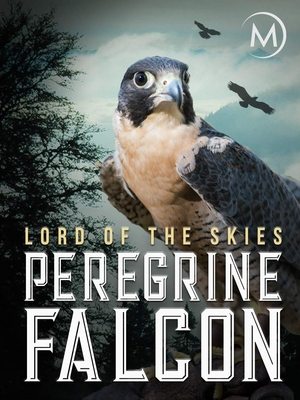
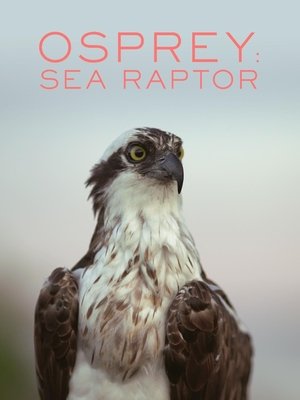
Hamza Yassin’s true passion is for nature, and he regularly roams the outdoors to capture its beauty on film as a wildlife cameraman. In this special film for BBC One and iPlayer, he is on a quest to film his favourite birds of prey – and no corner of the UK is too remote for him to find them.
"CATANAS POINT - A Surf Documentary" portrays the reality of the sport of surfing in Angola and compares it with what surfing was like in Brazil from the 1980s to the present day.
Sheep bound through a narrow opening, followed by a panoramic vista of the flock running through a meadow.
The giant squid is a creature of legend and myth which, even in the 21st century, has never been seen alive. But now, an international team of scientists thinks it has finally found its lair, 1,000 metres down, off the coast of Japan. This is the culmination of decades of research. The team deploys underwater robots and state-of-the-art submersible vessels for a world first - to find and film the impossible.
Groundbreaking documentary which follows a Japanese-led team of scientists as they attempt to shed light on the mysterious world of deep sea sharks. Only 50 specimens of the newly discovered 'megamouth' have ever been sighted. Over four years, scientists and film crews voyaged in midget submarines into the depths of Suruga Bay and Sagami Bay to film them. Prehistoric 'living fossil' sharks such as bluntnose sixgill sharks, goblin sharks and frilled sharks also lurk in the depths. As part of the investigation, a sperm whale carcass was placed at the bottom of the sea to attract these sharks, which were then studied and observed from the submersible vessels. Revealing in detail the previously unknown behaviour of deep sea sharks, the film unravels another of the intriguing mysteries of our planet's biodiversity.
An epic story of adventure, starring some of the most magnificent and courageous creatures alive, awaits you in EARTH. Disneynature brings you a remarkable story of three animal families on a journey across our planet – polar bears, elephants and humpback whales.
The highest mountain range in the world, the Himalayan range is far reaching, spanning thousands of miles, and holds within it an exceptionally diverse ecology. Coniferous and subtropical forests, wetlands, and montane grasslands are as much a part of this world as the inhospitable, frozen mountaintops that tower above. The word Himalaya is Sanskrit for abode of snow, fitting for a stretch of land that houses the world’s largest non polar ice masses. Extensive glacial networks feed Asia's major rivers including the Ganges, Indus, and Brahmaputra. More than a billion people rely on these glacier-fed water sources for drinking water and agriculture. The Himalayas are not only a remarkable expanse of natural beauty. They're also crucial for our survival.
Deep in the jungles of Peru, a silky anteater is fighting to stay awake and a mother humming bird is struggling to raise her chick. Through millions of years of evolution they have developed bizarre relationships and unexpected strategies to overcome them changing conditions, but for all their ingenuity, they were never prepared for the arrival of a new species on the scene.
Deep Blue is a major documentary feature film shot by the BBC Natural History Unit. An epic cinematic rollercoaster ride for all ages, Deep Blue uses amazing footage to tell us the story of our oceans and the life they support.
In Monarch's Antarctic Base, a frozen fortress buffeted by screaming winds and surrounded by impenetrable ice, King Ghidorah shakes off his icy slumber and escapes in one of the film's most thrilling sequences. Join the filmmakers as they reveal how King Ghidorah was brought to terrifying life inside Monarch's underground biolab with its towering ice wall.
Catch the spark after dark at Disneyland Park. And say farewell to one of the Magic Kingdom's most celebrated traditions - The Main Street Electrical Parade. Where else, but in The Main Street Electrical Parade, could you see an illuminated 40-foot-long fire-breathing dragon? And hear the energy of its legendary melody one last time? It's unforgettable after-dark magic that will glow in your heart long after the last float has disappeared.
A short documentary that tells the story of queer artist Heather Spooner and the adult pen pal program she created during the pandemic, featuring the poignant and humorous stories of connection and humanity that came from it.
Haskell Wexler revisits the themes of his previous work "Medium Cool" on the occasion of the Occupy demonstrations in Chicago in 2012.
Stan Lee and Len Wein talk about X-Men & Wolverine.
This documentary follows various migratory bird species on their long journeys from their summer homes to the equator and back, covering thousands of miles and navigating by the stars. These arduous treks are crucial for survival, seeking hospitable climates and food sources. Birds face numerous challenges, including crossing oceans and evading predators, illness, and injury. Although migrations are undertaken as a community, birds disperse into family units once they reach their destinations, and every continent is affected by these migrations, hosting migratory bird species at least part of the year.
Takes us to locations all around the US and shows us the heavy toll that modern technology is having on humans and the earth. The visual tone poem contains neither dialogue nor a vocalized narration: its tone is set by the juxtaposition of images and the exceptional music by Philip Glass.