As the seasons turn, director Ava Ferrera follows a new generation rediscovering the fading art of craft cider-making. Raising intimate questions about heritage, cultural memory, and what we choose to carry forward. A journey of rediscovery, tradition and history.
Coco, a Beijing modern girl wants to spend a romantic and fancy Christmas vacation in Osaka. However the place where she gets in is Shinsekai ( "New World" in English, is an old neighbourhood located next to south Osaka city's downtown "Minami " area, as known as one of the most poorest and dangerous area in Osaka.)When she arrives there, she starts feeling regret and frustrated by the encounters and the landscapes which are far beyond her expectation. Suddenly she is involved in an incident surrounds a Chinese family there, meanwhile she starts fascinated by Shinsekai through her wondering. In this short and unusual Christmas vacation, Coco discovers a "Japan " she never knows and a "China" that she is not familiar with.
Conexões da Noite: Moda e Subcultura Paulistana
“Balance of Life” is a film about life’s and human kinds’ fight to find the balance between our own evolving life style and the nature of the planet we inhabit. The human race is drifting further and further away from its real roots and from what being a human is really about. The speed of development has increased to a state where humans have a hard time keeping up. We find ourselves in a situation where both our own and the planets’ wellbeing is severely threatened. As a last resort human is relying on faith to find the balance. Is faith the last defense of man or is this world guided by forces greater than us? Is this force God, evolution or just the mere sum of coincidences that formed the universe, the natural order and laws of physics?’ Watch it here (https://vimeo.com/51203265)
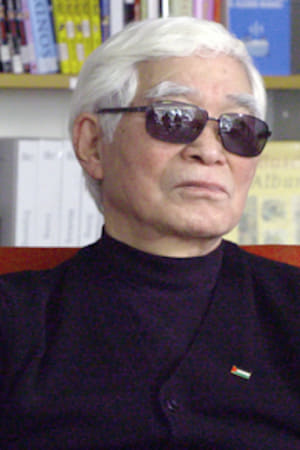
Masao Adachi, the author and director of experimental works and pinku-eiga in the 1960s, was a member of the Japanese New Left that shifted from being a filmmaker to a guerrilla fighter. In 1974, he joined the Japanese Red Army in Lebanon, which worked closely with the Popular Front for the Liberation of Palestine. Filmmaker Lutz Dammbeck met Adachi in Tokyo in 2018 and talked with him about a wide range of topics, including art, revolution, the influence of western avant-garde art and American underground; the Japanese Red Army; collaboration with secret services; the role of the Left after 1968; and the reasons for failures of leftist ideas and strategies.
Follows the waves of literary, political, and cultural history as charted by the The New York Review of Books, America’s leading journal of ideas for over 50 years. Provocative, idiosyncratic and incendiary, the film weaves rarely seen archival material, contributor interviews, excerpts from writings by such icons as James Baldwin, Gore Vidal, and Joan Didion along with original verité footage filmed in the Review’s West Village offices.
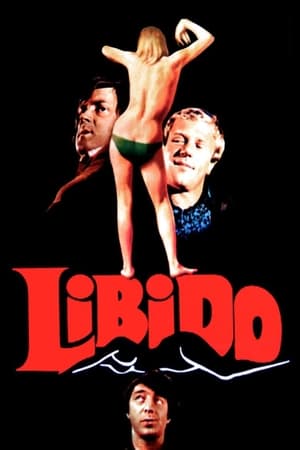
Scripted by four of Australia’s greatest authors (David Williamson, Thomas Keneally, Hal Porter and Craig McGregor), this quartet of carnal desires explores adultery and jealous fantasies, the end of innocence, the moral and spiritual conflicts of a priest and a nun in love. The stories define the exploration of women and the cultural upheaval of the early 70s.
Afrocantos
The life of Shona mbira player Gwanzura Gwenzi coexists in both the traditional and modern worlds: he works in the city for a large western corporation; at his rural homestead, he is the family head who hosts all-night spirit ceremonies, called bira. His sister Francisca is the family medium for the spirit of Kaodza, their great-grandfather. The highlight and centerpiece of the film is a bira, perhaps the only one ever completely captured on film. We see the various stages and liturgical components of the ceremony, culminating in the arrival of the spirits late at night. Francisca’s daughter, now-famous mbira player Stella Chiweshe becomes possessed by a snake spirit. Kaodza arrives through Francisca, and the family confers with the spirit in an extraordinary scene that shows how ancestors interact with the living. (Description credit: Villon Films)
Slow Southern Steel is a film about heavy music in the modern American South, as told by the very people who have created this music during the last two decades. Shot in back alleys, parking lots, and the seedy green rooms of the dirtiest clubs that the Bible Belt failed to snuff out, these diehard musicians discuss their love of music and the south, as well as the difficulties, contradictions, and insanity that haunt every southern artist. There are no illusions here, no apologies, no distractions - only the straight truth as told by those who would know the difference. Narrated by the notorious Dixie Dave Collins (Weedeater, Buzzov-en, Bongzilla), Slow Southern Steel is an authentic and honest and thorough look at one of the most remarkable music communities ever spawned on the continent.
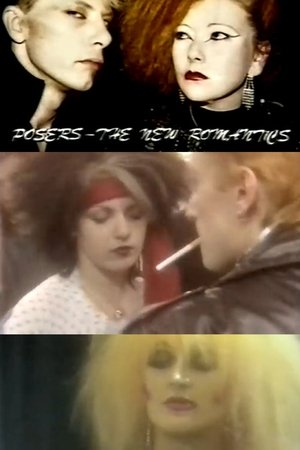
Shot in a single day, POSERS captures a thriving subculture in Kings Road, London: the style, music, and expression of the New Romantics.
The peaceful life of the members of the Rabbani family undergoes changes with the unexpected arrival of a snake, the discovery of an exquisite manuscript and a mysterious hole.
This documentary on the "youth movement" of the late 1960s focuses on the hippie pot smoking/free love culture in the San Francisco Bay area.
The story follows a day in the life of Ismail, a Palestinian photographer whose American upbringing was shaped by his grandfather’s displacement during the 1948 Palestine Nakba. When Ismail’s mother gifts him his grandfather’s keffiyeh—a traditional Palestinian scarf—it triggers an internal struggle between shame and pride in his cultural identity, all unfolding against the ominous backdrop of rising violence against Palestinians.
Between sambas and memories, composers, performers and "Velha Guarda do Samba" instrumentalists from Belo Horizonte
College freshman Krishna Reddy, who has never cared for his Indian-American cultural heritage, looks forward to a new life on campus but is surprised to find that he has been assigned Indian roommates.
Xiaofan, a young girl who works at a Karaoke Club, awakes one morning in a remote forest with her body covered in blood. As she struggles to find her way out, she tries to understand the drama circumstances which got her into the situation, events mainly related to her unpredictable boyfriend. She needs to make a decision that may change her life.
An illiterate village girl defies the customs of her tribe, discriminatory to women, only to become the spark of a Literary Revolution.
Since August 2024, in Martinique, a popular protest movement against the high cost of living has been reemerging under the leadership of the RPPRAC (Rassemblement Pour La Protection Des Peuples Et Des Ressources Afro-Caribéens – Gathering for the Protection of Afro-Caribbean Peoples and Resources). On the island, food prices are on average 54% higher than in mainland France.* Through various cultural figures, the people of Martinique are expressing their anger and seeking concrete solutions. *Source: Kiprix, Price comparison between supermarkets in the French overseas territories and mainland France.
Um Vestido Para Lia