By filming on the actual locations traversed by Marco Polo, the series brings to life the authenticity of the local peoples from the standpoints of ethnology, historiography, culture and economics. We follow the exact route depicted in his book, Il millione, documenting the peoples, customs and cultures along the way to bring into sharp relief the cultural differences within the Asian mainland. Viewers are introduced to their development, becoming familiar with three completely different and, to us, relatively unknown spheres of civilisation and religion - Arabic Islam, Indian Hinduism and Oriental Buddhism. The host takes us through regions and cultures that may seem exotic - and, at times,dreamlike - in our search for the evidence of Marco Polo's passage.
Part two of the Mysterious China series chronicles Marco Polo's adventures and discoveries along the Silk Road as he heads toward the Mongol Empire in China. This documentary reveals the pivotal trade route as experienced and written about by the 13th-century explorer. Follow the tracks of the Venetian adventurer -- one of the first Westerners to journey into China -- and uncover the mysteries of the Silk Road.
While it has been debated for many years, new evidence might finally put one debate to rest: Marco Polo has gone to China. Explore the mysteries of the historical figure in this documentary.
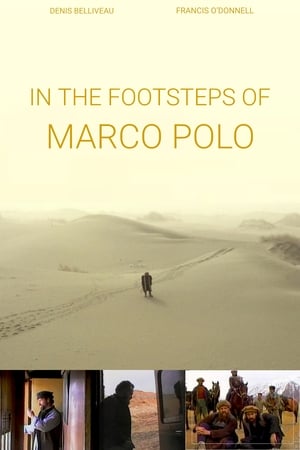
In the Footsteps of Marco Polo is a 2008 PBS documentary film detailing Denis Belliveau and Francis O'Donnell's 1993 retracing of Marco Polo's journey from Venice to Anatolia, Persia, India and China.
Three people from different walks of life find themselves trapped inside a stalled elevator. What at first seems like an inconvenience rapidly escalates into a nightmare.
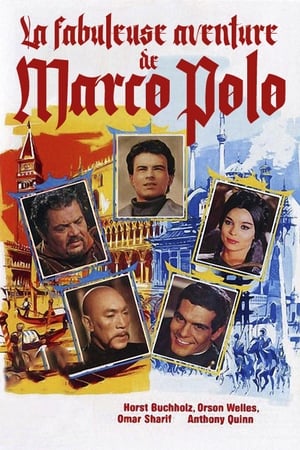
Assigned to accompany two priests on a mission to convert the court of Kublai Khan to Christianity, Marco Polo is abandoned in the mountains when the priests, doubting the very existence of China, turn back. Polo eventually pushes bravely forth alone toward the fabled country where he is accepted as an envoy into Khan's court. Marooned on the far side of the world, Polo, accompanied by his servant, Pedro, advances as a Mongol grandee for twenty extraordinary years. What he eventually brings back with him to the West is a chronicle that changed history forever.
In this globe-trotting adventure, Marco Polo (Don Diamont) plays the famous 13th Century explorer who sets out from Italy to find his missing father, and along the way finds danger, excitement, and amazing discoveries at every turn. The supporting cast includes Oliver Reed, Jack Palance, and Herbert Lom.
Set at the time of Italian explorer Marco Polo's historic expedition to China ,during the reign of Monogol ruler Kublai Khan, it stars American actor Richard Harrison as Polo. Taking considerable liberties with the historic record, the film has Polo turning up as an Imperial Inspector assigned to root out Chinese rebles in the south, but eventually being won over to their cause.
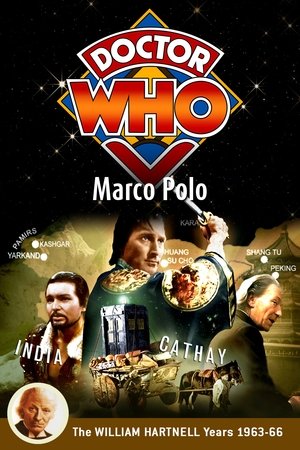
The TARDIS crew lands in the Himalayas of Cathay in 1289, their ship badly damaged, and are picked up by Marco Polo's caravan on its way along the fabled Silk Road to see the Emperor Kublai Khan. The story concerns the Doctor and his companions' attempts to thwart the machinations of Tegana, who attempts to sabotage the caravan along its travels through the Pamir Plateau and across the treacherous Gobi Desert, and ultimately to assassinate Kublai Khan in Peking, at the height of his imperial power.
The Venetian traveler Marco Polo meets Kublai Khan and foils a plotter with fireworks in medieval China.
A defiant warrior-monk arrives at Kublai Khan's court in chains and soon earns his tragic nickname in this 30-minute origin story.
Young Marco Polo travels to China to help Kublai Khan fight against rebels, headed by his own son, with a new invention: gunpowder.
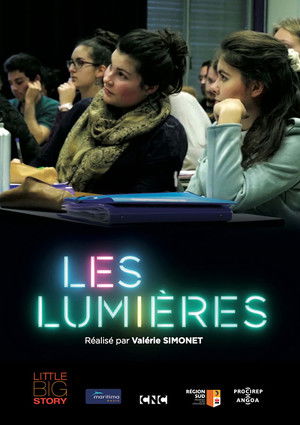
How can we rethink our ways of learning and transmitting knowledge? This film answers this question through the creation of a unique bachelor’s program: the Arts and Sciences Bachelor. The origin of this bachelor lies in the uprising against the 2009 reform of the university. During three years, students explore knowledge through the intertwining of different subjects. Indeed, they discover every aspect of color in sociology, chemistry, and literature. By following four students from their first to their third year, the film explains to the spectator how this bachelor program works. Les Lumières offers a reflection on transdisciplinarity.
Made for the Sheffield and District Workers Film Society by Brian Pickersgill, this film documents anti-war protest marches through the streets of Sheffield to Endcliffe Park in 1936. The film concentrates on the Women’s, Youth, and May Day demonstrations held that week.
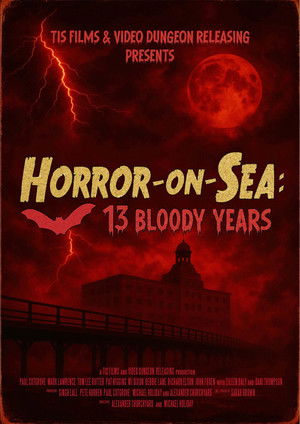
A documentation and celebration of 13 years of the Horror-on-Sea film festival in Southend-on-Sea, Essex, U.K.
A short film featuring quotes from Armenian auteur Sergei Parajanov and clips from his masterpiece The Colour of Pomegranates.
They, Erode, Bend, and Flow Outside
Models, calculations, samples: the facts about climate change are on the table, but politicians refuse to acknowledge them. Faced with this dilemma, three scientists decide to leave the laboratory and become activists. Maria, Sebastian, and Nana use their knowledge to maintain integrity between emotion and reason.
French documentary that explores how the third generation deals with the memory of the Holocaust. It follows grandchildren of survivors—Camille, Frankie, Théo, and Mathis—as they inherit family secrets and the responsibility of bearing witness to this trauma
Lopper