Canada - The Fascinating North
Black Bears
Half of all bird species undertake annual migrations, everything from heavy-bodied swans to delicate hummingbirds. Migration is one of the most remarkable phenomena on the planet, hosts of animals of all shapes and sizes demonstrating incredible feats of endurance.
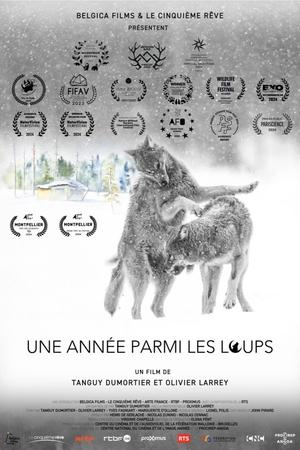
A vast, snow-covered forest, untouched by human presence. Two men cross it, bags on their backs, cross a frozen river and finally arrive at the peatland, a vast white expanse. For years, Yves the painter and Olivier the photographer, have traveled the world, meeting wildlife from one pole to the other, privileged and concerned witnesses to the fragile beauty of the planet. But the two men share a common dream: to see a wolf pack live, grow, and spread out. One day, their search leads them to a hideout in no-man's-land between Iceland and Russia, a place conducive to a different temporality. The wait begins. Over the seasons, they will stand there in these eight square meters of wood, silent amid an unchanging scenery, until they gradually become part of the “picture” and immerse themselves in the life of the wolves. A motionless adventure...
Bora Bora is the most popular destination in French Polynesia, certainly because of its lagoon, considered the most beautiful lagoon in the world. In this context, the islet could have sunk under concrete and pollution, and the reef could have been irreparably impacted. However, thanks to the will of a handful of inhabitants including the mayor of the island, Bora Bora is today a model of sustainable development, with water treatment technologies that are 15 years ahead of France, programs to rebuild corals and protect wildlife, educational actions and the rehabilitation of Polynesian traditions such as “rahui” and the establishment of a monitoring network using new technologies. All of this makes the island a veritable open-air laboratory that shows the way for all tropical coastal environments around the world.
The River Danube is home to a fish that grows larger than the Great White Shark. Although it leads a secretive life, the Beluga Sturgeon – the King of the Danube – produces the most prized food in the whole world. For over 200 million years, the 8-metre long fish had no enemies, and yet today it is on the verge of extinction. Evolution did not prepare the fish for pollution, river regulation and overfishing. Beluga caviar is traded for up to 20,000 dollars per kilogramme. Ironically, the high price of this precious product could save the animals from a premature disappearance from planet earth.
With more than 300 days a year, the sun dominates this country so much that it’s even shining from their flag. It’s a barren land, sometimes it’s like it’s from another planet but still familiar. It is land of contrasts and colours with wide landscapes and fascinating deserts. Influenced by various cultures during colonization and now reborn from the shadows of Apartheid in 1990, Namibia gives a beautiful collage of culture, language, art, music and food. Everyone who loves an adventure should travel to Namibia, the precious corner of our world full of incredible natural wonders. The experience of endless landscapes and an unparalleled blaze of colour make Namibia unforgettable. NAMIBIA – THE SPIRIT OF WILDERNESS invites you on a trip whose fascination will never let you go: From the Namib Desert over the breath-taking Fish River Canyon to the spectacular Etosha National Park where you will see wild elephants, antelopes, giraffes, zebras and lions.
“Entourage” star Adrian Grenier ventures to Cocos Island off the shore of Costa Rica to bring attention to the plight of endangered sharks who are being threatened by poachers and ocean pollution.
Meet the big birds, a feathered family who have never flown a day in their lives! From ostriches to kiwis, these bizarre birds appear to be nature's greatest novelty act. How they came to be and how they continue to survive is a fascinating tale that has long captivated Sir David Attenborough. It is a story of dedicated dads, enormous eggs and a serious need for speed. And far from being the court jesters of the animal world, these flightless curiosities once nearly ruled the land.
A documentary about the beauty of Slovak nature with world-renowned wildlife popularizer Nigel Marven... Nigel Marven is a British wildlife filmmaker, screenwriter, presenter and adventurer, known worldwide for his unique style, innovative programs and enthusiasm. He worked alongside Sir David Attenborough for 12 years. He has made more than 150 documentaries, visited all continents and conveyed the stories of amazing wild animals to viewers. This time he visited Slovakia to introduce the natural beauty of Slovakia to the whole world in cooperation with our nature filmmakers.
A clash of true oceanic titans sees fights in the remote battlefields of Ascension Island. Tuna are often faster, fitter and bigger than the sharks.
Join Australian Museum and UNSW Sydney PhD Candidate and Nat Geo Explorer Tim Cutajar as he searches for the feared-extinct Southern Gastric Brooding Frog (Rheobatrachus silus) in the Sunshine Coast hinterland. Using environmental DNA, Tim and the team are trying to detect any trace of this species, which has been missing since the early 1980s. Taking samples from water, air and frog-biting, blood-sucking flies, the team are trying to forensically detect this missing species.
About 3 thousand years ago, apparently due to climate change, musk oxen in Eurasia became completely extinct. They remained only in hard-to-reach places in North America and Greenland. To return the musk oxen to their historical homeland, scientists decided to conduct an experiment and brought 30 musk oxen to Taimyr. To find out how the experiment went, 35 years later we set off on a long trip to Taimyr and there we try to meet musk oxen.
Australia's strange and often beautiful wildlife is no more apparent than in the Lyrebird with its exotic courting displays and its ability as a mimic, which is unrivalled in the world of birds. Following its life for a year through Australia's great rain forests, we see a large variety of songbirds and the marsupials who share its natural environment.
The American Southwest is a feature length blue chip natural history film narrated by indigenous environmentalist Quannah Chasinghorse. The movie journeys down the mighty Colorado River, examining the astonishing beauty and biodiversity of the region, while confronting the environmental destruction from dams and the perilous fate of the river. The story is told through never-before-seen wildlife sequences such as beavers building wetlands, condors recovering from the brink, and the potential return of Jaguars to American soil. The film beautifully advocates for better management of the river and increased wildlife conservation efforts in the iconic landscapes of The American Southwest.
The Common Ring-Necked Pheasants of Cornwall erupt into a medley of sonic sensations.
Nuie is an uplifted coral island, a tiny speck in the middle of the South pacific. It is on the migratory path of the great Humpback Whales. In the crystal water these giants rise up to breathe beside the divers, some with new born calves. The Rocky island is home to a unique species of venomous sea snakes, that come ashore to lay their eggs. They have never bitten an islander, yet, and become part of their lore. In Snake Gully Ben Cropp meets these snakes in their hundreds, they sleep en masse in every crevice, and the traffic is like pitt street when they surface for air every half hour. When you swim at Nuie, you swim with snakes.
A small exploration in the cemetery from the township of Sainte-Colombe throught a focus into the light, graveyards, flaggings and funerary plaques.
“We, the Gwit’chin are an ancient and united people. We live in a very cold place. We know how to survive. We don’t make money, we live from the land. Until now”. Over 18 days photographers Marta Bretó and Tato Rosés explore the world of the Gwit’chin, also called the Arctic National Wildlife Refuge (Alaska), one of the most pristine and wild areas on Earth. Their purpose is to experience what nature was like before the invasion of human beings. 80,000 km² of tundra, mountains and rivers, without a single road to the coastal plain, next to the Arctic Ocean.
Journey to far-flung islands off Africa, South America, Australia and Oceania for a look at the bird species that lived alongside our ancestors.