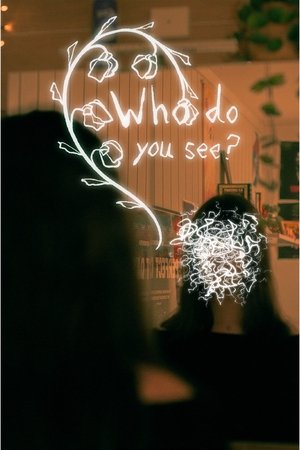
Identity is an experimental short film about gender fluidity, memory, and transformation.
Fred Martinez was a Navajo youth slain at the age of 16 by a man who bragged to his friends that he 'bug-smashed a fag'. But Fred was part of an honored Navajo tradition - the 'nadleeh', or 'two-spirit', who possesses a balance of masculine and feminine traits.
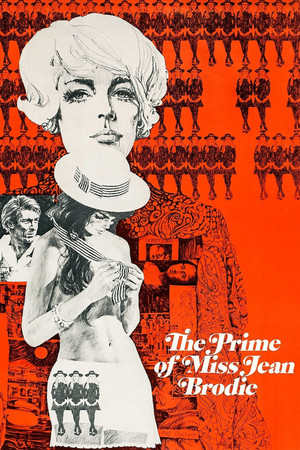
A headstrong young teacher in a private school in 1930s Edinburgh ignores the curriculum and influences her impressionable 12-year-old charges with her over-romanticized worldview.
For decades, performance artist and writer Kate Bornstein has been exploding binaries and deconstructing gender. And, her own identity. Trans-dyke. Reluctant polyamorist. Sadomasochist. Recovering Scientologist. Pioneering Gender Outlaw. Kate Bornstein Is a Queer and Pleasant Danger, joins her on her latest tour capturing rollicking public performances and painful personal revelations as it bears witness to Kate as a trailblazing artist theorist activist who inhabits a space between male and female with wit, style, and astonishing candor. By turns meditative and playful, the film invites us on a thought provoking journey through Kate's world to seek answers to some of life's biggest questions.
A headstrong young girl in Afghanistan, ruled by the Taliban, disguises herself as a boy in order to provide for her family.
A journey between the sacred and profane in which the Femminielli, an ancient non-binary Neapolitan figure, fight for their survival against the globalizing tides of modernity.
A work produced for the Morimura Yasumasa Exhibition at the Yokohama Museum of Art, (April 6 to June, 1996). It was shown in an old-style theater constructed within the exhibit space that featured photographs of Morimura playing famous foreign and Japanese actresses.
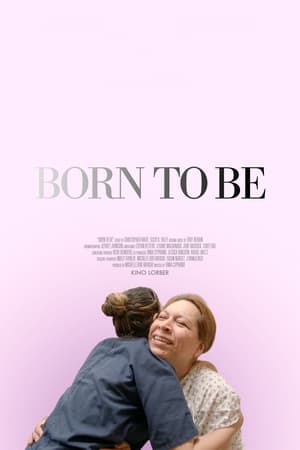
Soon after New York state passed a 2015 law that health insurance should cover transgender-related care and services, director Tania Cypriano and producer Michelle Hayashi began bringing their cameras behind the scenes at New York’s Mount Sinai Hospital, where this remarkable documentary captures the emotional and physical journey of surgical transitioning. Lending equal narrative weight to the experiences of the center’s groundbreaking surgeon Dr. Jess Ting and those of his diverse group of patients, BORN TO BE perfectly balances compassionate personal storytelling and fly-on-the-wall vérité. It’s a film of astonishing access—most importantly into the lives, joys, and fears of the people at its center.
This documentary will explore the Afro-Caribbean dance, ‘whining’ alongside the practice of twerking to analyze respectability politics, pressures to accommodate whiteness, and gendered criticism of sexual expression within the Black diaspora. Using archival footage of West African dance, expert opinion from dancing and gender studies professors, and the active participation of partygoers in a dance experiment, Watkins will paint the picture of the defiance, autonomy, and ancestral veneration intrinsic to these traditional movement styles.
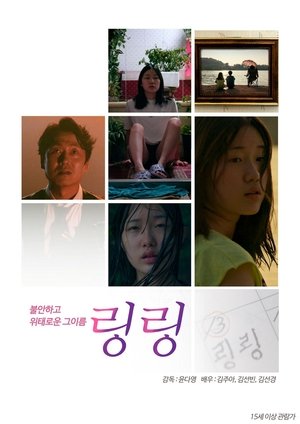
A storm is coming; the winds are getting strong. The real source of the ominous winds lies with Jina, who finds the strange word 'LingLing' written in her father’s notebook. She suspects he is cheating on her mother, who appears to be bored with life and fills the house with potted plants as if to show for her apathy. The film too is riddled with images of humid air and foul-smelling water, impure and overflowing. The sway of her father’s fishing pole and the flutters in Jina’s skirt seem perilous and unstable. When her anxiety and doubts finally come to a head, the family squarely face the rough downpour brought on by the storm. The director’s talent in boldly translating the characters desires and sensibilities into a narrative with powerful imagery is quite impressive.
In the Deep South of the 1930s, Rose is taken in by the Hillyer family to serve as housemaid so that she can avoid falling into a life of prostitution. Her appearence and personality is such that all men fall for her, and she knows it. She can't help herself from getting into trouble with men.
A reclusive illustrator falls in love with a young woman who addictively shops for clothing.
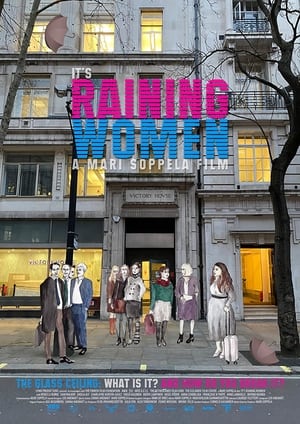
A woman moves into a Manhattan apartment, where she learns that the previous tenant's life ended under mysterious circumstances.
After experiencing her first heartbreak, Anais declares war on all the boys in 6th grade.
For 18-year-old Finnish–Kosovan Fatu, a simple visit to the grocery store feels as nerve-racking as a lunar expedition: for the first time in his life, he’s wearing makeup in public. Luckily his best friend Rai, a young woman on the spectrum of autism, is there to ferociously support him through the voyage.
Couples watch a lot of TV, and sometimes they share this moment with their kids.
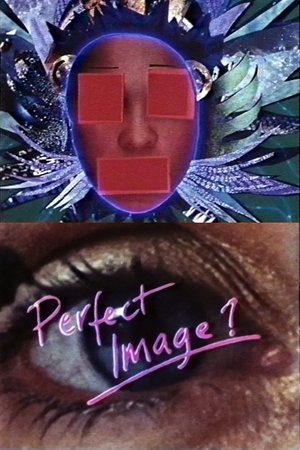
Arguing that advertising not only sells things, but also ideas about the world, media scholar Sut Jhally offers a blistering analysis of commercial culture's inability to let go of reactionary gender representations. Jhally's starting point is the breakthrough work of the late sociologist Erving Goffman, whose 1959 book The Presentation of the Self in Everyday Life prefigured the growing field of performance studies. Jhally applies Goffman's analysis of the body in print advertising to hundreds of print ads today, uncovering an astonishing pattern of regressive and destructive gender codes. By looking beyond advertising as a medium that simply sells products, and beyond analyses of gender that tend to focus on either biology or objectification, The Codes of Gender offers important insights into the social construction of masculinity and femininity, the relationship between gender and power, and the everyday performance of cultural norms.
The story of the sexual memoirs of a Victorian gentleman who revealed himself as Walter. He documented his liaisons in a frank series of journals which ran to eleven volumes and 1.5 million words, titled 'My Secret Life'. Within the journals he documented details of his liaisons, the names of the women, their social standing, and their conversation. For a century, this material was considered obscene, its publication illegal. Today, however, it's seen as a unique insight into Victorian social and sexual mores, providing valuable information on class, gender, marriage, fidelity and morality. This film looks at the dark life of 'Walter', and examines the way his journals have shaped contemporary understanding of Victorian society. The film also examines the mystery that has surrounded this story - who exactly was 'Walter'? The film asks whether he could have been Henry Ashbee, a wealthy London gentleman who was obsessed with sex and attained a pornographic library of over 15,000 volumes.
Borrowing its title from the William Carlos Williams poem of the same name, Nameless Spectacle revela in the beauty of ordinary life through themes of voyeurism, power, and sexual violence. Projected on two duelling screens the viewer is unable to focus on the parallel perspectives of the film’s dual perspectives.
A depressed wife and mother whose reality is starting to fracture into fantasy, drives her children to the beach. On the return journey she stops at a service station to fill up with petrol. Four mechanics eye her off and, as one of them walks towards her car, a full-blown erotic fantasy develops.