In 1924, Oskar Matzerath is born in the Free City of Danzig. At age three, he falls down a flight of stairs and stops growing. In 1939, World War II breaks out.
In 1933 Oregon, Samuel Murphy is torn from his daughter and sent to a brutal work camp. Warden Clancy tempts him with early release if he smuggles gold through deadly wilderness, but betrayal festers within the crew, and Murphy questions how far he’ll go to see his child again.
A dying man in his forties recalls his childhood, his mother, the war and personal moments that tell of and juxtapose pivotal moments in Soviet history with daily life.
Charlotte Biltekoff is the author of “Eating Right in America” where she traces the food reform movements throughout American history. She questions socially accepted ideas about “good and bad eaters” and what those assumptions reveal about food, culture, and the struggle over moral values.
Otakar Vávra walks through Prague in front of the camera and with the camera, and remembers those who in the 1930s determined the pulse of the cultural and political life of that time.
How were the giant stone heads of Rapa Nui – also known as Easter Island – carved and raised, and why? Since Europeans arrived on this remote Pacific island over 300 years ago, controversy has swirled around the iconic ancient statues and the history of the people who created them. Now, a new generation of researchers is overturning old theories, revealing the rich history, innovation, and resilience of the Rapanui people, and uncovering intriguing new evidence about where they – and their practice of monumental stone building – came from.
In a year of uprisings and political unrest, Stonebreakers documents the fights around monuments in the United States and explores the shifting landscapes of the nation's historical memory.
A true-story account of a German businessman who saved more than 200,000 Chinese during the Nanjing massacre in 1937-38.
September 1st, 1939. Nazi Germany invades Poland. The campaign is fast, cruel and ruthless. In these circumstances, how is it that ordinary German soldiers suddenly became vicious killers, terrorizing the local population? Did everyone turn into something worse than wild animals? The true story of the first World War II offensive that marks in the history of infamy the beginning of a carnage and a historical tragedy.
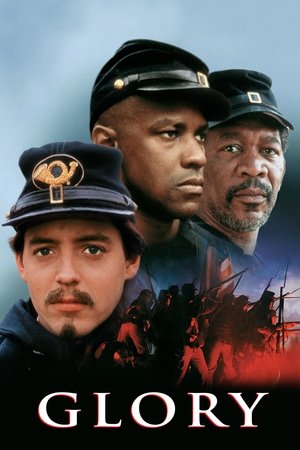
Robert Gould Shaw leads the US Civil War's first all-black volunteer company, fighting prejudices of both his own Union army and the Confederates.
1936. Giovanni Comini, the youngest Federal in Fascist Italy, is summoned to Rome for a delicate mission: to surveil aging national poet Gabriele D'Annunzio, whose increasingly restless behavior Mussolini fears could damage his alliance with Nazi Germany. However, after spending time with D'Annunzio, Comini finds himself torn between loyalty to the Party and his fascination with the poet, who will put his burgeoning career at risk.
Green Flake, a southern slave, joins Church of Jesus Christ of Latter Day Saints as a child. Later on in his life he is sent to pave the way to what is now the Salt Lake Valley and his faith sustains him.
A montage of newscasts tracing the events of the "damned war" and the German invasion of 1940.
A French documentary or, one might say more accurately, a mockumentary, by director William Karel which originally aired on Arte in 2002 with the title Opération Lune. The basic premise for the film is the theory that the television footage from the Apollo 11 Moon landing was faked and actually recorded in a studio by the CIA with help from director Stanley Kubrick.
In early 1860s New York, Irish immigrant Amsterdam Vallon is released from prison and returns to the Five Points, seeking revenge against his father's killer, William Cutting, a powerful anti-immigrant gang leader. He knows that revenge can only be attained by infiltrating Cutting's inner circle. Vallon's journey becomes a fight for personal survival and to find a place for the Irish people.
San Francisco Bay is home to various shark species. Alcatraz guards made sure the prisoners knew it, telling stories of sharks to stop escapes.
The first American space station Skylab is found in pieces scattered in Western Australia. Putting these pieces back together and re-tracing the Skylab program back to its very conception reveals the cornerstone of human space exploration.
This is based on a true story. Solomon Northrop is a black man in the mid 19th century before slavery was abolished. He's a born free man who works as a carpenter and is also a part time musician. One day he is approached by some men who want him to play for them. However, that is not their intention; they have kidnapped him and sold him into slavery. Now he has to endure the hardships that he has been spared because of his status as a free man. And his family who don't know what happened to him is searching for him but where do they go? And Solomon also wishes to let them know where he is so that they could get him but unfortunately no one believes his story or is willing to help him.
True story of the undersized Depression-era racehorse whose victories lifted not only the spirits of the team behind it but also those of their nation.
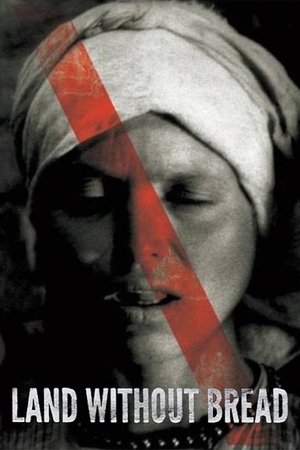
An exploration —manipulated and staged— of life in Las Hurdes, in the province of Cáceres, in Extremadura, Spain, as it was in 1932. Insalubrity, misery and lack of opportunities provoke the emigration of young people and the solitude of those who remain in the desolation of one of the poorest and least developed Spanish regions at that time.