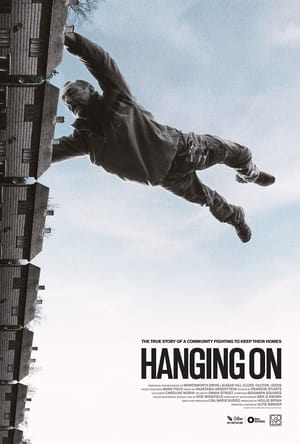
Set in Oulton, Leeds - some of the last remaining post-war prefabricated houses in the UK are still standing. Residents of this ex coal mining village now at threat of eviction share their stories of community and family as they look to their future. ‘Hanging On’ is a docu-drama that combines artistic visuals of residents suspended in mid air, literally hanging onto their homes and audio interviews about the strength of what happens when people come together. It reminds us about the struggles of people who are slipping through the cracks of society and what it means to have a home.
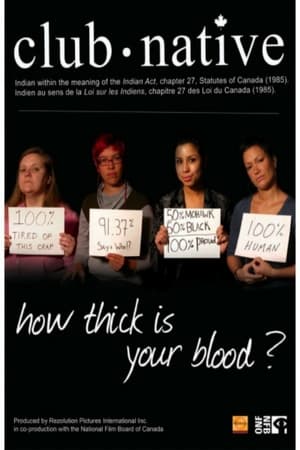
With moving stories from a range of characters from her Kahnawake Reserve, Mohawk filmmaker, Tracey Deer, reveals the divisive legacy of more than a hundred years of discriminatory and sexist government policy to expose the lingering "blood quantum" ideals, snobby attitudes and outright racism that threaten to destroy the fabric of her community.
Thomas Haemmerli is about to celebrate his fortieth birthday when he learns of his mother's death. A further shock follows when he and his brother Erik discover her apartment, which is filthy and full to bursting with junk. It takes the brothers an entire month to clean out the place. Among the chaos, they find films going back to the 1930s, photos and other memorabilia.
HOMELESS is a documentary that humanizes unhoused people and explores their backgrounds, dreams and struggles to find the way home. The film aims to raise awareness and funds to end homelessness, which is an ever more urgent global challenge: The United Nations Human Settlements Program estimates that 1.6 billion people live in inadequate housing, and the best available data suggests that more than 100 million people have no housing at all.
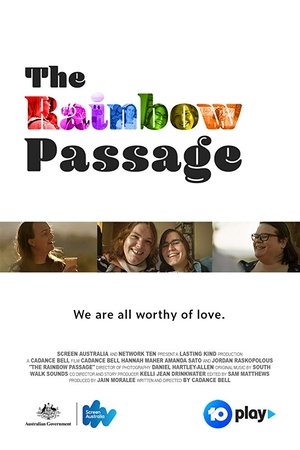
Following a year in Cadance and Amanda's gender transition, this intimate documentary charts not only their personal transformation but the building of a life and community together in regional New South Wales.
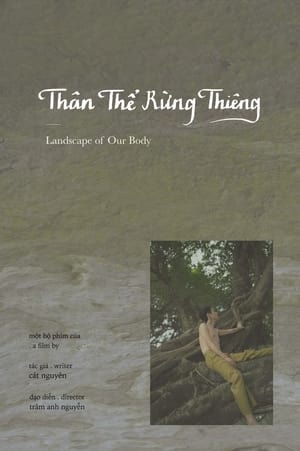
As queer trans and gender non-conforming children of the Vietnamese diaspora, we are fragmented at the crossroads of being displaced from not only a sense of belonging to our ancestral land, but also our own bodies which are conditioned by society to stray away from our most authentic existence. Yet these bodies of ours are the vessels we sail to embark on a lifetime voyage of return to our original selves. It is our bodies that navigate the treacherous tides of normative systems that impose themselves on our very being. And it is our bodies that act as community lighthouses for collective liberation. Ultimately, the landscape of our bodies is our blueprint to remembering, to healing, to blooming.
Following the death of her husband, Dan, in November of 2010, Suzanne Frisse Lathrop converts her Facebook into a public diary, housing her grief in magical and unexpected ways. A ritual throughout her week, Suzanne photographs the sky and shares photos containing strange spherical aberrations which she calls "orbs." For A Day Like Today confronts American attitudes surrounding grief all the while inviting audiences to reflect on how and where they see those they have lost.
Returning to his old neighborhood before its demolition, Ahmed revisits memories. As he wanders its streets, he recalls something that forever changed the way he sees the place he once called home
The UN estimates street children worldwide at 150 million. In Latin America, they are 40 million. In Brazil, street boys and girls felt so enchanted by a camera that they took it as their own to express themselves and fight the silence.
For 63 years, Tom Rose and his wife, Mary, built a life together on his family farm on Canaanville Road. Then last year Mary passed away, leaving Rose to face the future alone, surrounded by a lifetime of memories.
HOME
We follow the story of a Bulgarian elderly couple living in a stagnant small village called Balabansko. Taking care of the family house passed down the generations has been their life’s work. What does their future hold and why can’t they let go of the past?
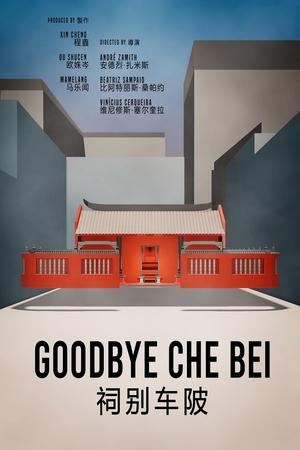
Goodbye Che Bei
Rosemarie Blank made this film, which focuses on women aged around fifty, in collaboration with the organisation VIDO (Dutch: Vrouwen in de Overgang/Women in the Menopause). An all but invisible group of housewives who have spent their lives putting themselves last to ensure that their husbands and children can reach their full potential.
Long ago, Geamăna was a Romanian village in the Apuseni Mountains, home to about 1000 people. Today, only the church spire rises from the poisonous mud of a neighbouring copper mine. Almost all the houses have sunk and their inhabitants fled. On the edge of the past, Valeria Praţa strives for her present - and is threatened by the future.
For over a decade, Stephanie has sacrificed her golden years to care for her husband with dementia.
It is a tribute to love, telling the beautiful story of Lucas and Débora, from their childhood until they became the most beautiful couple of all time.
This documentary profiles the eight couples who challenged marriage laws in British Columbia in court until same-sex marriage was recognized in 2003. As controversy swirls around this issue worldwide, Why Thee Wed? offers surprising and diverse perspectives on what it means for gay and lesbian couples to walk down the aisle and to fight for the right to do so under the law.
A Nice Place
Can we reinvent our lost queer histories? #Familiar #Touch #Lost #Figures is about queer ancestry and diaspora, a hybrid of cultural traditions and contemporary queer identity. It explores feelings of guilt and joy, and intimacy between femmes of colour.