A story about the special relationship between Jaana and her daughter Liisa who died in a traffic accident at the age of 16.
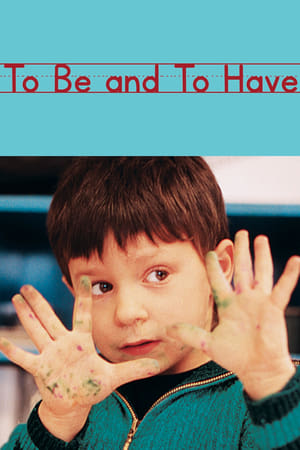
Junha is one of the most difficult children at the school. His autism causes him to attack his classmates and even teachers without warning. Each outburst further isolates Junha from his community as his teachers and peers struggle to find a way to live "with" Junha. The camera provides an intimate look into this society, leaving the question; what is human entity and how is it connected?
Ulrike and Olli meet in 1985 while on tour with Circus Roncalli. He is living his childhood dream as part of the successful clown duo 'Illi & Olli'. She has recently left her life as a nurse in Berlin behind. When the season is over, she moves with him to Switzerland. What began as a circus fairy tale eventually becomes reality, amid creative crises, raising children, and ultimately growing older.
Chelsea Bledsoe and her husband Graig throw a surprise intervention for her old high school boyfriend, Henry, with a mismatched group of acquaintances from back in the day to fill out the guest list.
yaya/ayat explores identities, being lost in translation and distance. But at its core it's about the filmmaker longing for a relationship with her geographically distant grandma and her journey to Greece to find her. This is an experimental documentary about how being a part of any diaspora shapes a person's identity.
Gavin built a giant volcano sculpture that's now in his dad's shed. Gavin seeks his dad's understanding but he's uninterested in modern art and refuses to participate in the documentary.
In Mexico City's wealthiest neighborhoods, the Ochoa family runs a for-profit ambulance, competing with other unlicensed EMTs for patients in need of urgent care. In this cutthroat industry, they struggle to keep their financial needs from compromising the people in their care.
In a series of letters to her young son, a mother, soldier and filmmaker documents her thoughts from the Ukrainian frontline.
Juan Méndez Bernal leaves his house on the 9th of april of 1936 to fight in the imminent Spanish Civil War. 83 years later, his body is still one of the Grass Dwellers. The only thing that he leaves from those years on the front is a collection of 28 letters in his own writing.
A documentary featuring internationally renowned photographer Toni Hafkenscheid as he explores hidden stories behind iconic architectural structures once considered "Visions of the Future" from the 1960's. This film is a light-hearted look at the way we perceive life and embrace modern advancements. It is a photography expose that becomes a personal journey of self-discovery while exploring innovative Visions of the Future that celebrate memories of Toni's, and our, collective past.
A journey through a century of Ambrosoli family history.
Não tem um Boteco nessa cidade em que eu não tenha falado de você
In the vast expanse of desert East of Atlas Mountains in Morocco, seasonal rain and snow once supported livestock, but now the drought seems to never end. Hardly a blade of grass can be seen, and families travel miles on foot to get water from a muddy hole in the ground. Yet the children willingly ride donkeys and bicycles or walk for miles across rocks to a "school of hope" built of clay. Following both the students and the teachers in the Oulad Boukais Tribe's community school for over three years, SCHOOL OF HOPE shows students Mohamed, Miloud, Fatima, and their classmates, responding with childish glee to the school's altruistic young teacher, Mohamed. Each child faces individual obstacles - supporting their aging parents; avoiding restrictions from relatives based on traditional gender roles - while their young teacher makes do in a house with no electricity or water.
Petr and Simona have been living together for twenty-five years. They have nine children, with whom they live in caravans on a meadow in Šumava – without television, computers, or running water. The authoritarian Petr calls himself a "professional father." He guides his offspring toward freedom and harmony with nature, while trying to protect them from the harmful influence of consumer society. The children only go to school for exams—their college-educated parents teach them at home. At first glance, the family cohesion, which is practically unparalleled in today's Western world, seems idyllic. Upon closer inspection, however, doubts begin to arise. The film Still Together explores the price of a free life outside of society and asks: is there a recipe for the ideal family?
Laosan, a young family man, spends all his time smoking opium. For his community, lost in the heart of the Laotian jungle, opium farming is the only way to survive. But opium is also the poison that puts men to sleep and kills their desires.
Violeta and Vyollca Dukay live in the south of Kosovo, close to the border with Albania. Faced with a very high unemployment in their country since the end of the war, they became deminers. They’ve been going to the minefields every day for six years now. The unique and very strong relationship that exists between the two sisters helps them to overcome their fear and to keep hoping in spite of the precariousness of their situation and the risks they run each day to earn their living.
National Film Board of Canada documentary of stories of Acadians (French Canadians from the eastern Maritime provinces). Hundreds of thousands of Acadians emigrated to Louisiana following deportation by the British during the Acadian Expulsion of the mid-18th century, hence the term 'Cajun.'
In 1939, Joel and Jana escape from their village because of the arrival of the Nazis. That decision would make them the only ones in their family to survive the Holocaust. 80 years later, Juliet, their granddaughter, decides to retrace their steps to understand what lies behind her father's silence. Then, she begins to suspect that there is a part of her own history that was omitted.
A young boy overcomes challenges set before him in pursuit of his love for creating art.
"Ni Muy Muy, Ni Tan Tan, Simplemente, Tin Tan. Tin Tan was one of the greatest comdedian-actors in the history of Mexican Cinema. He began his film career during the early years of what became the Golden Age of Mexican Cinema. Throughout the majority of his movies he plays the character of a pachuco; the Chicano/Mexicano in zoot suit, throwing out the tirili phrases and words, and jammin the jitty-bug. With the style and the slang down to a tee, he was picked up in Cd. Juarez Chihuahua by an acting troupe. Touring extensively through-out Mexico with the troupe landed him in Mexico City with film contracts. It was in those films that Tin Tan exposed the image of the pachuco, which Mexican Youth adopted. From the desert border-towns of Juarez y El Paso the style took off in various parts of the country, most notably in Mexico City