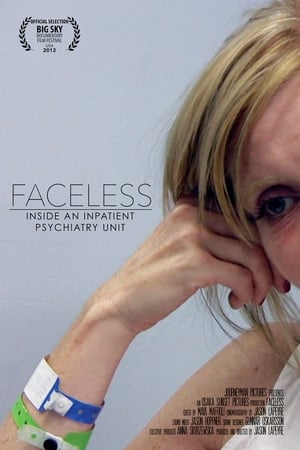
Faceless is a documentary film about the workings of an inpatient psychiatry unit, seen through the eyes of both the patients trying to get well and the staff trying to help them.
The psychiatric hospital was and is a disturbing place. Michel Défago, a former nurse, reports on a time when mentally ill people were still shackled or isolated. Today, nurses make every effort to free patients from their suffering and isolation.
This compelling film represents a rare record of an original genius. In Jung on Film, the pioneering psychologist tells us about his collaboration with Sigmund Freud, about the insights he gained from listening to his patients' dreams, and about the fascinating turns his own life has taken. Dr. Richard I. Evans, a Presidential Medal of Freedom nominee, interviews Jung, giving us a unique understanding of Jung's many complex theories, while depicting Jung as a sensitive and highly personable human being.
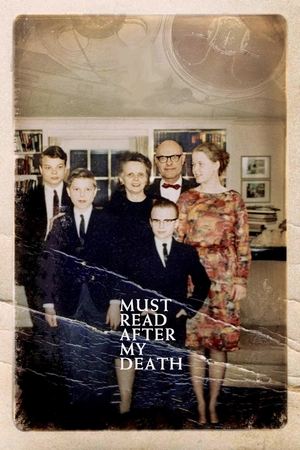
A grandmother dies and leaves behind hours of secret film and audio recordings as well as an envelope with the words “Must read after my death,” which reveal a dark history for her family to discover.
DEPO: AKIL HASTANESİNDE HAYAT
Documentary made with the patients of wards 15 and 17 of the Sainte-Anne psychiatric hospital in Paris in 2008-2009.
Inside the dramatic search for a cure to ME/CFS (Myalgic Encephalomyelitis/Chronic Fatigue Syndrome). 17 million people around the world suffer from what ME/CFS has been known as a mystery illness, delegated to the psychological realm, until now. A scientist in the only neuro immune institute in the world may have come up with the answer. An important human drama, plays out on the quest for the truth.
Things are busy at the Paris hospital where young psychiatrist Jamal and his colleagues work. The place is run down, the staff are exhausted, budgets are constantly being slashed. You know the story, but you’ve rarely seen it conveyed as engagingly as in ‘On the Edge’, which employs a handheld camera and meaningful, artistic interventions to observe the daily routine at the psychiatric ward. The deeply sympathetic Jamal is an everyday hero with an exemplary, humanistic disposition, for whom the most important prerequisites for mental health – and for a healthy society in general – are good relationships with other people. He puts his philosophy into practice by listening patiently, giving good advice and organising theatre exercises based on Molière. Realism and idealism, however, are in balance for the young doctor, at least as long as the institutional framework holds up.
L'albero storpio
Documentary film exploring the rise of mechanistic philosophy and the exploitation of human beings under modern hierarchical systems. Topics covered include behaviorism, scientific management, workplace democracy, schooling, frustration-aggression hypothesis, and human experimentation.
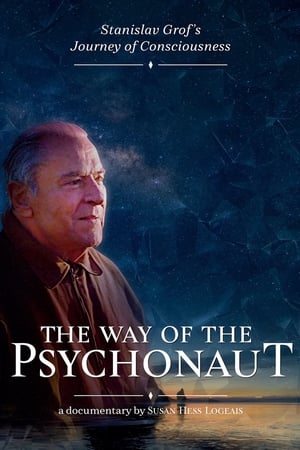
The Way of the Psychonaut explores the life and work of Stanislav Grof, Czech-born psychiatrist and psychedelic psychotherapy pioneer. Stan’s quest for knowledge and insights into the healing power of non-ordinary states of consciousness, influenced the discipline of psychology and profoundly changed many individual lives. One of those transformed by Stan is filmmaker Susan Hess Logeais. The documentary utilizes Susan’s personal existential crisis as a gateway to Grof’s impact, from the micro to the macro.
This documentary is about the life of a Venetian psychiatric hospital. The relationships between the doctors, the patients and their families are followed.
Maud Nycander has over one and a half years, filmed a psychiatric emergency ward at St. Göran's Hospital in Stockholm.
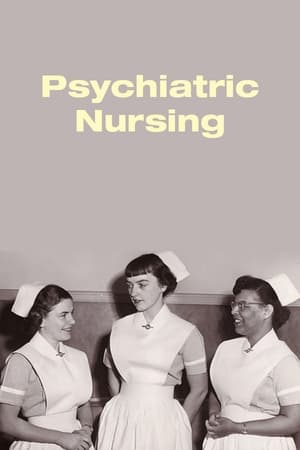
Psychiatric Nursing: The Nurse-Patient Relationship is a 1958 American documentary film directed by Lee R. Bobker. It was nominated for an Academy Award for Best Documentary Feature.
Averroès and Rosa Parks: two units of the Esquirol Hospital, which - like the Adamant - are part of the Paris Central Psychiatric Group. From individual interviews to «carer-patient» meetings, the filmmaker focuses on showing a form of psychiatry that continually strives to make room for and rehabilitate the patients’ words. Little by little, each one eases open the door to their world. Within an increasingly worn-out health system, how can the forsaken be given a place among others.
The Richardson Olmsted Campus, a former psychiatric center and National Historic Landmark, is seeing new life as it undergoes restoration and adaptation to a modern use.
This documentary was distilled from a 3 1/2-hour television film Nessuno o Tutti, to make the point that many inmates now in mental hospitals could be released without harm to society, and to their advantage.
This report was broadcast on ARD in 1993. In 43 minutes, the development of psychiatry "in the third year after reunification" is shown using two institutions in the new federal states as examples. A touchstone for all of psychiatry and disability care to this day. The film shows a shocking way in which disabled people are treated. The commentary uses the perspective of those affected. 50 years after euthanasia in Germany, this documentary reminds us of this once again.
A woman in her twenties has just admitted herself to a psychiatric hospital in California. A staff doctor characterizes her behavior as antisocial and impulsive.
With unique and exclusive testimonies from doctors, nurses, loved ones, and patients we go behind closed doors to examine a high security psychiatric facility that takes care of some of the most dangerous patients.