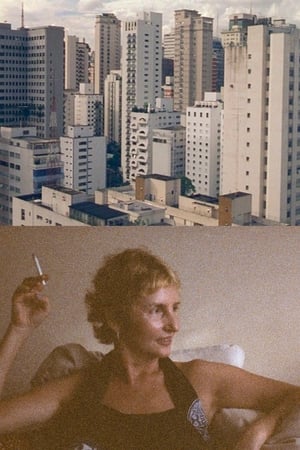
Resonating Surfaces is triple portrait, of a city, a woman and an attitude to life. For the personal story of Suely Rolnik, who is a Brazilian psychoanalyst currently living in São Paulo, involves the Brazilian dictatorship of the sixties as well as the Parisian intellectual climate surrounding Deleuze and Guattari in the seventies. The film is woven through by different themes: the other and the relation to otherness, the connection between body and power, the voice and, ultimately, the micropolitics of desire and of resistance.
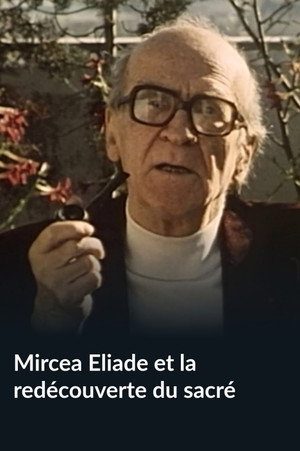
Mircea Eliade was a traditionalist Romanian novelist and philosopher. Following the disaster of the Second World War, he moved to Paris and Chicago, becoming a respected and influential historian of religions. He acquired something of the status of a guru, as poignantly told in the 1987 documentary Mircea Eliade et la redécouverte du sacré. The film features interviews with Eliade at the end of his life, artfully spliced with cuts to religious imagery on a background of moving spiritual music. It was released in 1987, the year after his death.
In 1950 Jerome Hill went to Zurich with the intention of making a film about Dr. Carl G. Jung. The project was abandoned when Hill decided that Jung was not a good subject. After Hill's death, Jonas Mekas edited the film which focuses on Dr. Jung as a person.
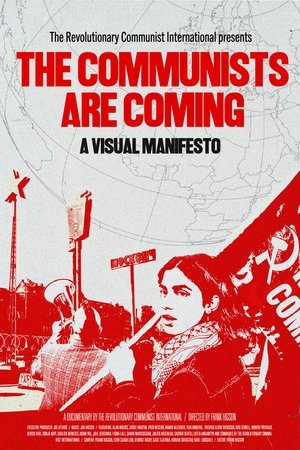
This original documentary charts the founding year of the Revolutionary Communist International, up to its inaugural conference in June 2024.
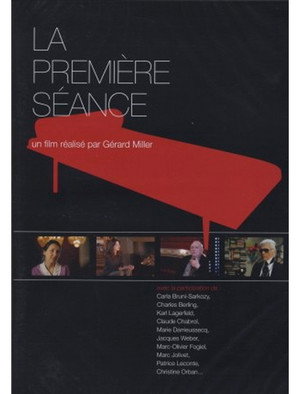
For the first time, filmed by psychoanalyst Gérard Miller, famous and ordinary patients speak in a documentary about their “first session” of analysis—the one that sets the course for a personal journey that may last for years. Among them are Jacques Weber, Charles Berling, Marc-Olivier Fogiel, Marie Darrieussecq, and Carla Bruni-Sarkozy—who is the only wife of a sitting head of state to speak candidly about why and how she has been in analysis for the past eight years. But why did all these “analysands” go to see a psychoanalyst? What happened during their first session? Why did they continue? And why did some, like Karl Lagerfeld or Claude Chabrol, become critics of Freudian theory? The inside of the consulting room, where everyone dreams of being a fly on the wall and hearing what is said, but also… everything that goes on around, before, and after.
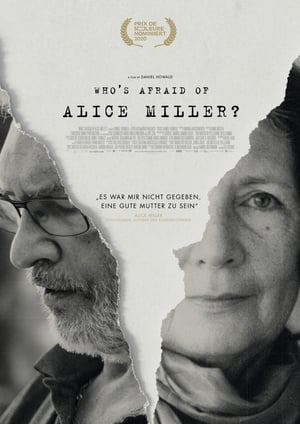
Martin is rejected by his mother with callousness and beaten by his father: a childhood without love. The story sounds like a case study from the book "The Drama of the Gifted Child" by the world-famous Swiss psychoanalyst Alice Miller. But Martin is the son of the committed child rights activist...
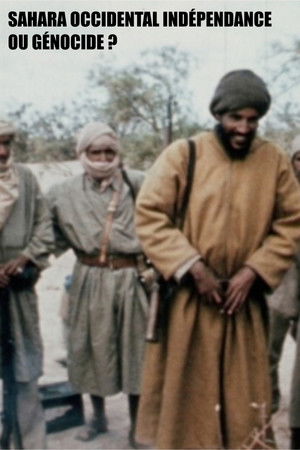
Sahara Occidental : indépendance ou génocide ?
Legendary underground cartoonist Spain Rodriguez and his friends -- cartoonists Robert Crumb and Jay Kinney and cultural critic Susie Bright -- discuss Spain's art and his life as an outlaw biker, '60s figure and social satirist.
A documentary that traces the life and times of Bhagat Singh, a committed Marxist who most ably exemplified the spirit of revolutionary resistance against British imperialism in undivided India.
L'espoir trahi, 1936 en Espagne
This is a reflection of & on class consciousness
In Brazil, political parties are often associated with politicians who are only out to line their own pockets, win elections, and enrich themselves at the expense of the public purse. PSTU is different. We hope that, after watching this special feature, you'll understand why PSTU members can proudly say, with a smile on their faces: “That's My Party!”
A psychoanalyst learns to have an illness and as a consequence he decides to quit his job. All his patients get together to find a way to make him feel better.
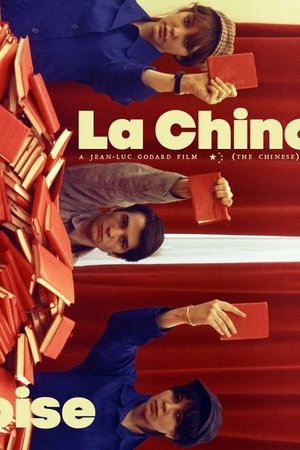
A small group of French students are studying Mao, trying to find out their position in the world and how to change the world to a Maoistic community using terrorism.
Novelist Catherine Tramell is once again in trouble with the law, and Scotland Yard appoints psychiatrist Dr. Michael Glass to evaluate her. Though, like Detective Nick Curran before him, Glass is entranced by Tramell and lured into a seductive game.
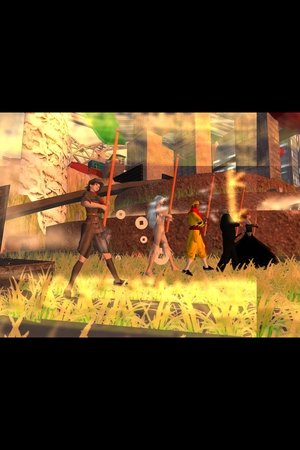
Cao Fei explores a virtual metropolis within the online platform Second Life. The work blends real and fictional elements of Chinese identity and urbanism to comment on capitalism and development in the aftermath of the global financial crisis. Marxist iconography intersects with modern corporate structures, creating a dystopian yet whimsical reflection on 21st-century economic realities.
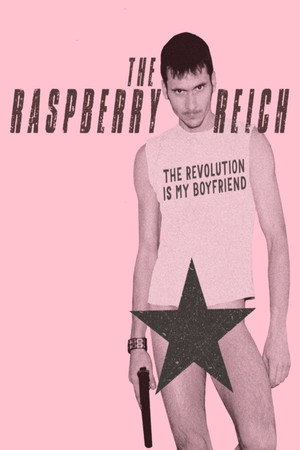
Gudrun has modeled her amateur German terrorist group after the 1970s Red Army Faction (Baader-Meinhof Gang). She attempts to imitate her heroes by kidnapping the son of a wealthy industrialist and hopes to negotiate leftist demands from the father. When Gudrun’s not spouting leftist verses (including during a hilariously brilliant fuck session), she’s trying to convince her all-male gang to abandon their heterosexuality, which she believes is the result of mass delusion.
A psychoanalyst helps a patient to achieve his ambitions.
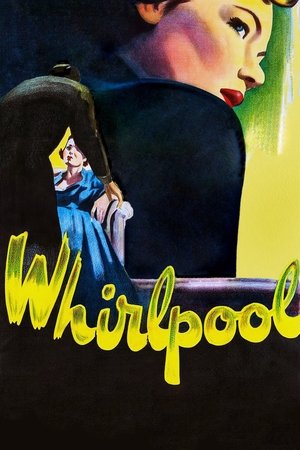
The wife of a psychoanalyst falls prey to a devious quack hypnotist when he discovers she is an habitual shoplifter. Then one of his previous patients now being treated by the real doctor is found murdered, with her still at the scene, and suspicion points only one way.
A group of patients converges in Paris following the demise of their renowned American psychoanalyst, unveiling profound bonds as they reminisce about the late therapist's deep influence on their lives.