Sergeant Cruchot and his faithful comrades have been sent to the International Congress of Gendarmerie in N.Y.
When a machine that allows therapists to enter their patient's dreams is stolen, all hell breaks loose. Only a young female therapist can stop it and recover it before damage is done: Paprika.
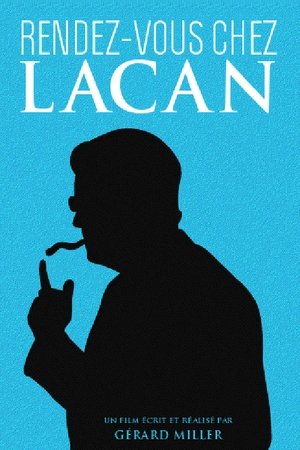
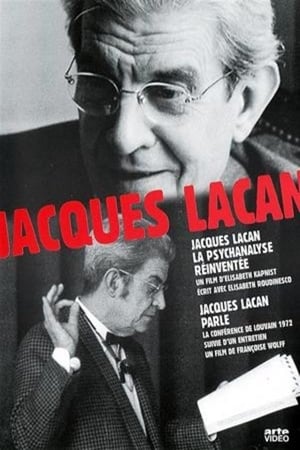
Do you know Lacan, which many consider as the greatest psychoanalyst since Freud? Beyond the myth, the legends and sometimes, the curses, this film by Gérard Miller allows us to discover his work and his personality, through the testimony of his patients, his students, and also his relatives. Born with the XXth century into an upper-middle-class Catholic family, a psychiatrist by training, with an encyclopaedic knowledge of culture, a friend of Picasso, Levi-Strauss and Sartre, Lacan was a great theoretician, an outstanding practitioner, and he remains the most modern, the most challenging and even the most sulphurous of psychoanalysts. The director Gerard Miller met Lacan thanks to his brother, Jacques-Alain, the most faithful of his students, who married his daughter Judith. Their close and intense relationship makes this film exceptional.
The residents of San Francisco are becoming drone-like shadows of their former selves, and as the phenomenon spreads, two Department of Health workers uncover the horrifying truth.
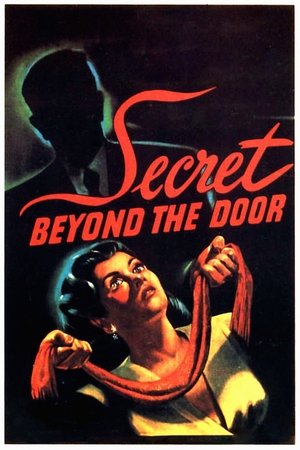
After a whirlwind romance in Mexico, a beautiful heiress marries a man she barely knows with hardly a second thought. She finds his New York home full of his strange relations, and macabre rooms that are replicas of famous murder sites. One locked room contains the secret to her husband's obsession, and the truth about what happened to his first wife.
In the whimsical Dreamworks (1983), a narrator recites a parody of Freud that analyzes the dreams of cats against abstract images that seem to represent those dreams and shots from a cat’s point of view, moving about a room close to the floor.
For a series of programs made for TV Fnac, Philippe Grandrieux meets different people who tell us, each in their own point of view, a story of images. After Paul Virilio (The World is an image) and before Jean-Louis Schaeffet, Le Trou noir (AKA The Black Hole) gives us the enlightened reflections of psychanalyst Juan David Nasio about real and reality.
Jerry Falk, an aspiring writer in New York, falls in love at first sight with a free-spirited young woman named Amanda. He has heard the phrase that life is like "anything else," but soon he finds that life with the unpredictable Amanda isn't like anything else at all.
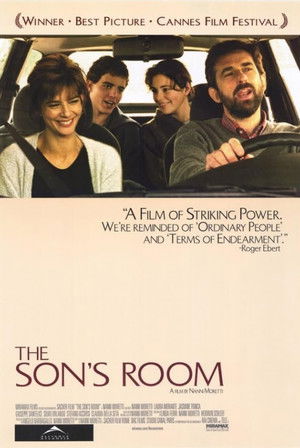
A psychoanalyst and his family go through profound emotional trauma when their son dies in a scuba diving accident.
Michele, a young mathematics professor, moves into a new flat. Lonely, depressed, and neurotic, he spends his free time spying on his neighbors, particularly a young couple struggling with the routines of married life. When Bianca, a new teacher at the local high school, enters his life, Michele finds himself falling in love. At the same time, a string of murders rocks the neighborhood, casting suspicion on him.
A worried husband hires a beautiful psychotherapist to nurse his delusional wife and help her deal with the death of their child in a car accident. However, the nurse starts playing mind games. Or is he just being paranoid?
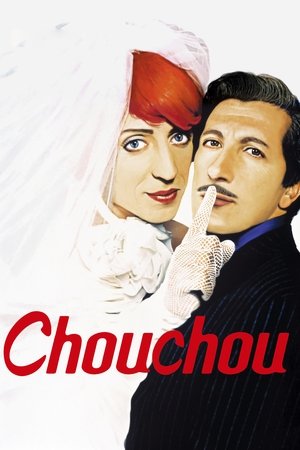
Choukri, alias Chouchou, a transvestite Maghrebi with clear eyes, comes illegally to Paris to find his nephew. Hired as an assistant by a psychotherapist, known for his good mood, he also work as a waiter in a transvestite cabaret of Clichy where he meets Stanislas.
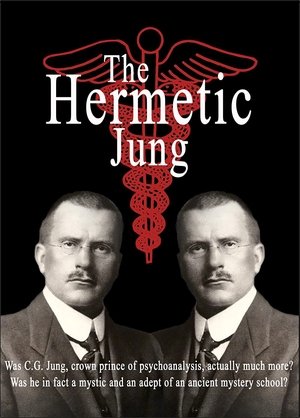
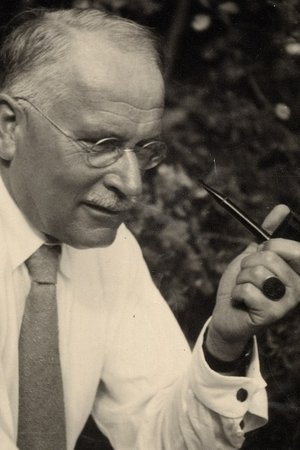
Acclaimed author Gary Lachman looks at renowned psychoanalyst C.G. Jung's work from an esoteric viewpoint, drawing parallells to the disciplines of mysticism and occultism.
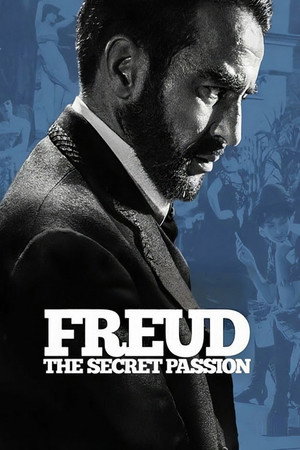
An examination of Austrian psychologist Sigmund Freud's career when he began to treat patients diagnosed with hysteria, using the radical technique of hypnosis.
"Cilantro y perejil" is a comedy about couples from the same family, hit by the economic crisis in Mexico. The plot turns around the eternal question of whether it is worth it to live as a couple. The conclusions are fun, unpredictable and very human. After ending a ten-year marriage, Carlos and Susana try to fall in love with other people without success. As the days go by, Carlos realizes that without Susana he is unable to do many things, including distinguishing cilantro from parsley.
When a pompous actor tells good girl Alexa that she hasn't lived, she embarks on a bold journey that takes her to mysterious bad boy Johnny. Envious, her shy best friend Ben also dares to pursue Johnny.
This compelling film represents a rare record of an original genius. In Jung on Film, the pioneering psychologist tells us about his collaboration with Sigmund Freud, about the insights he gained from listening to his patients' dreams, and about the fascinating turns his own life has taken. Dr. Richard I. Evans, a Presidential Medal of Freedom nominee, interviews Jung, giving us a unique understanding of Jung's many complex theories, while depicting Jung as a sensitive and highly personable human being.
The Stanford prison experiment was a landmark psychological study of the human response to captivity, in particular, to the real world circumstances of prison life, and the effects of imposed social roles on behaviour. It was conducted in 1971 by a team of researchers led by Philip Zimbardo of Stanford University.
A film about the noted American linguist/political dissident and his warning about corporate media's role in modern propaganda.
Screwball account of the legendary psychologist's life leading up to his ground-breaking theories.