During China's Tang dynasty the emperor has taken the princess of a neighboring province as his wife. She has borne him two sons and raised his eldest. Now his control over his dominion is complete, including the royal family itself.
After completing jail time for beating up a man who tried to seduce his mentally-handicapped teenage daughter, the Butcher wants to start life anew. He institutionalizes his daughter and moves to the Lille suburbs with his mistress, who promises him a new butcher shop. Learning that she lied, the Butcher returns to Paris to find his daughter.
Bilike has never seen a ping-pong ball before. He and his family live without electricity and running water in a solitary tent home among the vast steppe grasslands. The magnificent landscape here has changed little since the days of Genghis Kahn. But life in the middle of nowhere can be exciting for a young boy. The smallest of details become big events for curious Bilike and his best friends Erguotou and Dawa. The mystery of the small white ball floating in the creek leads to questions about the world around them, as well as innocent mischief.
Throughout ten years of a key era in Chinese and Hong Kong history, a girl becomes fixated on a fellow commuter who she observes regularly. While the two never speak to one another, the girl captures her appearance and life changes during the years through various means such as photos and drawings.
The feature introduces a fictional golden-colored flower, which possesses the magical ability to debauch humans who get too close to it. As the flower only chooses kindhearted people as hosts, a group of martial artists who want to eradicate the plants face a dilemma: should one kill good people for rescuing men from sin?
Young Sung Neng Yee, who is brought as part of a wealthy Chinese family. She is eager to become part of Mao Tze Tung's "new society", but soon becomes disenchanted by the economic misery the changes bring to her family. Before long, the authorities become aware of Neng Yee's feelings and she is taken to a labour camp, overseen by the sadistic Colonel Cheng.
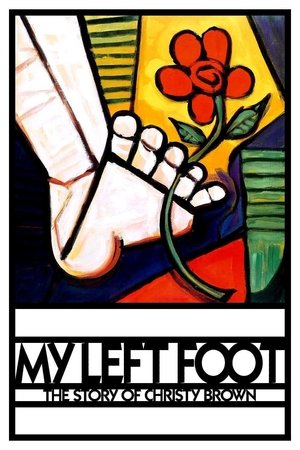
No one expects much from Christy Brown, a boy with cerebral palsy born into a working-class Irish family. Though Christy is a spastic quadriplegic and essentially paralyzed, a miraculous event occurs when, at the age of 5, he demonstrates control of his left foot by using chalk to scrawl a word on the floor. With the help of his steely mother — and no shortage of grit and determination — Christy overcomes his infirmity to become a painter, poet and author.
On his daughter’s birthday, Das chooses not to return home. Instead, he visits Yakob—an elderly man slowly losing his memory. Introducing himself as Yakob’s long-lost son, Yusuf, Das spends the day with him, carefully nurturing conversations and reliving borrowed memories. As they walk, talk, and share quiet moments, a fragile bond begins to form—tender, unexpected, and deeply human.
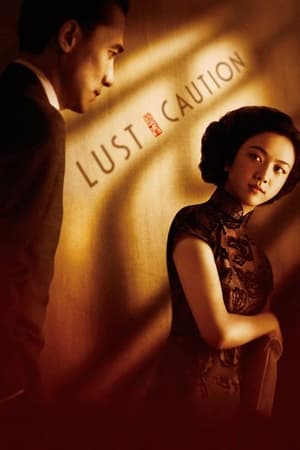
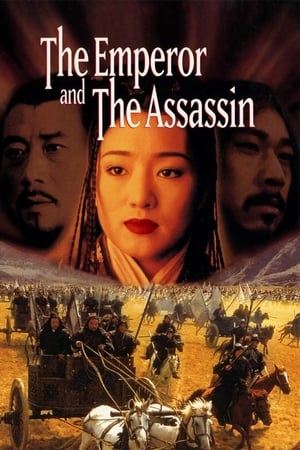
In pre-unified China, the King of Qin sends his concubine to a rival kingdom to produce an assassin for a political plot, but as the king's cruelty mounts she finds her loyalty faltering.
In late 19th-century Canton, legendary hero Wong Fei-Hung battles foreign forces' (English, French and American) plundering of China. When Aunt Yee returns from America totally westernised, Wong assumes the role of protector. This proves difficult when his martial arts school and local militia become involved in fierce battles with foreign and local governments. As violence escalates, even Aunt Yee has to question her new western ideals, but is it possible to fight guns with Kung Fu?
A dramatic history of Pu Yi, the last of the Emperors of China, from his lofty birth and brief reign in the Forbidden City, the object of worship by half a billion people; through his abdication, his decline and dissolute lifestyle; his exploitation by the invading Japanese, and finally to his obscure existence as just another peasant worker in the People's Republic.
Kuhle Wampe takes place in early-1930s Berlin. The film begins with a montage of newspaper headlines describing steadily-rising unemployment figures. This is followed by scenes of a young man looking for work in the city and the family discussing the unpaid back rent. The young man, brother of the protagonist Anni, removes his wristwatch and throws himself from a window out of despair. Shortly thereafter his family is evicted from their apartment. Now homeless, the family moves into a garden colony of sorts with the name “Kuhle Wampe.”
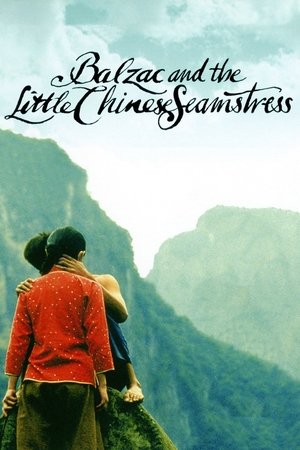
During the Cultural Revolution, two young men are sent to a remote mining village where they fall in love with the local tailor's beautiful granddaughter and discover a suitcase full of forbidden Western novels.
A town in Fengjie county is gradually being demolished and flooded to make way for the Three Gorges Dam. A man and woman visit the town to locate their estranged spouses, and become witness to the societal changes.
The Tibetans refer to the Dalai Lama as 'Kundun', which means 'The Presence'. He was forced to escape from his native home, Tibet, when communist China invaded and enforced an oppressive regime upon the peaceful nation. The Dalai Lama escaped to India in 1959 and has been living in exile in Dharamsala ever since.
In 9th century China, a corrupt government wages war against a rebel army called the Flying Daggers. A romantic warrior breaks a beautiful rebel out of prison to help her rejoin her fellows, but things are not what they seem.
True story of Norman Bethune, a medical doctor who fought for justice in China during Mao's rise to power.
Accio and Manrico are siblings from a working-class family in 1960s Italy: older Manrico is handsome, charismatic, and loved by all, while younger Accio is sulky, hot-headed, and treats life as a battleground — much to his parents' chagrin. After the former is drawn into left-wing politics, Accio joins the fascists out of spite, but his flimsy beliefs are put to test when he falls for Manrico's like-minded girlfriend.
A true-story account of a German businessman who saved more than 200,000 Chinese during the Nanjing massacre in 1937-38.
Ruth is a Catholic teenager in the midst of Muslims. As a minority in a place to study, she must adapt to the habits of his friends. This carried over to habits in her personal life, could she?