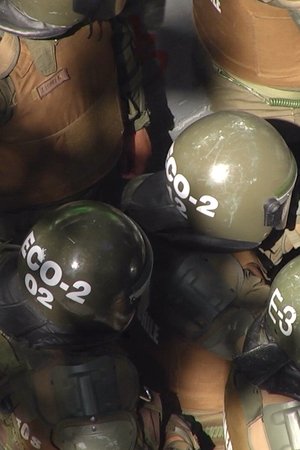
Images of Argentinian companies and factories in the first light of day, seen from the inside of a car, while the director reads out documents in voiceover that reveals the collusion of the same concerns in the military dictatorship’s terror.
Rüdiger was a child, Aki two months old and Kurt, the deputy of the pedophile leader of the sect. In 1961 they came to Chile together with 500 other German sect members and for over 40 years they lived secluded from the rest of the world. The film tells about the attempt to survive as a collective after decades of crimes such as torture and murder and shows different ways in which the individual copes with the history of the community.
Portrait of the writer Elsa Triolet, wife of poet Louis Aragon. The tile is a play on a famous poem by Louis Les yeux d'Elsa.
Filmmaker Rodrigo Dorfman goes in search of his revolutionary roots in Chile and in the process finds it in the euphoria of the Occupy Movement.
Drawing on a wealth of unseen archival material and unpublished notebooks, the film weaves a complex and personal portrait of Margaret’s life, from the perspective of a fellow artist sensitive to the potential Margaret envisaged for film as a poetic medium.
Report on the town of San Pedro which exists in the middle of the desert and at over 2,430 meters above sea level. It also deals with the work of priest Gustavo Le Paige and the museum he helped develop.
He is considered the greatest European poet of the Middle Ages and his work unfolds the whole panopticon of occidental education – theology, philosophy, sciences, politics and literature. But who has really read it, the “Divine Comedy”? Who knows more of its creator Dante Alighieri than that he had an eagle-like profile and was in love with a woman named Beatrice? 700 years after Dante’s death, the filmmaker Adolfo Conti travels through Italy with Dante’s words in mind and eyes to see the world as Dante did. As the film encounters the beauty of arts and the Tuscan landscape, the forces of nature, a dramatic life story is unfolded.
During the first days after the 1973 Chilean coup d’état, the political leadership of the Popular Unity government was arrested and transferred to Dawson Island, Magallanes Region, extreme south of Chile and the mainland. The wives of the then political prisoners began an incessant effort to find out the whereabouts of their husbands and then try to return them alive. In these circumstances, they meet and spontaneously organize into a group they call the “Dawsonianas.”
A documentary on the rise and fall of Project Cybersyn, an attempt at a computer-managed centralized economy undertaken in Chile during the presidency of Salvador Allende.
Documentary on the life of the great Romanian-Jewish poet Paul Celan. Tormented by the experiences of the Holocaust, he committed suicide in Paris in 1970 in the Seine. For the first time, the poet's son, Eric Celan, speaks in front of the camera about his father and the difficult life of the family.
A film about the poet Oscar Lucero during the year 2012 in La Legua.
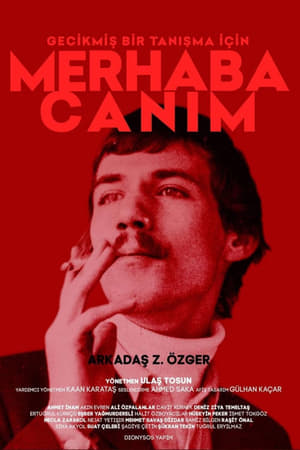
The documentary is titled after Arkadaş Z. Özger’s poem “Hello My Dear” which had caused much controversy in the period it was first published. Considered to be in defiance of heteronormativity, the said poem includes references to the poet’s personality, his family, his relationship to the society, and his “unexpected” death, which came three years after its publication. Today, 50 years after it was written, the documentary follows these same lines in the poem utilising cinematic elements. The documentary also rediscovers the poetics; reaches out to the family, the comrades, the friendships, departing from the official historical accounts, cognizant of his experience of otherness, in pursuit of the “lost” portrait of Arkadaş Z. Özger.
Concert by Víctor Jara at Panamericana Televisión in Lima, Peru, on July 17, 1973. This is one of the last audiovisual records of Víctor Jara. Two months later he would be assassinated by the Chilean military dictatorship.
The third installment in Dan Přibáň's series of travel documentaries describes the author's journey with his friends across South America in vehicles that are often notorious but cult in their own way. The charming dynamics of the group on screen are further enhanced by the high-quality craftsmanship.
In early September 2011, Leah decided to go to Lebanon to film her grandmother. Two weeks after the end of filming, her grandmother died of metastatic lung cancer. It would take her 12 years to regain the courage to review their last conversations. Through memories and poems she draws the portrait of her grandmother paying homage to her colorful spirit that made her unique.
1972. During the government of Salvador Allende 34 artists made works that were included in the construction of the UNCTAD III building, today GAM. After the 1973 coup, few works survived looting and destruction. 40 years later, Joaquín Maruenda, son of the late sculptor Félix Maruenda, finds a record that leads him to investigate the events of the sculpture "Chimeneas" and its possible restoration. Joaquín, artists and workers involved with the construction of the building, will try to answer the question Why did they destroy the art?
By ending the life of Jean Senac on August 30, 1973 in Algiers, his assassins believed they would silence him forever. They were wrong since his voice is a little louder every day. Witnesses to these craze: the publication of the complete works of this great poet, the countless conferences and radio broadcasts devoted to him and finally the production of films such as "Jean Sénac, the blacksmith of the sun". The moving and overwhelming testimonies of those who knew him, the unpublished film archives, the generous voice of the poet on the radio, the discovery of his travels in the territories of poetry and politics make this film a precious document on the life of Jean Senac.
Sonar Rock City: Seattle is a journey through the city that caught our attention back in 1992 thanks to the grunge movement which today no longer exists. Still today the creative spirit runs through its veins with a new music scene that captures what Seattle is in its core.
Valdivia 1960, El Gran Terremoto
It has been over one hundred years since M. K. Čiurlionis left his lasting imprint on Lithuanian culture. He was a composer, painter, genius, and madman who created an entirely new space, new context, and new universe.