An experimental meditation on Times Square's marquees and iconic advertising that captures the concurrently seedy and dazzling aspects of New York's Great White Way.
At 16, Max left with dreams and a GoPro slung over his shoulder for an exchange program at a high school in Oklahoma. Since then, Donald Trump has become president, the Capitol has been stormed, and abortion bans have gained ground. On the eve of Trump’s second term, Max goes back to see his friends to understand what their journeys reveal about the evolution of American society
Amid Guanajuato's vibrant streets, an aging filmmaker becomes a modern Don Quixote, joined by a spirited young animator as his loyal Sanchia. Together, they navigate themes of mortality, unfulfilled dreams, and the fragile line between madness and clarity, uncovering the transformative power of light, art, and the landscapes that shape our souls.
As part of a six-month investigation, The Times synchronized and mapped thousands of videos and police audio of the U.S. Capitol riot to provide the most complete picture to date of what happened - and why.
Something strange and unpredictable takes inthe mysteriously vacant rooms of Berlin’s infamous Techno club Berghain. A group of wild animals occupy the monumental spaces of the former power station. We explore the building together with the animals and experience its dimensions from a new, nonhuman perspective. The brutality of the industrial architecture is confronted with the beauty of these shy creatures.
We follow the story of The Thinker bombing at the Cleveland Museum of Art, trying to solve the mystery behind it because no one was ever caught. By following this case, we unravel the whole landscape of Cleveland and the USA in the 60s/70s - student protests, social justice movements, anti-war movements, and radical militant groups. We give a context to the bombing, which is symbolic on so many levels - it's an art piece that randomly became a target for political violence that, by being left unrepaired, became a reminder of the complicated history of the 60s/70s. The Thinker is a silent witness to this fascinating decade, looking down from his pedestal, still thinking about our place in the world as humans.
Hercules travels by bicycle from Krefeld on the Lower Rhine to Olympus, the throne of ancient deities. The Hercules myth, as a primal myth of male power, is questioned through biographical reflections and the staging of mythological echoes. The dramaturgical structure of the hero's journey disintegrates in a multi-material perspective into questions about male identity, ideals and remorse.
An innovative and charismatic influencer is suddenly exiled from her community of creative partners and colleagues when she states an opinion that she did not know was “unacceptable” in their eyes.
One Meter of Democracy (2010) challenged the endurance of viewers, as well as the courage of the artist. In a quasi-democratic process, He Yunchang invited approximately 20 friends to vote in a secret ballot on whether he should have a surgeon cut a one metre incision the length of his body, from collar bone to knee, without anaesthesia. The vote was carried by a narrow majority, with several abstaining. The performance was documented in video and photographs that reveal the emotional cost of witnessing this gruelling event. This work, sometimes also known as ‘Asking the Tiger for its Skin’ was also staged on a symbolic date: 10 October 2010 was the 99th anniversary of the Wuchang uprising and the Xinhai Revolution which led to the fall of the Qing Dynasty and the establishment of the Republic of China. The final image shows the group with sombre, shocked faces.
Inspired by Lois Patiño's short movies project called "Paisaje-Duración" (Duration-Landscape) and Hiroshi Sugimoto's photo series "Seascapes", "Duração-Diferença" (Duration-Difference) reveals the difference through duration, through time; this short experimental movie seeks to capture, as Patiño and Sugimoto achived, the immanence as the entrance for something more - or something in between.
Phil Comeau shines a spotlight on the Ordre de Jacques-Cartier, a powerful secret society that operated from 1926 to 1965, infiltrating every sector of Canadian society and forging the fate of French-language communities. Through never-before-heard testimony from former members of the Order, along with historically accurate dramatic reconstructions, this film paints a gripping portrait of the social and political struggles of Canadian francophone-minority communities.
Las Preguntas que Perdimos
Through deep examination, this documentary from Oscar nominee Petra Costa explores the profound impact of evangelism on Brazil's political landscape.
Fragments from Brussels, about the flow of the city, A cinema, A body, A film, and a wind that blows through the town. The film is a Schizomentry experience that blends real stories and fiction. After all, where is the border?
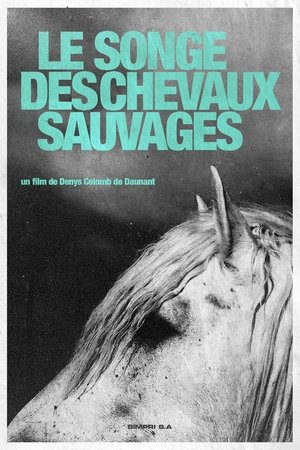
The horses in Denys Colomb Daunant’s dream poem are the white beasts of the marshlands of the Camargue in South West France. Daunant was haunted by these creatures. His obsession was first visualized when he wrote the autobiographical script for Albert Lamorisse’s award-winning 1953 film White Mane. In this short the beauty of the horses is captured with a variety of film techniques and by Jacques Lasry’s beautiful electronic score.
Three images of a person running in the void through the movement of speed and abstract images
Jean-Luc Godard is synonymous with cinema. With the release of Breathless in 1960, he established himself overnight as a cinematic rebel and symbol for the era's progressive and anti-war youth. Sixty-two years and 140 films later, Godard is among the most renowned artists of all time, taught in every film school yet still shrouded in mystery. One of the founders of the French New Wave, political agitator, revolutionary misanthrope, film theorist and critic, the list of his descriptors goes on and on. Godard Cinema offers an opportunity for film lovers to look back at his career and the subjects and themes that obsessed him, while paying tribute to the ineffable essence of the most revered French director of all time.
A young adult's first-hand account of "accidentally becoming human again" after, and with, trauma induced depression. Lo-fi, vulnerable, and uniquely youthful, "The Afterlife" is a melancholic affirmation of life after death.
The sequel to Lumière! L'aventure commence (Lumière! The Adventure Begins) reveals another hundred Lumière films, all immaculately restored, and aims above all to explore more deeply the history of the invention and affirmation of cinema in the world. This new feature-length film, following the great success and worldwide release of its predecessor, will confirm to audiences everywhere that the roots of the greatest and most beautiful works in the history of cinema lie in its origins, which are both profoundly French and truly international.
A nuanced portrait of the (Amsterdam) police which portrays not only the police as an institution, but also individual officers. Issues raised include: ethnic profiling, lack of influence by neighbourhood officers, the role of women within the police force and the question of whether the police sometimes use excessive force, for example during the clearance of squats by the ME (Riot Police) in Amsterdam’s Kinkerbuurt neighbourhood, where defenceless locals were beaten by officers with batons.