A progressive-minded documentary filmmaker reunites three older women who have been separated since college and takes them on a trip.
Biography of the curvaceous and sharp-witted actress who scandalized Broadway and Hollywood in the 1920s-30s with her frank approach to sex.
The death of the minotavr talks about the concept of the heroine's journey. Suffering, horror and exhaustion lead the protagonist to a process of transformation, abyss and expiation, because only murdering to minotaur and everything he represents is possible to return to life. From the female gaze, it shows the depth of the emotional wounds caused by domestic violence; the same one that the surrealist Dora Maar lived and that ask why, as a society, instead of killing the minotaur, we blindly continue to send him women only to be devoured and ask them why they simply did not fight, why they did not try get out of the labyrinth.
A punk scarecrow, endowed by life, annihilates its roots and revitalizes its territory.
Two former geeks become 1980s punks, then party and go to concerts while deciding what to do with their lives.
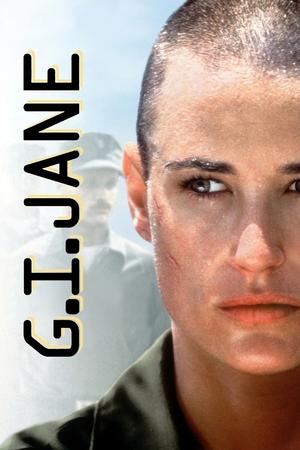
In response to political pressure from Senator Lillian DeHaven, the U.S. Navy begins a program that would allow for the eventual integration of women into its combat services. The program begins with a single trial candidate, Lieutenant Jordan O'Neil, who is chosen specifically for her femininity. O'Neil enters the grueling Navy SEAL training program under the command of Master Chief John James Urgayle, who unfairly pushes O'Neil until her determination wins his respect.
Kore
In a dystopian, polluted right-wing religious tyranny, a young woman is put in sexual slavery on account of her now rare fertility.
Katherine Watson is a recent UCLA graduate hired to teach art history at the prestigious all-female Wellesley College, in 1953. Determined to confront the outdated mores of society and the institution that embraces them, Katherine inspires her traditional students, including Betty and Joan, to challenge the lives they are expected to lead.
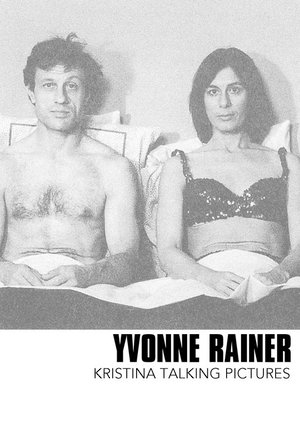
Kristina, a self-named Hungarian female lion tamer, arrives in New York to become a dance choreographer. Kristina, now a middle-class NYC artist concerned about the environment, has a sailor lover named Raoul. The film, a collage work, an essay film, a fictional narrative and a documentary all rolled into one, is one of the most important independent American feminists films made during the 1970's.
Matthew, a college freshman, meets his dream girl in a dorm elevator during a blackout. He never sees her face, but instantly falls in love. In the morning, the power is restored, but the "dream girl" has vanished. All Matthew knows is that she lives in an all-girls dorm. He sets out on a semester-long journey to find his mystery girl among a hundred female suspects. Could it be Wendy? Dora? Arlene? Patty? Cynthia? Or the 95 other girls, any of whom could have been in that elevator with Matthew.
In the capital of southern Brazil in the 1890s, a beautiful and mysterious couple gained notoriety, both for the achievements of the husband, Dr. Gustavo Ramos, and for the morbid personality of his wife, Katalina Paulsen. When fear strikes, terrible secrets are revealed.
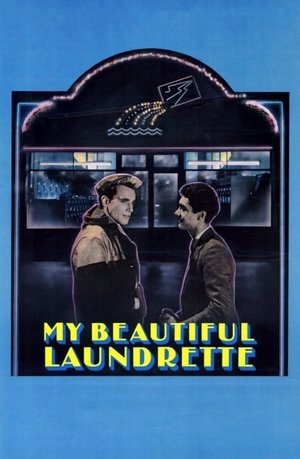
A young Pakistani Briton manages a rundown laundrette with his lover while dealing with tension in his family, the local Pakistani community, and a persistent mob of skinheads.
This is a fairy tale about a girl who just lived and was, and about a boy who just lived and was. You may recognize yourself in these stories, but all coincidences with real people are accidental.
The life and rather obscure hardships of a Slovenian feminist author and human rights activist Angela Vode.
A docu-drama shot in 1970, but not completed until 1973, the film sought to encapsulate in an experimental form issues that were under discussion within the Women’s Liberation Movement at this time and to thus contribute to action for change. In its numerous community screenings, active debate was encouraged as part of the viewing experience.
Partly based on a true event, the death in 1817 of a Birmingham woman, Mary Ashford, and the consequent trial of a local man, Abraham Thornton, for her rape and murder. The film is concerned with the response of her contemporaries to her behaviour on the night before she died, and by situating this within the fictional circumstances of a modern woman, explores current attitudes to rape, and the forces and assumptions underlying them.
Yusef, a first-generation Pakistani engineering student, moves off-campus with a group of Muslim punks in Buffalo, New York. His new "un-orthodox" housemates soon introduce him to Taqwacore: a hardcore, Muslim punk-rock scene that only exists out west. As the seasons change, Taqwacore influences the house more and more. The living room becomes a mosque during the day, while it continues to host punk parties at night. Ultimately, Yusef is influenced by Taqwacore too, as he begins to challenge his own faith and ideologies. 'The Taqwacores' deals with the complexities of being young and Muslim in modern-day America.
Moa is in her early 20s, works at a factory and lives by herself in a cottage in the forest. She is a vegan and follows her friends and demonstrations, mostly to fit in. But at home, by herself, she listens to pop music and use make-up.
It is the summer of 1984 in Schmalenstedt, in the middle of Holstein Switzerland, directly on the Baltic Sea. The 17-year-old Malte Ahrens, who calls himself Roddy Dangerblood, lives with his elderly parents in a farmhouse, is trained as a potter and has discovered for himself the punk that has made its way into Schmalenstedt with some delay.