CBS presentation of the Prince Street Players' Aladdin adaptation.
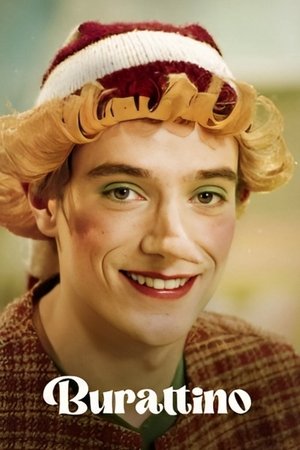
Born from the fairytale of Alexei Tolstoy, a lively story about a curious tree boy Burattino who gets into an unexpected adventure.
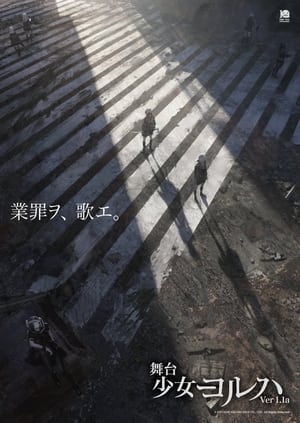
A gender-swapped re-envisioning of the YoRHa Boys Ver1.0 play from 2018, it tells the story of a group of female androids that undertake an experimental mission in Tokyo, Japan.
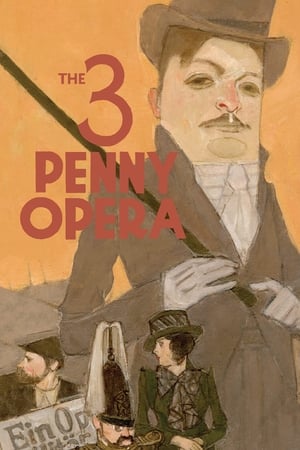
In London at the turn of the century, underworld kingpin Mack the Knife marries Polly Peachum without the knowledge of her father, the equally enterprising 'king of the beggars'.
The Little Black Fish tells the tale of a small, inquisitive fish who dares to question the limitations of her world—the stream where generations of fish have lived without exploring beyond. Driven by curiosity and a thirst for truth, she embarks on a brave journey beyond the known waters, encountering various creatures, dangers, and wonders. Her journey becomes a powerful metaphor for resistance, growth, and the importance of independent thought.
A look at the entire process of creating and developing Patrice Chéreau’s third staging of "In the Solitude of Cotton Fields" by Bernard Marie Koltès with Pascal Greggory and Chéreau himself. From the first reading around the table through the first contact with the performance space, rehearsals and lighting to opening night, the entire creative process unfurls in front of our eyes. The film shows us the evolving and ongoing dialogue between Greggory and Chéreau, a dialogue full of crises and magical moments of harmony and insight via which the truth, intensity, complexity, mystery and depth of Koltès’ text gradually emerge to form an implicit bond between these two men. The film also shows Chéreau directing rehearsals for Mozart’s "Don Giovanni" in Salzburg, revealing both the unity of and profound differences between his opera and theater work.
Having seen the Seisho, Siegfeld, and Seiran Play Exchange Program's "The Wartime of Farewells" through to success, Stella and the others have taken a big step forward as Stage Girls. Then, another exchange program begins. The name of their partner school is Romana Drama School. It is a newly established school that was founded five years ago. With the rumors of them snatching up excellent students from exchange programs, they possess a shady history. The play Romana has chosen is Oscar Wilde's "Salome", which was once banned due to its content being deemed radical and degenerate. To play Salome, one must steal others' brilliance and be a pure egoist with infinite desires. Appearing before the bewildered Stella is none other than Mikoto Aragami, her old rival from her time in Munich, Germany... "Stella Takachiho. I will steal everything from you, and play Salome."
Based on the popular Japanese manga series "Ginga -Nagareboshi Gin-" by Takahashi Yoshihiro, this stage musicals follow the story of an Akita dog Gin, the son of the mighty hunting dog Riki.
In the near future, Panther Claw has destroyed the Tokyo Metropolitan Government. The capital government is forced to shift into the provinces. During this time, Honey Kisaragi has transferred to St. Chapel Academy as part of a special course. This special course is the "New Generation Honey" project, where students, including Honey, become Cutie Honey.
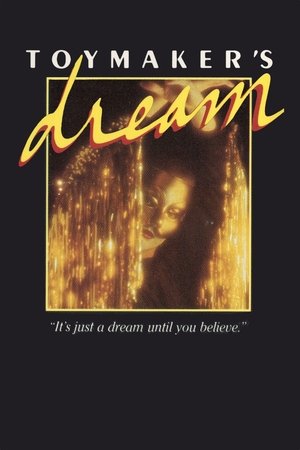
Toymaker's Dream is a vibrant, high-energy theatrical presentation that retells the biblical narrative of creation, the fall of man, and redemption through the life and death of Jesus Christ. The story is presented as a fantasy allegory, portraying God as the "Toymaker," humanity as his beloved "toys" living in "Dreamland," and Satan as the "Dream Hater" who incites rebellion against the Toymaker.
A private stationed in Hawaii gets involved with the general's engaged daughter. In order to avoid a scandal, the pair break up, but meet again years later when he's at West Point producing the annual play that turns out to star her.
The original musical adaption of the Roman Polanski classic "The Fearless Vampire Killers". At the turn of the 20th century, Professor Abronsius and his assistant Alfred arrive in a remote Carpathian village to prove the existence of vampires, and get drawn into Count von Krolock’s eerie castle when the innkeeper’s daughter Sarah vanishes into the night. There, amid a lavish undead ball, Alfred’s love for Sarah and the professor’s scientific zeal collide with the vampires’ insatiable thirst, entangling both men in the Count’s eternal curse.
The second theatrical play adaptation of the popular manga series “Patalliro!”.
The first theatrical play adaptation of the popular manga series “Patalliro!”.
For Shion, an elite student in the technologically sophisticated city No. 6, life is carefully choreographed. School, study, and the occasional visit with his friend and classmate Safu. One fateful day, however, he takes a misstep, sheltering an injured boy his age from a typhoon. Known only as Nezumi («Rat»), this boy is a VC – a fugitive living outside the computerized tapestry of city control – and helping him will throw Shion’s life into chaos and start him down a path to discovering the appalling secrets behind the superficial perfection of No. 6. ☆ The first theatrical play adaptation of the popular light novel series “No. 6”. ☆
“Patalliro! The Stage” is based on the popular manga series “Patalliro!” by Mineo Maya, which has been running since 1978. “Patalliro!” follows the adventures and mischiefs of Patalliro du Malyner VIII (knowns as Patalliro), who is the king of Malynera. His silly gag “Cock Robin Ondo” is well known from the ending song of the anime adaptation. Patalliro is played by Kato Ryo, one of the most influential and eccentric actors of his generation. The full cast except for Ryo was replaced for the latest show, providing a fresh take on the wacky world of “Patalliro!”. The story is based on “Misty London Airport”, one of the most iconic episodes of the original manga.
Enda Walsh's play Misterman, written for a solo performer, is a study of one man’s descent into religious mania in small-town Ireland.
A provocative and ironic pamphleteering documentary about the making of Christoph Schlingensief’s Nazi-'Hamlet’ (2001). Both a media event and a form of political action Schlingensief let ex-neo-Nazis play themselves. His provocation in so-called Nazi-free Switzerland was not appreciated and when he added fuel to the flames by calling for the local political party SVP to be banned, his media offensive made front-page news far beyond Switzerland.
John Stonehouse (William Russell) checks into a hotel, intending to commit suicide. But instead he winds up helping a girl, Gilberte Bonheur (Fritzi Brunette), out of a jam. He finds her bending over a man who she has apparently killed, and since he's about to kill himself anyway, he offers to assume the blame. Throw a valuable emerald into the works, and the fact that the dead man suddenly comes back to life, and Stonehouse -- not to mention the audience -- becomes thoroughly befuddled by it all. Everything clears up, however, when Gilberte gives him a theater ticket -- it turns out that everything he went through was the plot to a stage play, enacted in real life by the actors. The critics roasted the play, saying it wasn't true to life, and this was their proof that the situations really could happen. Gilberte retires from acting when Stonehouse proposes.
Caesar returns in triumph to Rome and the people pour out of their homes to celebrate. Alarmed by the autocrat’s popularity, the educated élite conspire to bring him down. After his assassination, civil war erupts on the streets of the capital. Nicholas Hytner’s production will thrust the audience into the street party that greets Caesar’s return, the congress that witnesses his murder, the rally that assembles for his funeral and the chaos that explodes in its wake.